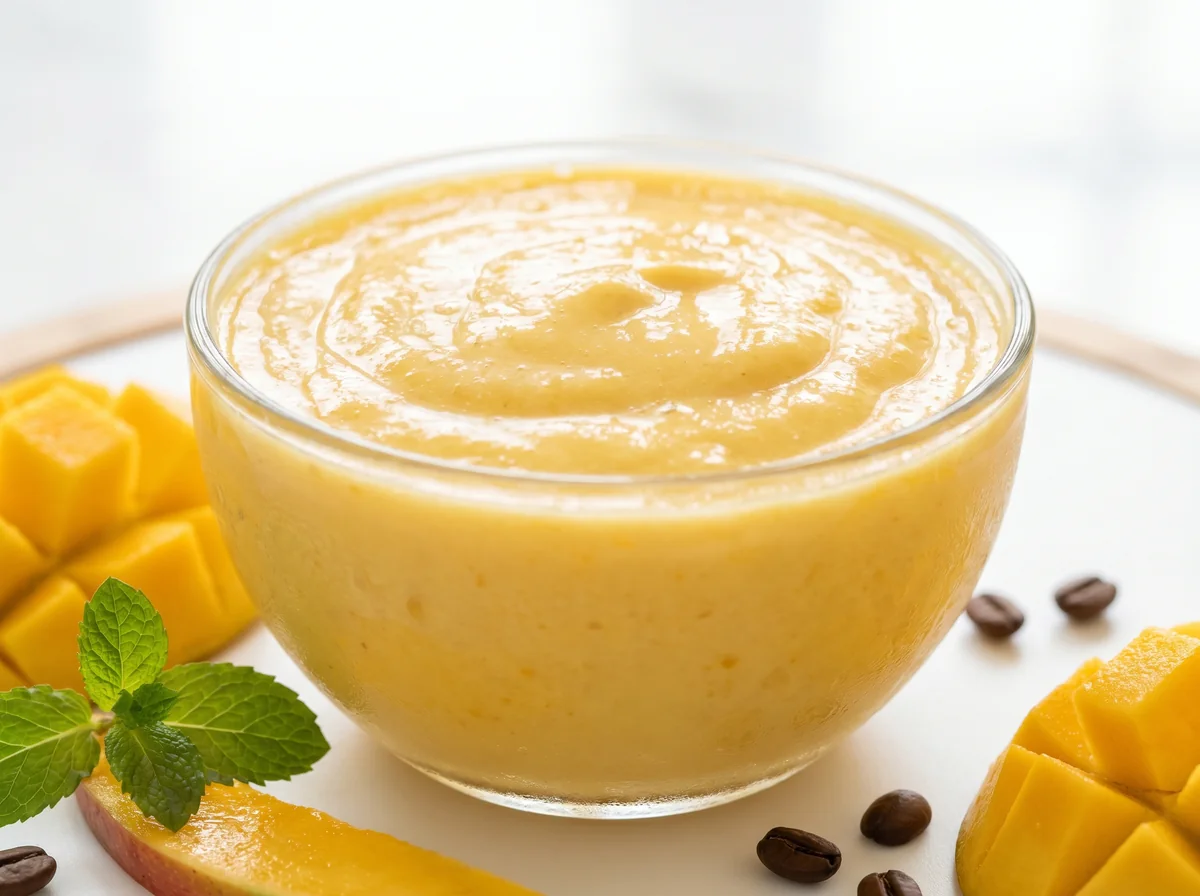
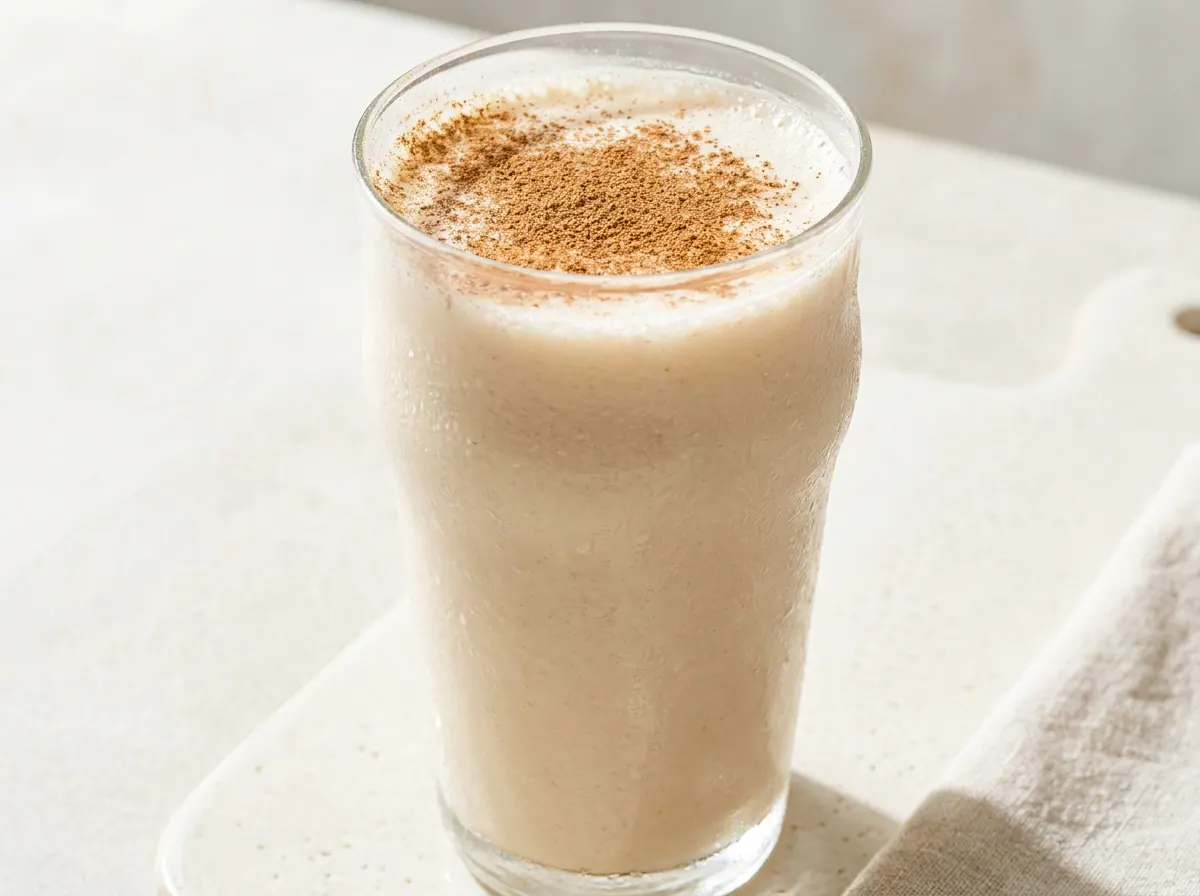
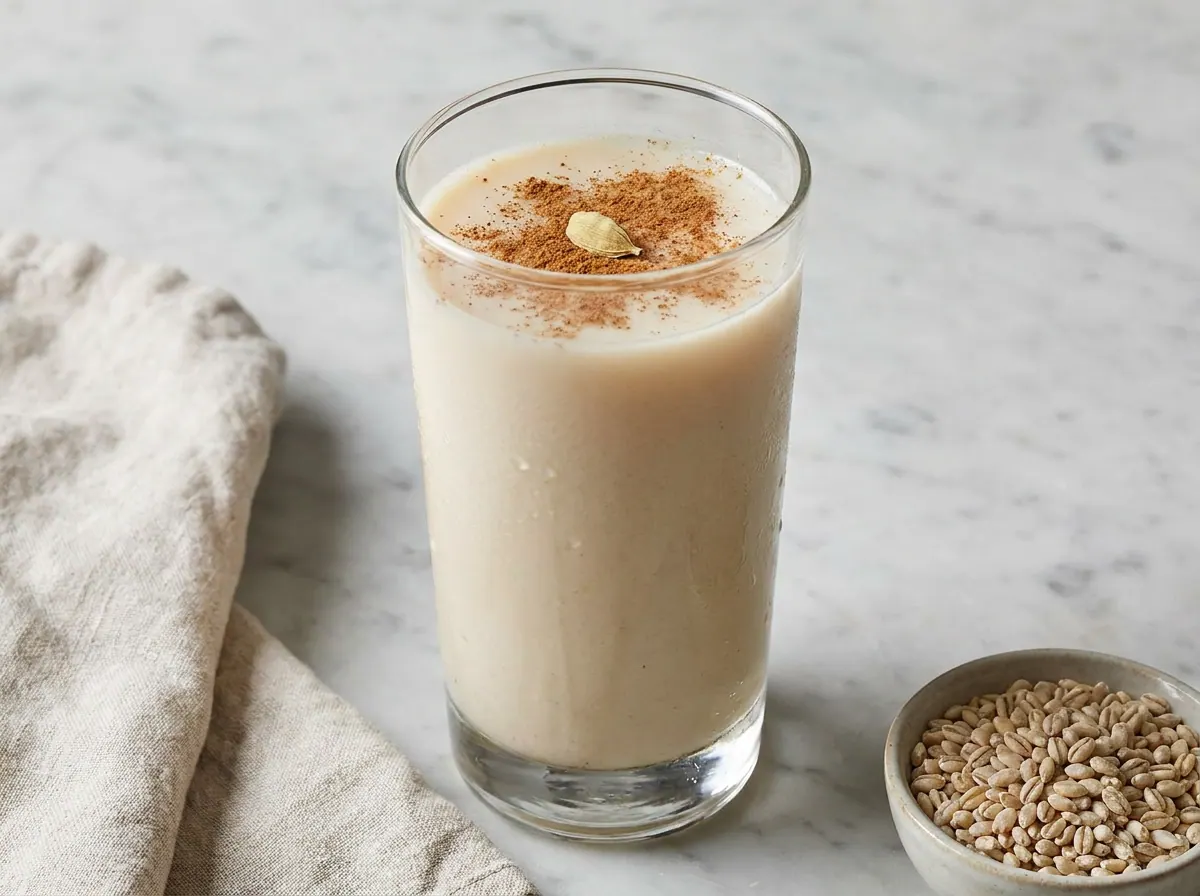
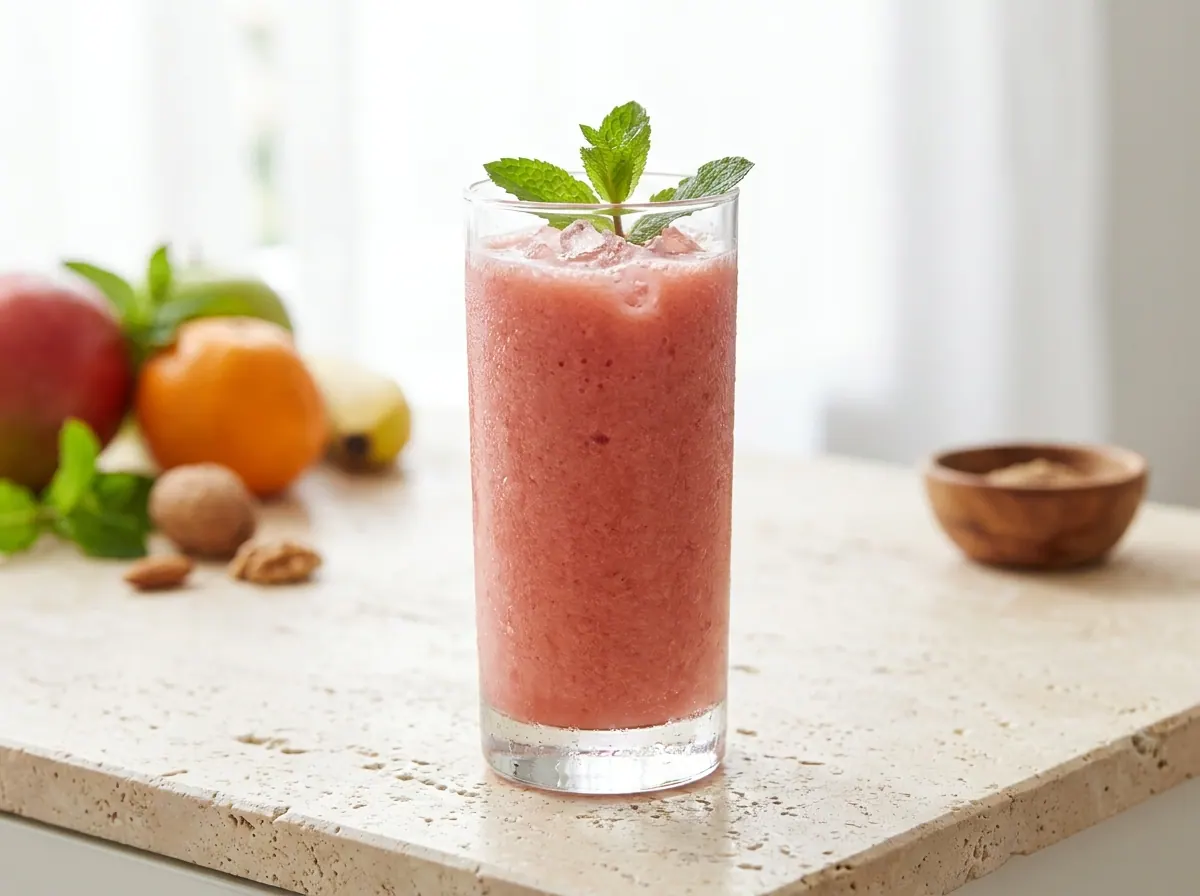
On a training morning, or in the rush of a breakfast with no time to cook, this glass is born from a simple idea: what if we combined the beloved Gulf sweetness of mango with something creamy that satisfies and supports the muscles? Mango is no stranger to our tables — we know it in juice and date sweets — but here it wears a different outfit. Greek yogurt gives it a creamy density and a gentle acidity that balances the sugar, and a scoop of protein turns the drink from a fleeting treat into a liquid meal that holds hunger at bay for hours.
This is not just another thin mango juice; it is a smoothie you eat with a spoon before you drink it. It suits anyone stepping out of the gym looking for something quick to support their effort, and anyone starting the day with no time for a full spread but refusing to go hungry before noon. In five minutes, with no heat, taste and satisfaction meet in a single glass.
Preparation Steps
Prepare the blender
Add the cold milk first to the blender jar, then the Greek yogurt. Putting the liquid at the bottom lets it flow around the blades smoothly, preventing the frozen ingredients from sticking and cutting down blending time.
Add the mango and seeds
Add the frozen mango, ground flaxseed, and cardamom. Use frozen mango rather than fresh — it gives a thick, cold texture that eliminates the need for excess ice, which would dilute the flavour.
Blend first pass
Blend on medium speed for about 30 seconds until the mango chunks break down and no lumps remain. Starting on medium protects the motor from the sudden load of frozen solids.
Add the protein
Add one scoop of whey protein and blend on low speed for about 15 seconds only until incorporated. Brief blending prevents a thick foam and grainy texture, since whey protein is sensitive to prolonged whipping.
Adjust the consistency
Check the texture: for a thicker drink add the ice cubes and blend 10 seconds; for a thinner consistency add 30 to 50 ml more milk. The ideal smoothie consistency is one that pours slowly off a spoon rather than flowing freely like juice.
Serve immediately
Pour into two glasses and serve at once. Serving immediately preserves the thick texture and chill — the smoothie begins losing structure and separating within minutes of blending.
Blood Sugar Impact
The glycemic index (GI) measures how quickly a food raises blood sugar, while the glycemic load (GL) measures how much a full serving raises it. Together they give the complete picture.
Glycemic Index
GI
42Low
Low0–55Medium56–69High70+
A low value (≤55) means a gradual rise in blood sugar — the most suitable range for diabetes and insulin resistance.
Glycemic Load
GL
12Medium
Low0–10Medium11–19High20+
Glycemic load reflects the impact of the full serving. To lower it: take half a serving, or pair the recipe with a source of protein and fiber.
Nutritional Information
Per ServingMakes 2 servings · one serving is about 370 g of raw ingredients
Calories329 kcal16%of Daily Value*
Protein26 g52%of Daily Value*
Carbohydrates32 g12%of Daily Value*
Fat11 g14%of Daily Value*
Fiber4 g14%of Daily Value*
Sodium136 mg6%of Daily Value*
* Percent Daily Values are based on a 2,000-calorie diet per FDA food-label reference values — your daily needs may be higher or lower. Values are derived from the recipe's ingredients via the USDA database.
Troubleshooting
The most common problems when preparing Mango Protein Yogurt Smoothie, and how to fix them:
Watery, thin consistency — more like juice than a smoothie
Use frozen mango rather than fresh, reduce the milk to 200 ml, and add ice cubes or an extra spoonful of yogurt. Freezing and yogurt are the source of thickness.
Grainy texture or thick foam after adding the protein
Blend the protein last on low speed for fifteen seconds only. Prolonged, fast beating of whey powder creates foam and a coarse texture.
Slight bitter or metallic taste
Usually from flaxseed that is old or stored at room temperature, or from a plant-based protein type. Use fresh flaxseed stored in the fridge and try reducing the amount to half a teaspoon.
Excess sweetness that overwhelms the balance
Increase the Greek yogurt to 250 g and reduce the mango to 200 g. The acidity of the yogurt balances mango's natural sugar without adding sweeteners.
Ingredients stick around the blades and blending stalls
Put the liquid at the bottom first, then the frozen ingredients on top. Stop the blender, stir with a spoon, then continue. Liquid at the bottom pulls the ingredients toward the blades.
Liquid separates quickly after pouring
Serve immediately after blending. If you must wait, store covered in the fridge and stir well before drinking — separation is natural and does not mean it has spoiled.
Storage and Make-Ahead
Refrigerator
Store in a sealed container for up to 24 hours. Stir or shake well before drinking, as the layers will naturally separate, and the texture may thicken — add a splash of milk to loosen.
Frozen
Pour into ice cube trays and freeze for up to a month, then re-blend the cubes with a little milk at serving time to restore the texture.
Prep ahead
Pre-portion frozen ingredient bags: mango and flaxseed in one bag per serving, then add the yogurt, milk, and protein at blending time. Saves morning time and preserves flavour.
Food safety note
Do not leave a dairy-containing drink outside the fridge for more than 2 hours (or 1 hour if the temperature exceeds 32°C) to prevent bacterial growth, per the established danger-zone rule.
Tested Ingredient Substitutions
Original Ingredient
Tested Substitute
Ratio
Flavor Difference
Whey protein
Plant-based protein (pea, rice, or soy)
1:1 by weight (30 g)
A dairy-free option for those with lactose intolerance. Note: soy protein adds a soy allergen, so update the allergen declaration. Texture may be slightly coarser.
Full-fat Greek yogurt
Plant-based yogurt (coconut or soy)
1:1 by weight (200 g)
For a fully plant-based version. Protein is lower than Greek yogurt, so rely on the protein scoop to boost the amount.
Cow's milk
Unsweetened almond or oat milk
1:1 (250 ml)
Almond milk adds a tree-nut allergen — update the declaration. Choose unsweetened to avoid added sugar.
Ground flaxseed
Chia seeds
1:1 (10 g)
Chia thickens more over time, so drink faster or add more milk. Both are sources of fibre and plant omega-3.
Frozen mango
Frozen peach or pineapple
1:1 by weight (250 g)
A flavour variation that keeps the chill and thickness. Pineapple is more acidic, so you may need less yogurt.
How Much Does It Make? Scaling Guide
Number of servings
Frozen mango
Greek yogurt
Milk
Whey protein
Ground flaxseed
1 serving
125 g
100 g
125 ml
15 g
5 g
2 servings (base)
250 g
200 g
250 ml
30 g
10 g
4 servings
500 g
400 g
500 ml
60 g
20 g
6 servings
750 g
600 g
750 ml
90 g
30 g
EEINA Nutrition Tip
Spread your protein intake across the day rather than piling it into one meal. This smoothie is a practical way to boost the protein share of breakfast or post-workout, but make it part of a balanced pattern rather than a permanent substitute for complete meals rich in fibre and vegetables. Anyone with kidney impairment should consult their doctor before increasing protein.
Add This Recipe to Your Plan
The EEINA app saves your favorite recipes, calculates them from their real ingredients, and shows your daily numbers toward your goal. Try it free now.
Either works. Post-workout, the protein and amino acids support muscle recovery; pre-workout by an hour or two it provides energy and satiety without heaviness. Avoid drinking it immediately before intense exercise to prevent stomach discomfort.
Can it fully replace a meal?
It works as a satisfying breakfast or occasional liquid meal since it combines protein, carbohydrates, and fat, but it lacks the fibre and vegetables found in a complete meal. Make it part of a varied pattern rather than a permanent daily substitute, and consult a dietitian if relying on meal replacements.
Is it suitable for diabetics?
With caution. Mango is high in natural sugar, and the protein and yogurt moderate but do not eliminate the response. Anyone with blood sugar concerns should consult their doctor and may reduce the mango while increasing the yogurt and protein to lower the glycaemic load.
How much protein does it contain approximately?
Protein comes from three sources: Greek yogurt, milk, and the whey scoop. The total is relatively high per serving, but the exact figure depends on the brand of protein and yogurt used — check the product label for an accurate count.
Can it be made without protein powder?
Yes. Increase the Greek yogurt to 250 g and add a little more milk to get good protein from dairy alone, albeit less than the original version. It remains a satisfying and nourishing drink.