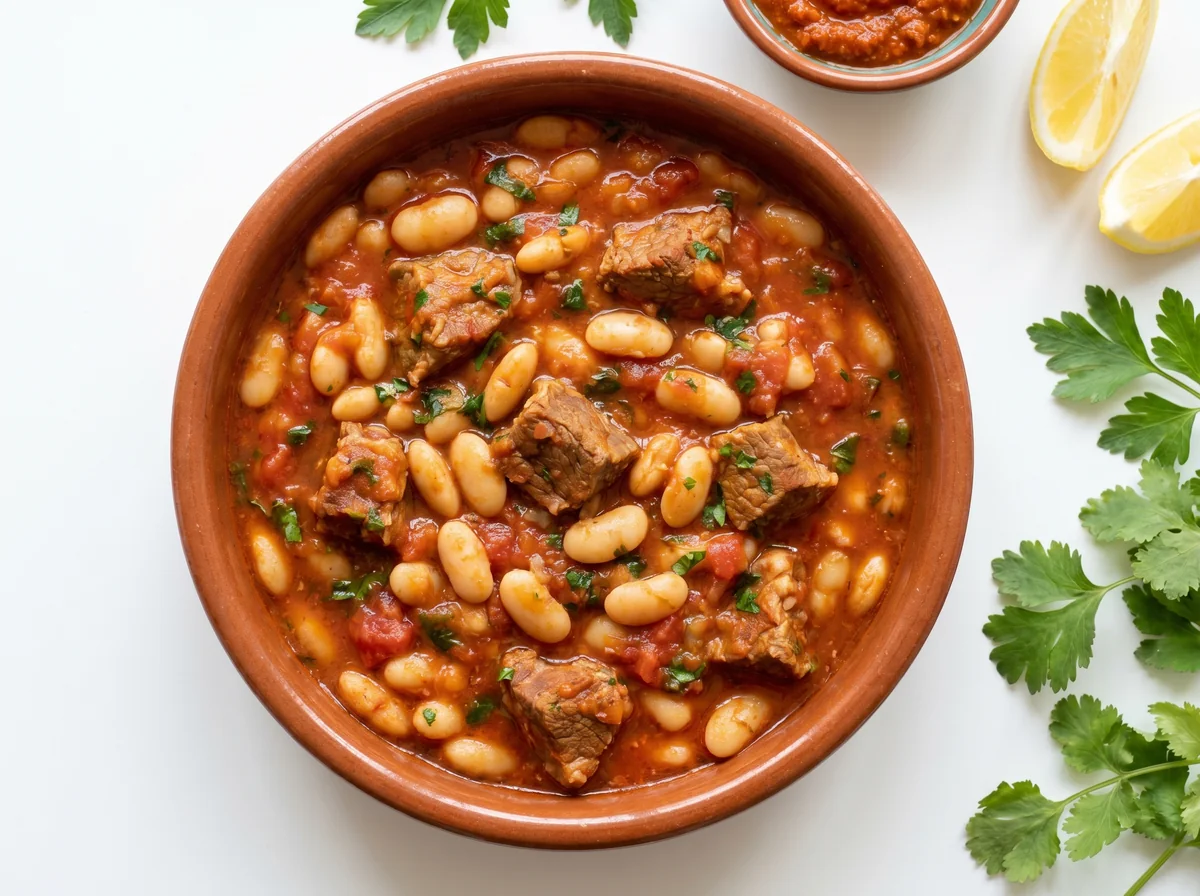
A Levantine stew — green beans (loubia) and beef in a tomato sauce with garlic and coriander, served over rice. Rich in fibre and protein, low glycemic load, and free of common allergens.
Green bean and meat stew (loubia bil-lahm or loubia bi-zeit) is a beloved Levantine home stew, belonging to the family of stews (okra, peas, white beans) that share the same idea: vegetables and meat in a tomato sauce. Green beans are rich in fibre and vitamins, and cooked with meat, garlic, and coriander they make a complete meal over rice.
There is also a vegetarian version with olive oil (loubia bi-zeit) eaten cold. It is affordable, nourishing home food that brings the family together.
Preparation Steps
Brown the meat
Heat oil in a pot and brown the beef cubes over high heat until the surfaces are sealed. Browning locks in the meat juices and gives the stew depth. Add water to cover the meat, put the lid on, and cook for about 45 minutes until tender.
Prep the green beans
Trim the ends of the green beans and cut into medium pieces (or leave whole depending on the variety). Wash and drain. Fresh beans in season are best; frozen beans are practical year-round.
Fry the garlic and coriander
In a separate pan, fry the crushed garlic in a little oil until golden, then add most of the fresh coriander and stir for a minute (frying the garlic and coriander gives the Levantine stew its signature flavour). Add to the pot, or fry the garlic with the onion directly in the pot.
Add the tomatoes
To the tender meat, add the sautéed onion, grated tomatoes, tomato paste, baharat (Gulf spice blend), cumin, and a pinch of salt. Let the sauce boil and thicken slightly, about five minutes.
Cook the green beans
Add the green beans to the pot and stir them with the sauce and meat. Add enough hot water to nearly cover them. Cover and cook on low heat for twenty to twenty-five minutes until the beans are tender, have absorbed the flavour, and the sauce has thickened.
Serve
Stir in the remaining fresh coriander at the end. Taste and adjust salt. Serve the loubia with meat hot over white rice, or on its own with bread for a lighter version. This is a nourishing Levantine home stew that brings together vegetables and protein in a rich tomato sauce.
Blood Sugar Impact
The glycemic index (GI) measures how quickly a food raises blood sugar, while the glycemic load (GL) measures how much a full serving raises it. Together they give the complete picture.
Glycemic Index
GI
15Low
Low0–55Medium56–69High70+
A low value (≤55) means a gradual rise in blood sugar — the most suitable range for diabetes and insulin resistance.
Glycemic Load
GL
2Low
Low0–10Medium11–19High20+
Glycemic load reflects the impact of the full serving. To lower it: take half a serving, or pair the recipe with a source of protein and fiber.
Nutritional Information
Per ServingMakes 5 servings · one serving is about 325 g of raw ingredients
Calories290 kcal14%of Daily Value*
Protein19 g38%of Daily Value*
Carbohydrates15 g5%of Daily Value*
Fat18 g23%of Daily Value*
Fiber5 g18%of Daily Value*
Sodium152 mg7%of Daily Value*
Potassium981 mg21%of Daily Value*
Phosphorus280 mg22%of Daily Value*
* Percent Daily Values are based on a 2,000-calorie diet per FDA food-label reference values — your daily needs may be higher or lower. Values are derived from the recipe's ingredients via the USDA database.
Troubleshooting
The most common problems when preparing Green Bean and Meat Stew (Loubia), and how to fix them:
Green beans lost their colour
Cooked too long over high heat. Cook on low heat for a moderate time until just tender — overcooking over high heat turns green to a dull olive.
Meat is tough
Not cooked long enough before adding the vegetables. Cook the meat until tender (about 45 minutes) before adding the beans, since vegetables cook much faster.
Beans are tough or stringy
Trim the ends and the side string if present, and choose fresh, young beans. Large, older beans tend to be stringy — small, tender ones are best.
Sauce is watery
Too much water. Leave it to boil uncovered to thicken. The desired consistency is a medium sauce that coats the vegetables and meat. Tomato paste helps with texture.
Bland flavour
Not enough fried garlic and coriander. Frying the garlic and coriander in oil gives Levantine stews their signature flavour — never skip this step — and add fresh coriander at the end.
Storage and Make-Ahead
Refrigerator (4°C)
Keep in an airtight container for three days — the flavour improves the next day. Reheat on low heat; keep the rice separate.
Freezer (-18°C)
Freeze (without the rice) for two months in an airtight container. Thaw in the refrigerator and reheat. Green beans freeze well.
Meal prep
Cook the meat and prepare the sauce in advance, then add the green beans when reheating so they keep their colour and texture.
Food safety
Cook the meat thoroughly until tender, and do not leave the stew unrefrigerated for more than two hours.
Tested Ingredient Substitutions
Original Ingredient
Tested Substitute
Ratio
Flavor Difference
Beef
Lamb or vegetarian version (loubia bi-zeit)
same weight
The vegetarian version with olive oil is eaten cold — light and refreshing
White rice
Brown rice or whole-wheat bread
same amount
Higher fibre and lower glycemic load for the meal
Fresh green beans
Frozen green beans
same amount
Practical year-round and retain their nutritional value — add directly without thawing
How Much Does It Make? Scaling Guide
Number of servings
Green beans
Meat
Tomatoes
3 (half recipe)
300 g
200 g
2 pieces
5 (base)
500 g
400 g
4 pieces
10 (large family)
1 kg
800 g
8 pieces
EEINA Nutrition Tip
Green bean and meat stew is a balanced stew: green beans are rich in fibre and vitamins and low in calories, while the meat adds protein and iron. The glycemic load is low — most carbohydrates come from the accompanying rice. To lighten it: use lean meat, serve with a small portion of rice or over brown rice, or make the vegetarian olive oil version with bread.
Add This Recipe to Your Plan
The EEINA app saves your favorite recipes, calculates them from their real ingredients, and shows your daily numbers toward your goal. Try it free now.
What is the difference between loubia bil-lahm and loubia bi-zeit?
Bil-lahm is cooked with beef cubes in tomato sauce and served hot over rice. Bi-zeit is vegetarian, cooked with olive oil and tomatoes and eaten cold as a meze. Same vegetable, two methods.
How do I keep the green beans' colour?
Cook on low heat for a moderate time until just tender — do not overcook. Excessive cooking over high heat fades the green colour to a dull olive.
Is loubia with meat healthy?
Yes — a balanced stew: green beans are rich in fibre and vitamins and low in calories, while the meat provides protein and iron. The glycemic load is low, so manage the portion of accompanying rice.
What is the garlic and coriander fry?
Crushed garlic and chopped fresh coriander fried in oil and added to the stew. This is what gives Levantine stews (loubia, okra, molokhia) their distinctive flavour — they are incomplete without it.