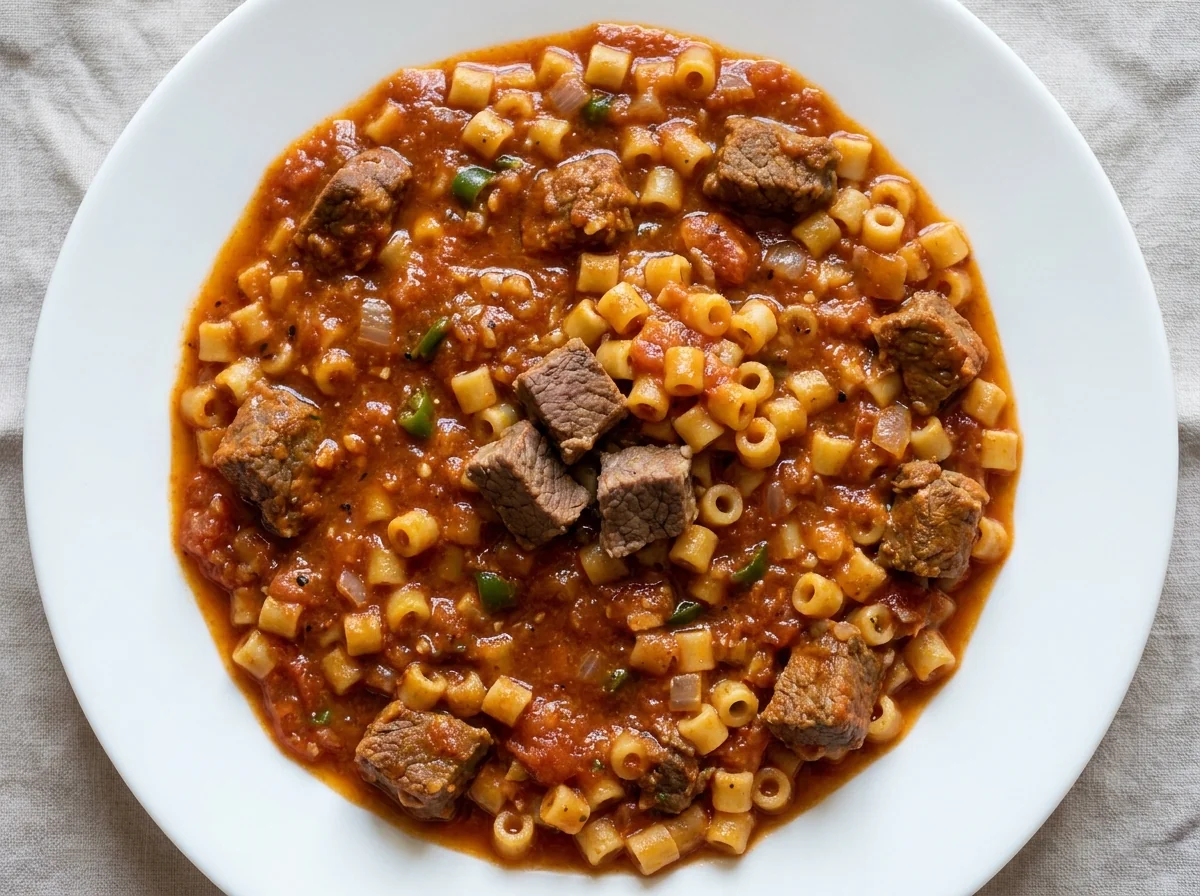
We cook Mbakbaka the way it is cooked in Libyan homes, where the pasta is boiled inside the hot tomato sauce rather than in separate water, so it soaks up its color and flavor and, while it boils, gives off the bubbling sound from which it takes its name.
We add the turmeric and hot chili so it gains its golden color and its bite, and we serve it as a single warm dish that brings the meat and pasta together on the family table.
Preparation Steps
Sautéing the onion and meat
Heat the olive oil in a wide pot and sauté the onion until it wilts, then add the beef cubes and garlic and stir until the meat's color changes.
Building the sauce
Add the tomato paste, turmeric, and black pepper and stir for two minutes until the paste loses its acidity, then add the grated tomato.
Cooking the meat
Cover the meat with the hot water and add the hot green chili, cover the pot, and leave it over medium heat until the meat turns tender and the sauce thickens.
Adding the pasta
Season with the salt and add the pasta to the sauce with a little hot water, lower the heat, and stir from time to time until the pasta is cooked and absorbs the flavor.
Serving
Let the Mbakbaka rest for five minutes until its texture firms up, and serve it hot in deep bowls.
Blood Sugar Impact
The glycemic index (GI) measures how quickly a food raises blood sugar, while the glycemic load (GL) measures how much a full serving raises it. Together they give the complete picture.
Glycemic Index
GI
43Low
Low0–55Medium56–69High70+
A low value (≤55) means a gradual rise in blood sugar — the most suitable range for diabetes and insulin resistance.
Glycemic Load
GL
19Medium
Low0–10Medium11–19High20+
Glycemic load reflects the impact of the full serving. To lower it: take half a serving, or pair the recipe with a source of protein and fiber.
Nutritional Information
Per ServingMakes 4 servings · one serving is about 320 g of raw ingredients
Calories514 kcal26%of Daily Value*
Protein27 g54%of Daily Value*
Carbohydrates49 g18%of Daily Value*
Fat23 g29%of Daily Value*
Fiber4 g14%of Daily Value*
Sodium375 mg16%of Daily Value*
Potassium948 mg20%of Daily Value*
Phosphorus391 mg31%of Daily Value*
* Percent Daily Values are based on a 2,000-calorie diet per FDA food-label reference values — your daily needs may be higher or lower. Values are derived from the recipe's ingredients via the USDA database.
Troubleshooting
The most common problems when preparing Libyan Mbakbaka (Spiced Tomato Pasta with Beef), and how to fix them:
The pasta stuck to the bottom of the pot
Stir from time to time and keep the heat low, and add the hot water gradually so the sauce does not dry out.
The dish is dry and the sauce is scant
Add hot water little by little while the pasta cooks, for it drinks up a lot of liquid.
The meat is still tough
Cook the meat in the sauce until it turns tender before adding the pasta, for the meat needs more time than the pasta.
Storage and Make-Ahead
Refrigerator
Keep it in an airtight container for up to two days, and reheat it with a splash of hot water because the pasta absorbs the sauce after cooling.
Freezing
It is best to freeze the meat with the sauce on its own for up to a month, then cook the pasta fresh at serving so its texture stays good.
Tested Ingredient Substitutions
Original Ingredient
Tested Substitute
Ratio
Flavor Difference
beef
lamb or chicken
same weight, 400 g
Chicken cooks faster and lamb is closer to traditional Libyan cooking
small pasta
whole wheat pasta
same weight, 200 g
It raises the fiber and lowers the glycemic load a little
grated tomato
canned crushed tomato
same amount, 400 g
Practical out of season, with attention to its salt
hot green chili
sweet paprika
as desired
It gives color and flavor without heat
How Much Does It Make? Scaling Guide
Ingredient
Half amount
Base amount (base)
Double
Beef
200 g
400 g
800 g
Pasta
100 g
200 g
400 g
Onion
75 g
150 g
300 g
Tomato paste
22 g
45 g
90 g
Grated tomatoes
200 g
400 g
800 g
Salt
1.5 g
3 g
6 g
EEINA Nutrition Tip
Cook the pasta directly in the sauce while adding the hot water gradually, for this is the secret to Mbakbaka's flavor, and stir from time to time so it does not stick to the bottom.
Add This Recipe to Your Plan
The EEINA app saves your favorite recipes, calculates them from their real ingredients, and shows your daily numbers toward your goal. Try it free now.