Dishisha is a venerable Maghrebi soup for which the Libyan table is famous, prepared especially in Ramadan.
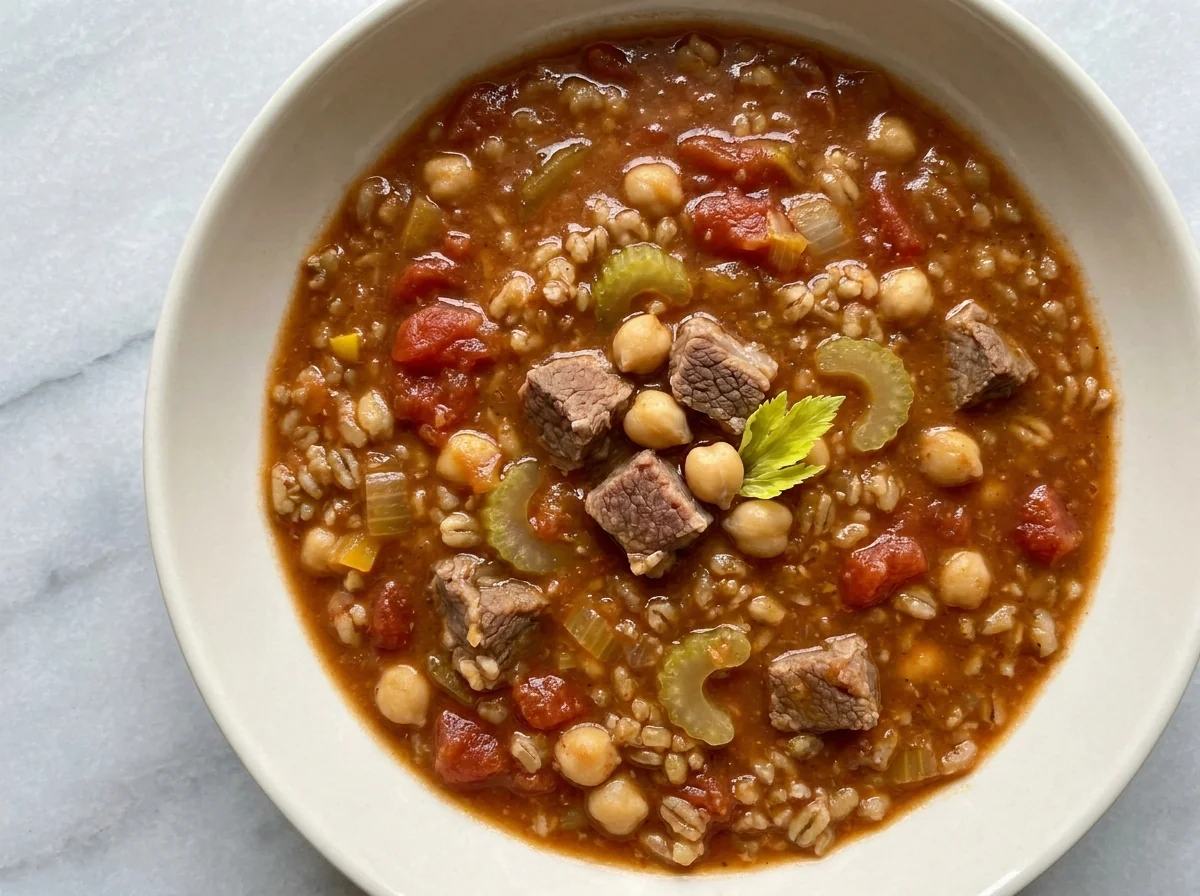
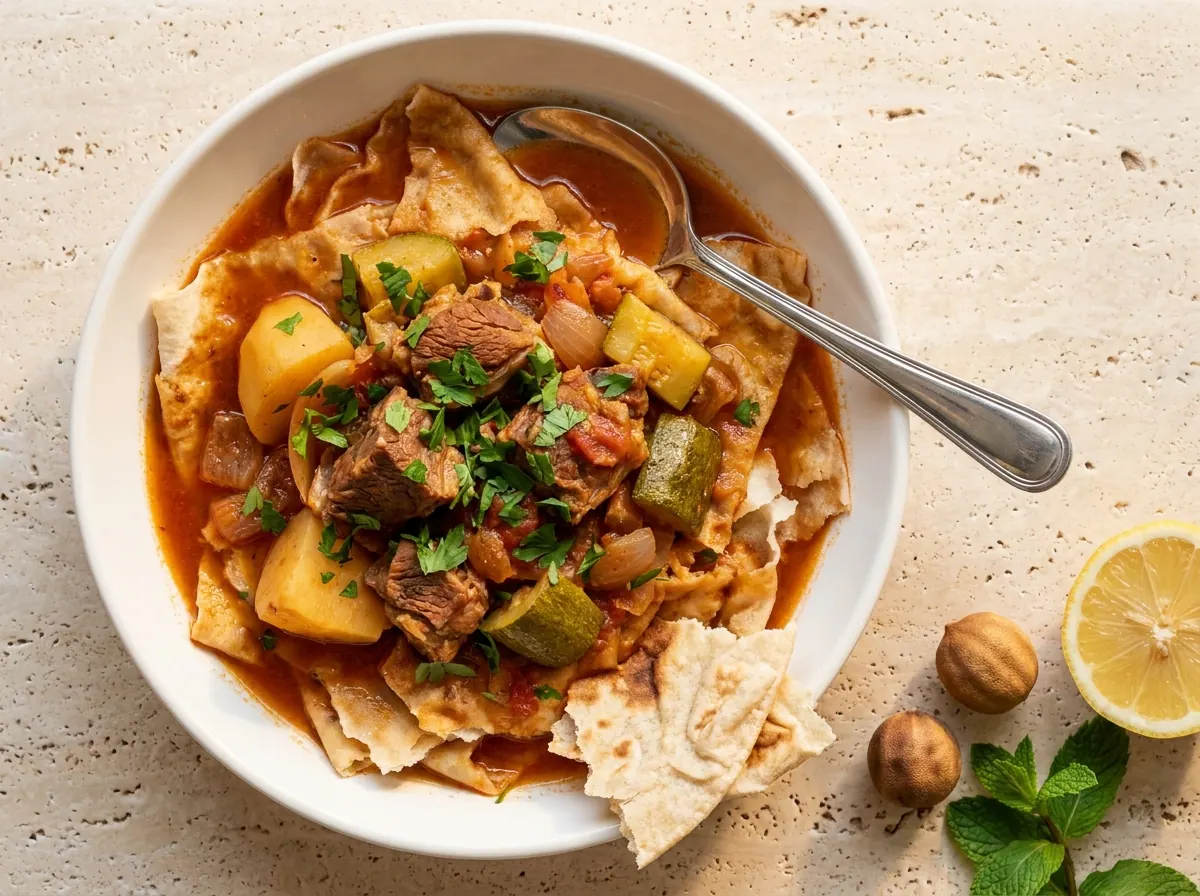
Its name comes from cracked barley, that is barley coarsely broken, which gives the soup its thick, rich texture. We present it as it is cooked in Libyan homes, meat, chickpeas, and barley in a spiced tomato broth, finished with mint and lemon.
Preparation Steps
Heating the oil and browning the meat
Heat the olive oil over medium heat, then add the onion and stir it for five minutes until it softens and turns translucent, as this is the aromatic base that carries the flavor of the whole soup. Add the meat and let it brown on all sides, because browning gives the broth a depth and color that boiling alone cannot achieve.
Adding the garlic, spices, and tomato paste
Add the garlic, celery, black pepper, turmeric, cayenne, and tomato paste, and stir the mixture for two to three minutes over low heat. Toasting the paste and spices in the oil opens up their flavor and removes the raw sharpness of the paste, and this is a step we take care with so no uncooked sour taste remains in the soup.
Adding the tomatoes, chickpeas, and water
Add the chopped tomatoes, the soaked chickpeas, and the water, raise the heat until it begins to boil, then lower it. Leave the pot over low heat until the meat softens and the chickpeas start to cook through, and adjust the salt at this stage because the chickpeas absorb it slowly and need time to balance.
Adding the barley and slow cooking
Add the soaked cracked barley and stir so it does not stick to the bottom, then leave it to cook over low heat for about twenty minutes, stirring now and then. The barley releases its starch gradually so the soup becomes thick and creamy, and this rich, gentle texture is what sets dishisha apart on the Ramadan table.
Garnishing and serving
Taste and adjust the salt at the end, then sprinkle the parsley and dried mint and serve the soup hot with the lemon quarters. A squeeze of lemon before eating refreshes the dish and balances the richness of the meat and barley, and we set it aside so each eater can add it to their own taste.
Blood Sugar Impact
The glycemic index (GI) measures how quickly a food raises blood sugar, while the glycemic load (GL) measures how much a full serving raises it. Together they give the complete picture.
Glycemic Index
GI
26Low
Low0–55Medium56–69High70+
A low value (≤55) means a gradual rise in blood sugar — the most suitable range for diabetes and insulin resistance.
Glycemic Load
GL
8Low
Low0–10Medium11–19High20+
Glycemic load reflects the impact of the full serving. To lower it: take half a serving, or pair the recipe with a source of protein and fiber.
Nutritional Information
Per ServingMakes 6 servings · one serving is about 460 g of raw ingredients
Calories369 kcal18%of Daily Value*
Protein19 g38%of Daily Value*
Carbohydrates42 g15%of Daily Value*
Fat14 g18%of Daily Value*
Fiber10 g36%of Daily Value*
Sodium447 mg19%of Daily Value*
Potassium732 mg16%of Daily Value*
Phosphorus266 mg21%of Daily Value*
* Percent Daily Values are based on a 2,000-calorie diet per FDA food-label reference values — your daily needs may be higher or lower. Values are derived from the recipe's ingredients via the USDA database.
Troubleshooting
The most common problems when preparing Libyan Barley Soup (Dishisha), and how to fix them:
The soup became too thick after it cooled
The barley absorbs the liquid over time, so add hot water and stir over low heat until the desired creamy texture returns.
The meat stayed tough
The meat did not get its time over low heat before adding the barley, so extend its cooking before the barley until it softens, because adding the barley early weighs down the pot and makes the meat harder to cook through.
The broth tastes slightly sour
The tomato paste was not cooked enough, so let it toast in the oil with the spices before adding the liquid until the raw sharpness fades.
Storage and Make-Ahead
The refrigerator
Keeps in a sealed container for up to three days, and is reheated with a splash of hot water because it thickens after chilling.
The freezer
Freezes for up to a month in sealed containers, and is thawed in the refrigerator overnight before reheating over low heat.
Tested Ingredient Substitutions
Original Ingredient
Tested Substitute
Ratio
Flavor Difference
lamb
beef cut into cubes
350 g
An available substitute that gives a rich broth, with the cooking time extended a little until it softens.
cracked barley
coarse bulgur
200 g
A substitute close in texture for those who cannot find cracked barley, with the cooking time reduced a little as it cooks faster.
chickpeas
soaked white beans
90 g
A legume substitute that gives a similar density for those who do not want chickpeas.
celery
parsley with a little dill
60 g
A green aromatic substitute close to the flavor of celery when it is not available.
How Much Does It Make? Scaling Guide
Ingredient
For 3 servings
For 6 servings (base)
For 12 servings
Lamb (g)
175
350
700
Cracked barley (g)
100
200
400
Chickpeas (g)
45
90
180
Onion (g)
65
130
260
Tomato paste (g)
30
60
120
Water (ml)
750
1500
3000
EEINA Nutrition Tip
Soak the barley and chickpeas together overnight, as this shortens the cooking time and gives the soup a uniform texture. And stir the barley after adding it so it does not stick to the bottom of the pot and burn.
Add This Recipe to Your Plan
The EEINA app saves your favorite recipes, calculates them from their real ingredients, and shows your daily numbers toward your goal. Try it free now.
Yes, we soak it overnight so it softens, shortens the cooking time, and gives the soup a uniform creamy texture instead of the barley staying grainy and hard.
What is the difference between dishisha and harira?
Both are Maghrebi soups, but dishisha is based mainly on cracked barley that gives it a rich texture, while harira relies on lentils, chickpeas, and tomatoes and is sometimes thickened with flour.
Does the dish contain gluten?
Yes, barley contains gluten, so the dish does not suit anyone avoiding it except by swapping the barley for a gluten-free substitute, with a change in texture and flavor.