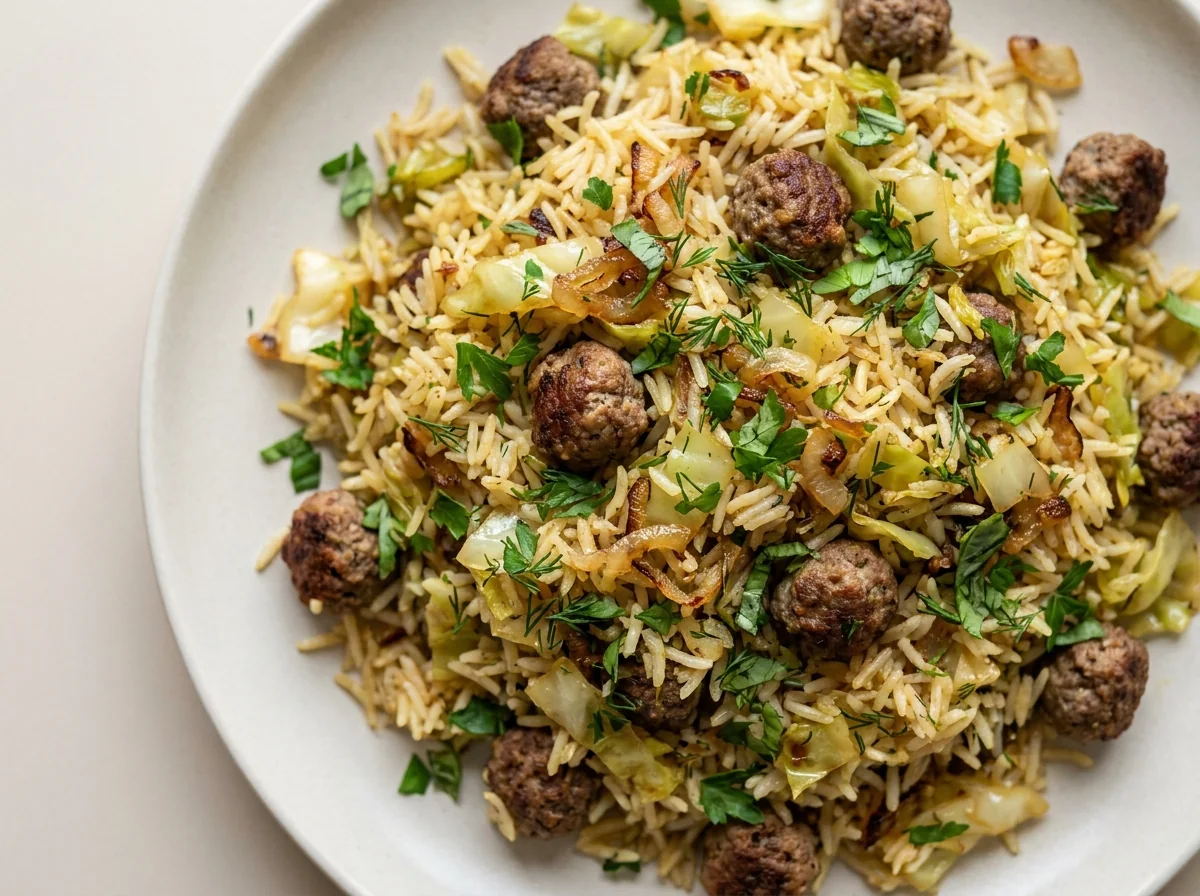
Kalam Polo is a time-honored Shirazi dish that blends fragrant rice with sautéed cabbage, green herbs, and small meatballs seasoned with Persian spices.
Its balance between the aroma of the spices and the texture of the cabbage made it one of the most beloved rice dishes on the tables of Shiraz.
Preparation Steps
Sautéing the cabbage
Sauté half the onion in the olive oil until it wilts, then add the chopped cabbage and sauté it for about ten minutes until it softens and turns golden, and season it with the Persian spices, salt, and pepper.
Mixing the meatballs
Knead the ground meat with the grated onion, turmeric, salt, and pepper until it binds, so the meatballs hold together and do not fall apart when cooking.
Shaping and browning the meatballs
Shape small walnut-sized balls and brown them in a little oil until golden on every side and they reach a safe internal temperature.
Washing the rice
Wash the rice until the water runs clear; this removes the excess starch and gives us separate, fluffy rice.
Parboiling the rice
Boil plenty of salted water and parboil the rice for five to seven minutes until the edge softens while the core stays firm, then add the chopped herbs for one minute and drain the mixture.
Preparing the tahdig base
Heat the oil in the pot and spread a layer of rice mixed with the saffron water on the bottom to form the tahdig (the crispy Persian rice crust).
Arranging the layers
Stack alternating layers of rice, then the sautéed cabbage, then the browned meatballs, and finish with a layer of rice covering the surface.
Steaming the rice
Shape the rice into a mound and poke five holes with the handle of a spoon, cover the pot with a lid wrapped in a towel, and leave it over low heat for forty-five minutes until it cooks and the crust forms.
Serving
Flip the rice gently onto a plate, distribute the meatballs over the surface, and serve the crispy tahdig pieces on the side.
Blood Sugar Impact
The glycemic index (GI) measures how quickly a food raises blood sugar, while the glycemic load (GL) measures how much a full serving raises it. Together they give the complete picture.
Glycemic Index
GI
65Medium
Low0–55Medium56–69High70+
A low value (≤55) means a gradual rise in blood sugar — the most suitable range for diabetes and insulin resistance.
Glycemic Load
GL
39High
Low0–10Medium11–19High20+
Glycemic load reflects the impact of the full serving. To lower it: take half a serving, or pair the recipe with a source of protein and fiber.
Nutritional Information
Per ServingMakes 6 servings · one serving is about 285 g of raw ingredients
Calories549 kcal27%of Daily Value*
Protein20 g40%of Daily Value*
Carbohydrates63 g23%of Daily Value*
Fat24 g31%of Daily Value*
Fiber3 g11%of Daily Value*
Sodium275 mg12%of Daily Value*
* Percent Daily Values are based on a 2,000-calorie diet per FDA food-label reference values — your daily needs may be higher or lower. Values are derived from the recipe's ingredients via the USDA database.
Troubleshooting
The most common problems when preparing Cabbage Rice with Meatballs (Kalam Polo), and how to fix them:
The meatballs fall apart
We did not knead the meat enough or the grated onion was missing; knead it well until it binds and add the grated onion that holds the mixture together.
The rice is wet
We added the cabbage raw or wet; sauté it until its water evaporates and it turns golden before arranging the layers.
The flavor is dull
We were stingy with the Persian spices and herbs; season the cabbage well with the spices and add the fresh herbs at the end of parboiling the rice.
No tahdig crust forms
The heat is too low or there is too little oil; make sure there is enough oil at the bottom and use medium heat for the first ten minutes.
Storage and Make-Ahead
Refrigerator
Keep it in an airtight container for up to three days along with the meatballs.
Reheating
Sprinkle a little water and reheat it covered over low heat until it is heated through and turns soft again.
Freezer
Freeze the rice and meatballs for up to a month in an airtight container, and thaw it in the refrigerator before reheating.
Tested Ingredient Substitutions
Original Ingredient
Tested Substitute
Ratio
Flavor Difference
ground beef
ground lamb
same weight, 450 g
Closer to the traditional Shirazi version and richer in flavor.
cabbage
kohlrabi
same weight, 400 g
It is the original ingredient in Shiraz; firmer with a milder flavor.
olive oil
vegetable oil
same volume, 75 ml
A neutral-flavored alternative in the same amount.
fresh basil
fresh mint
same weight, 30 g
Gives a different refreshing aroma that suits the dish.
How Much Does It Make? Scaling Guide
Ingredient
2 servings
4 servings (base)
8 servings
Basmati rice
133 g
267 g
534 g
Chopped cabbage
133 g
267 g
534 g
Ground beef
150 g
300 g
600 g
Onion
83 g
167 g
334 g
Mixed Persian spices
3 g
5 g
10 g
EEINA Nutrition Tip
Sauté the cabbage until it wilts and turns golden before mixing it with the rice, because raw cabbage releases water that makes the rice wet and dulls its flavor.
Add This Recipe to Your Plan
The EEINA app saves your favorite recipes, calculates them from their real ingredients, and shows your daily numbers toward your goal. Try it free now.
The original Shirazi version uses kohlrabi, but cabbage is a common, available alternative that gives a softer texture and a close flavor.
What are Persian spices (advieh)?
It is a Persian blend that brings together cinnamon, cardamom, dried rose, cumin, and others, giving the dish its distinctive aroma, and it is available ready-made at spice shops.
How do I keep the meatballs from falling apart?
Knead the meat with the grated onion well until it binds and brown it gently without stirring early so a golden surface forms that holds its shape.