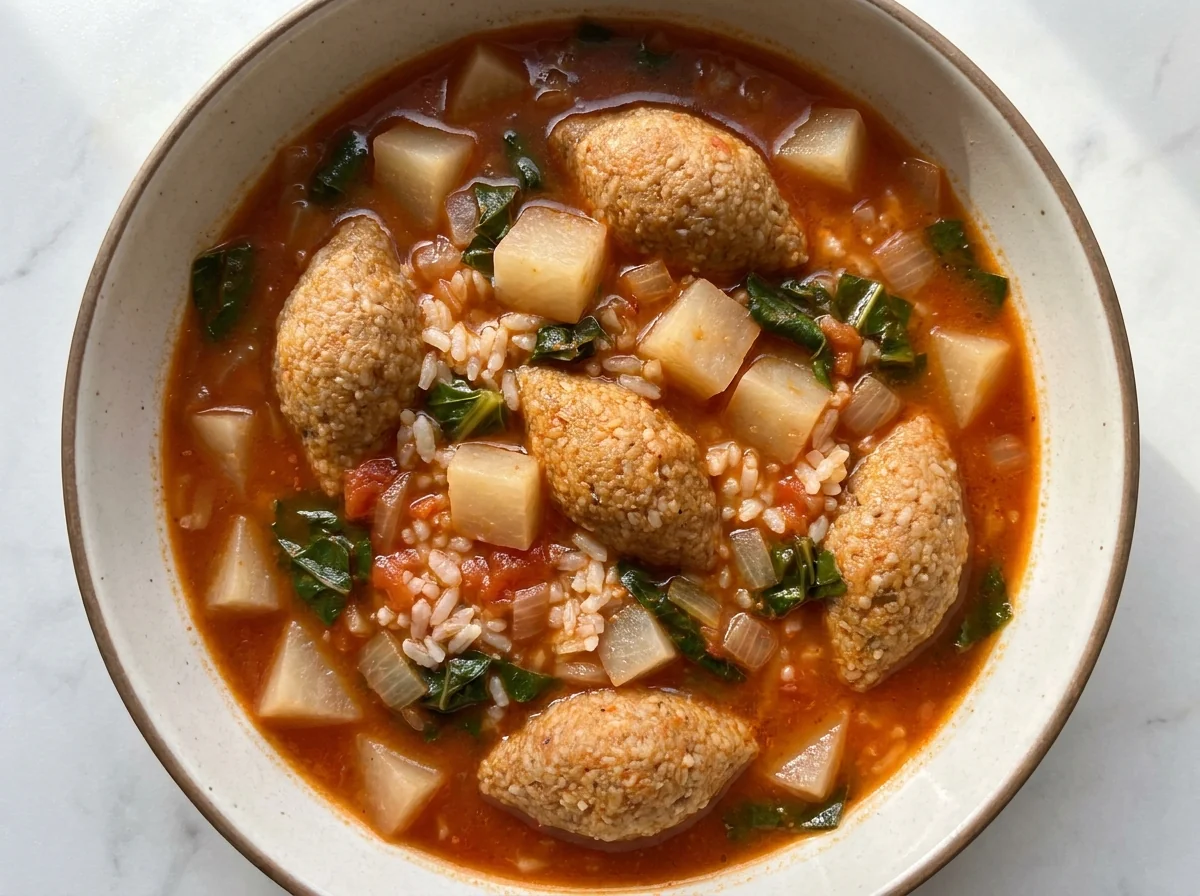
Kubbat Hamudh is one of Iraq's winter dishes that combines the sourness of lemon with the sweetness of toasted turnip and the texture of ground rice, with coarse bulgur kibbeh balls dropped into it.
We present it at EEINA as the Baghdadi homes cook it, a single, fully flavored dish that brings vegetables, grains, and meat together in one pot.
Preparation Steps
Prepare the vegetables
Chop the chard, peel the turnip and cut it into even medium cubes, and finely chop the onion so the flavor distributes through the broth (even cubes ensure uniform cooking).
Toast the base
Toast the turnip cubes in the oil over medium heat, then add the chopped onion and chard and keep stirring until the vegetables wilt and change color (toasting deepens the natural sweetness of the turnip before boiling).
Start the broth
Finely grind a third of the rice and add it with the tomato paste, grated tomatoes, and boiling water until the liquid rises above half the pot, and stir until the ground rice dissolves and thickens to a light consistency.
Sour it and cook the rice
Wait for the boil, then add the rest of the rice, salt, black pepper, and lemon juice, and let it boil until the rice is cooked and the liquid reduces to half the pot with a balanced acidity forming.
Drop in the bulgur kibbeh
Gently add the coarse bulgur kibbeh balls stuffed with beef, making sure the meat inside has reached seventy-one degrees Celsius per the FSIS standard after cooking, then cover the pot.
Cook until done
Let it cook over gentle heat for about half an hour with a light stir every two minutes until the kibbeh is cooked and the broth is uniform (the gentle stirring prevents the kibbeh from sticking to the bottom without breaking it apart).
Blood Sugar Impact
The glycemic index (GI) measures how quickly a food raises blood sugar, while the glycemic load (GL) measures how much a full serving raises it. Together they give the complete picture.
Glycemic Index
GI
23Low
Low0–55Medium56–69High70+
A low value (≤55) means a gradual rise in blood sugar — the most suitable range for diabetes and insulin resistance.
Glycemic Load
GL
19Medium
Low0–10Medium11–19High20+
Glycemic load reflects the impact of the full serving. To lower it: take half a serving, or pair the recipe with a source of protein and fiber.
Nutritional Information
Per ServingMakes 6 servings · one serving is about 600 g of raw ingredients
Calories489 kcal24%of Daily Value*
Protein15 g30%of Daily Value*
Carbohydrates96 g35%of Daily Value*
Fat7 g9%of Daily Value*
Fiber14 g50%of Daily Value*
Sodium471 mg20%of Daily Value*
* Percent Daily Values are based on a 2,000-calorie diet per FDA food-label reference values — your daily needs may be higher or lower. Values are derived from the recipe's ingredients via the USDA database.
Troubleshooting
The most common problems when preparing Iraqi Sour Turnip Kibbeh Soup (Kubbat Hamudh Shalgham), and how to fix them:
The broth is thicker than needed
The rice absorbed the liquid; add boiling water gradually and stir until you reach the desired soup consistency.
The turnip stayed firm
It was cut too large or the acid was added early, slowing its cooking; cook it before adding the lemon until it softens, then sour the broth.
Storage and Make-Ahead
Refrigerator
Keep it in a sealed container for up to three days; it thickens after chilling, so thin it with boiling water when reheating over gentle heat.
Freezing
Freeze it for up to a month, and it is best to freeze it before adding the kibbeh to preserve its texture, then cook it fresh at serving.
Tested Ingredient Substitutions
Original Ingredient
Tested Substitute
Ratio
Flavor Difference
turnip
green squash (zucchini)
600 g
A milder-flavored substitute when turnip is unavailable, with loss of the distinctive sweetness.
coarse bulgur kibbeh stuffed with beef
coarse bulgur kibbeh stuffed with lamb
500 g
Lamb is closer to the traditional Iraqi flavor and richer in fat.
short-grain white rice
ground basmati rice
180 g
Available when in stock, with a slightly less viscous broth consistency.
fresh lemon juice
pomegranate molasses
45 ml
Gives deep acidity with a dark color and an alternative Iraqi flavor.
How Much Does It Make? Scaling Guide
Ingredient
2 servings
4 servings
8 servings
Cubed turnip
200 g
400 g
800 g
Chopped onion
50 g
100 g
200 g
Short-grain rice
60 g
120 g
240 g
Grated tomatoes
80 g
160 g
320 g
Fresh lemon juice
20 ml
40 ml
80 ml
Boiling water
530 ml
1070 ml
2130 ml
Stuffed bulgur kibbeh
165 g
335 g
670 g
EEINA Nutrition Tip
Grinding a third of the rice and adding it first gives the broth a natural creamy texture without the need for starch or flour.
Add This Recipe to Your Plan
The EEINA app saves your favorite recipes, calculates them from their real ingredients, and shows your daily numbers toward your goal. Try it free now.
What is the difference between bulgur kibbeh and dough kibbeh?
Bulgur kibbeh is made from coarse bulgur or cracked wheat and has a coarse, grainy texture, while dough kibbeh is wrapped in a smooth flour dough as in Kubbat Saray.
When do I add the lemon juice?
Add it after the turnip softens and before adding the kibbeh, since adding it early to the raw vegetables slows their cooking.