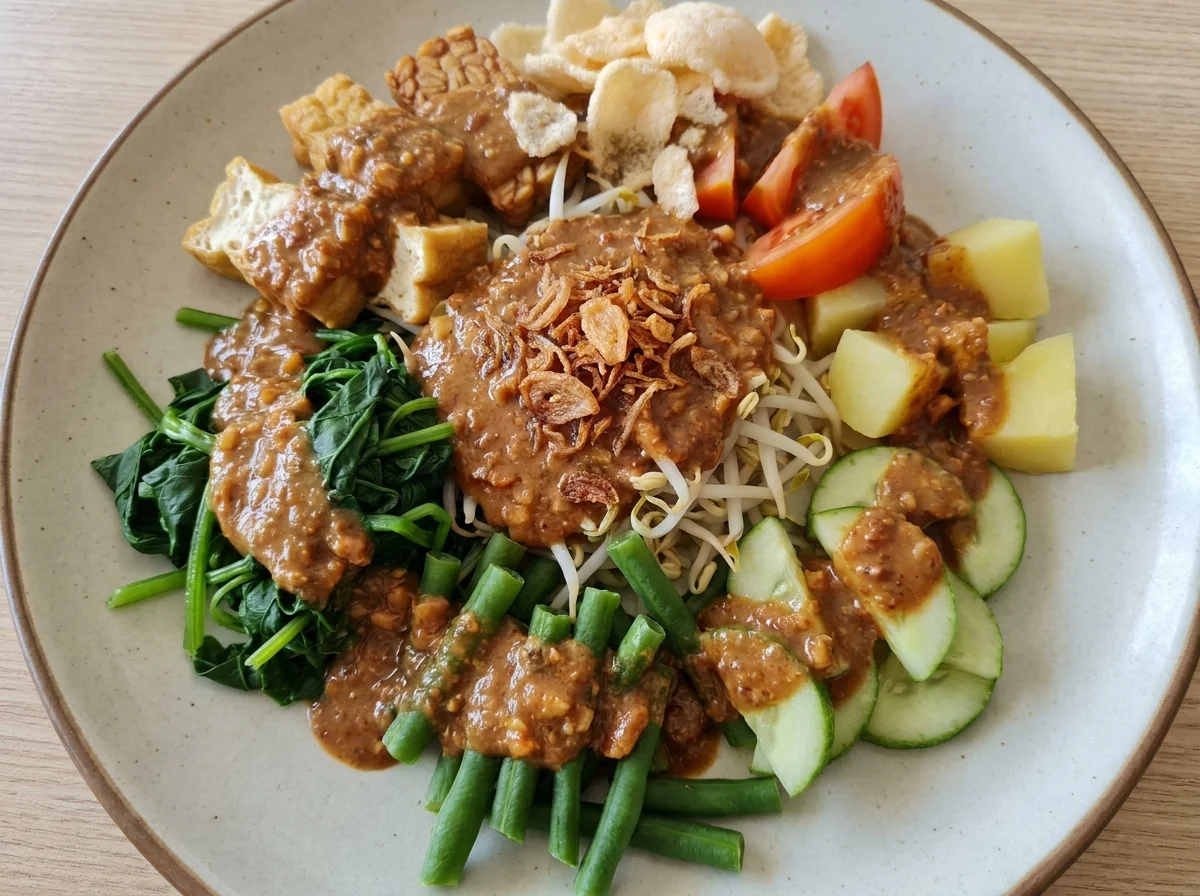
Gado-gado is one of Indonesia's most famous dishes, and its name literally means "mix mix" in reference to combining the boiled vegetables with the tofu, tempeh, and peanut sauce.
It is traditionally served as a standalone lunch meal, with its ingredients tossed while eating until they're coated in the sauce. The version here is purely plant-based: we left out the shrimp paste and boiled egg that some traditional versions use, and kept to a fully plant-based peanut sauce.
Preparation Steps
Fry the tofu and tempeh
Pat the tofu cubes dry with a paper towel, heat the vegetable oil in a skillet over medium-high heat, then fry the tofu cubes and tempeh (fermented soybeans) cubes until golden and crisp on all sides. Lift them onto paper towel to absorb the oil.
Blanch the vegetables
Wash the green beans, spinach, and bean sprouts. Bring salted water to a boil and blanch the green beans for three minutes, then add the bean sprouts and spinach for just one minute until they wilt and keep their color. Drain them immediately under cold water to preserve their crunch and color.
Make the peanut sauce
In a bowl, mix the peanut butter with the minced garlic, hot red pepper, dark soy sauce, date syrup, and tamarind paste. Add the warm water gradually and stir until the sauce becomes smooth and pourable. Taste and adjust the salt, sweetness, and acidity to your liking.
Arrange the plate
Arrange the boiled potato, green beans, spinach, bean sprouts, cucumber slices, and tomato in a wide dish, and scatter the fried tofu and tempeh cubes over them.
Serve
Pour the peanut sauce generously over the vegetables and garnish with the crispy fried onions. Serve gado-gado right away and toss its ingredients while eating; it can be served with cooked rice.
Blood Sugar Impact
The glycemic index (GI) measures how quickly a food raises blood sugar, while the glycemic load (GL) measures how much a full serving raises it. Together they give the complete picture.
Glycemic Index
GI
37Low
Low0–55Medium56–69High70+
A low value (≤55) means a gradual rise in blood sugar — the most suitable range for diabetes and insulin resistance.
Glycemic Load
GL
16Medium
Low0–10Medium11–19High20+
Glycemic load reflects the impact of the full serving. To lower it: take half a serving, or pair the recipe with a source of protein and fiber.
Nutritional Information
Per ServingMakes 3 servings · one serving is about 545 g of raw ingredients
Calories724 kcal36%of Daily Value*
Protein40 g80%of Daily Value*
Carbohydrates52 g19%of Daily Value*
Fat46 g59%of Daily Value*
Fiber9 g32%of Daily Value*
Sodium616 mg27%of Daily Value*
* Percent Daily Values are based on a 2,000-calorie diet per FDA food-label reference values — your daily needs may be higher or lower. Values are derived from the recipe's ingredients via the USDA database.
Troubleshooting
The most common problems when preparing Indonesian Gado-Gado with Peanut Sauce, and how to fix them:
The sauce is too thick and doesn't flow
Peanut butter varies in thickness. Add the warm water spoonful by spoonful while stirring until it reaches the desired pourable consistency.
The tofu came out soft, not crisp
Moisture is the cause. Squeeze and dry the tofu well before frying, and let the cubes brown without stirring much so a crust forms.
The vegetables became soft and lost their color
They were over-blanched. Blanch each type for only the time given, then drain immediately under cold water to stop the cooking and set the color.
The tempeh tastes slightly bitter
This is normal in some types. Boiling the tempeh for two minutes before frying eases the bitterness, or choose fresh tempeh that isn't dark.
Storage and Make-Ahead
Right away
Serve right away to keep the vegetables crisp and the tofu crunchy.
In the fridge
Keep the components and sauce separate for up to two days, and combine at serving time. The sauce may thicken in the cold, so thin it with a little warm water.
Freezing
Not suitable for freezing because the boiled vegetables and bean sprouts lose their texture.
Tested Ingredient Substitutions
Original Ingredient
Tested Substitute
Ratio
Flavor Difference
Tempeh
Extra tofu or boiled edamame
1:1
An available soy substitute for those who can't find tempeh, with the protein staying high
Peanut butter
Almond butter
1:1
For those avoiding peanuts, but it shifts the allergen to tree nuts
Date syrup
Maple syrup
1:1
Both are plant-based sweeteners that replace the traditional brown sugar
Tamarind paste
Lemon juice
15 g for a spoonful of juice
Gives the same acidity if tamarind isn't available
Potato
Cooked rice cubes
~
Close to the traditional Indonesian lontong (rice cake)
How Much Does It Make? Scaling Guide
Ingredient
3 servings
1.5 servings
6 servings
Tofu
250 g
125 g
500 g
Tempeh
200 g
100 g
400 g
Peanut butter
150 g
75 g
300 g
EEINA Nutrition Tip
Tempeh is one of the fermented soy foods, and fermentation makes its protein and minerals easier to digest and absorb. And although some fermented foods may contain a trace of vitamin B12, the reliable plant-based source of this vitamin remains fortified foods or supplements, since plants don't produce B12 naturally.
Add This Recipe to Your Plan
The EEINA app saves your favorite recipes, calculates them from their real ingredients, and shows your daily numbers toward your goal. Try it free now.
It means "mix mix" in Indonesian, because the dish is a mixture of boiled vegetables, tofu, and tempeh all tossed together with the peanut sauce while eating.
Is this version fully plant-based?
Yes, we left out the shrimp paste and boiled egg that some traditional versions use, making it purely plant-based and relying on soy and peanut protein.
What's the difference between tofu and tempeh?
Both are from soybeans, but tofu is made from curdled soy milk and has a soft texture, while tempeh is whole fermented soybeans, so its flavor is deeper and its texture firmer.
How do I add even more protein?
Increase the amount of tofu and tempeh, or add bean sprouts and edamame. Combining soy and peanut gives a plant protein complete in amino acids.