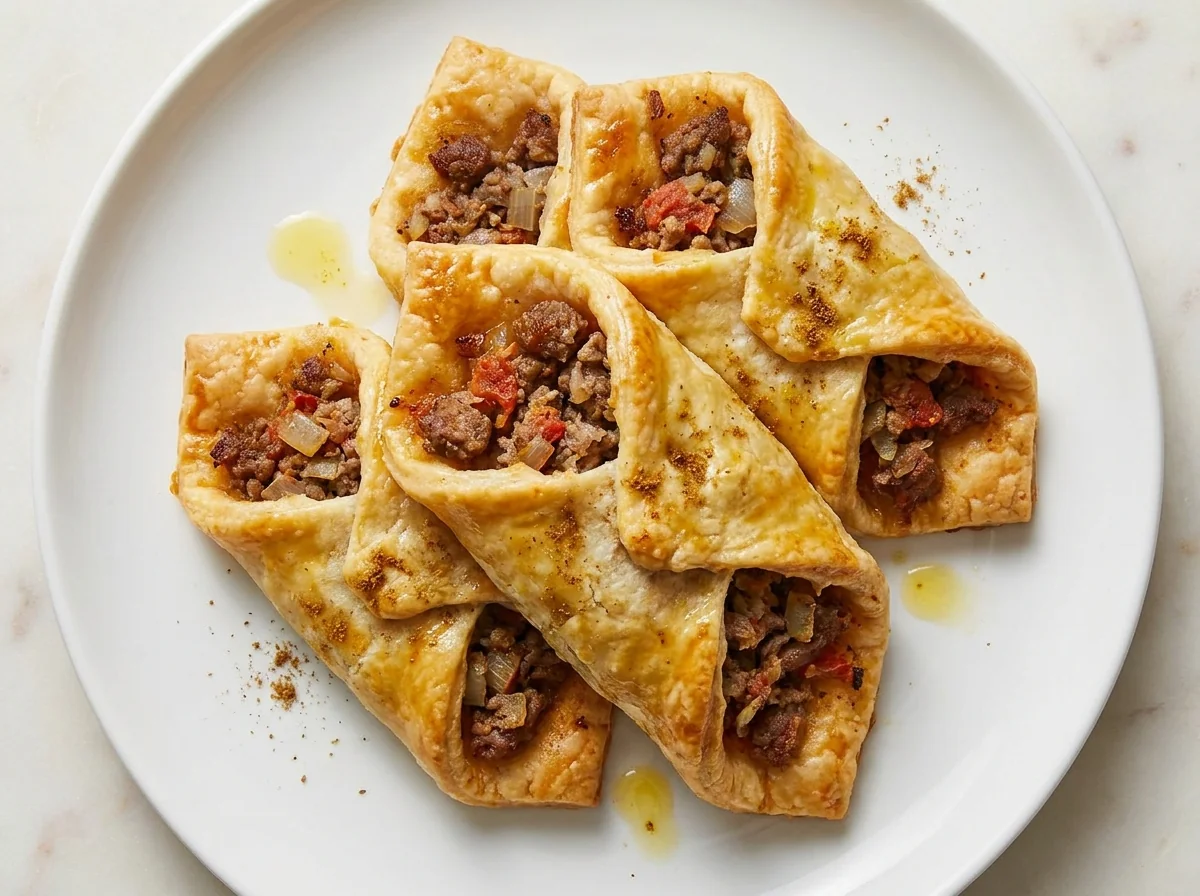
Yaghmash is a stuffed pastry that spread through the Hejaz as a popular dish in Makkah and Madinah, and it is often made during Ramadan as an alternative to sambousek.
Its dough is rolled into discs and filled with seasoned ground meat, then folded, brushed, and baked until browned.
Preparation Steps
Preparing the dough
Dissolve the yeast in the lukewarm water, then mix the flour, salt, ghee, and egg and add the water gradually until a soft dough comes together, and knead for about ten minutes until it becomes smooth and elastic, because good kneading develops the gluten so the dough rolls out without tearing.
Proofing the dough
Cover the dough and leave it in a warm place for about an hour until it doubles in size, because proofing gives the yaghmash a light, tender texture.
Preparing the filling
Saute the onion in a little oil until it softens, then add the ground meat and stir until it changes color, because sauteing the meat first releases its moisture and concentrates its flavor.
Seasoning the filling
Add the grated tomato, cumin, black pepper, and salt, and cook until the moisture dries up and the meat reaches 71 Celsius (160 Fahrenheit), because this temperature ensures the ground meat is safe, and drying out the moisture keeps the dough from getting soggy.
Dividing the dough
Divide the dough into equal balls and roll each ball into a thin disc, because even discs ensure uniform baking in the oven.
Filling and folding
Place a portion of the cooled filling in the center of each disc, fold it, and seal the edges tightly, because the cold filling is easier to seal and keeps the dough from opening during baking.
Brushing and baking
Arrange the discs on a tray and brush them with oil, then bake them in a preheated oven at 180 Celsius for about twenty-five minutes until they brown on top and bottom, because the oil gives a golden color and the controlled heat cooks the dough without drying it out.
Blood Sugar Impact
The glycemic index (GI) measures how quickly a food raises blood sugar, while the glycemic load (GL) measures how much a full serving raises it. Together they give the complete picture.
Glycemic Index
GI
70High
Low0–55Medium56–69High70+
A low value (≤55) means a gradual rise in blood sugar — the most suitable range for diabetes and insulin resistance.
Glycemic Load
GL
44High
Low0–10Medium11–19High20+
Glycemic load reflects the impact of the full serving. To lower it: take half a serving, or pair the recipe with a source of protein and fiber.
Nutritional Information
Per ServingMakes 6 servings · one serving is about 305 g of raw ingredients
Calories743 kcal37%of Daily Value*
Protein25 g50%of Daily Value*
Carbohydrates67 g24%of Daily Value*
Fat41 g53%of Daily Value*
Fiber4 g14%of Daily Value*
Sodium480 mg21%of Daily Value*
Potassium475 mg10%of Daily Value*
Phosphorus281 mg22%of Daily Value*
* Percent Daily Values are based on a 2,000-calorie diet per FDA food-label reference values — your daily needs may be higher or lower. Values are derived from the recipe's ingredients via the USDA database.
Troubleshooting
The most common problems when preparing Hejazi Meat-Stuffed Pastry (Yaghmash), and how to fix them:
The dough opens during baking
Seal the edges firmly by pressing, and make sure the filling is cold and dry, not wet.
The bottom does not brown
Move the tray to the lower rack at the end of baking, and make sure the oven is preheated.
The dough is tough after baking
Proof it a little longer and do not overdo the flour, as a softer dough gives a lighter texture.
Storage and Make-Ahead
Refrigerator
Keep it in an airtight container for up to three days, and reheat it in the oven to restore its crispness.
Freezing
Freeze it after baking for up to a month, and reheat it directly from frozen in a 180 degree oven.
Tested Ingredient Substitutions
Original Ingredient
Tested Substitute
Ratio
Flavor Difference
fatty ground meat
lean ground meat + oil
same weight + 15 ml oil
A lighter option in fat while keeping the filling moist.
vegetable ghee
butter
same amount
Gives a richer flavor with a similar texture.
grated tomato
tomato paste + water
30 g paste + 90 ml water
A practical alternative when fresh tomatoes are missing.
ground cumin
ground coriander
same amount
A different, lighter, earthier flavor when preferred.
How Much Does It Make? Scaling Guide
Ingredient
Half (3 servings)
Base (6 servings)
Double (12 servings)
White flour
240 g
480 g
960 g
Vegetable ghee
50 g
100 g
200 g
Eggs
50 g
100 g
200 g
Instant yeast
3 g
5 g
10 g
Fatty ground meat
250 g
500 g
1000 g
Chopped onion
150 g
300 g
600 g
Grated tomato
60 g
120 g
240 g
EEINA Nutrition Tip
Chill the filling before stuffing; a hot filling loosens the dough and makes sealing harder.
Add This Recipe to Your Plan
The EEINA app saves your favorite recipes, calculates them from their real ingredients, and shows your daily numbers toward your goal. Try it free now.
What is the difference between yaghmash and sambousek?
Yaghmash is a thicker leavened dough baked in the oven, while sambousek is a thin dough that is usually fried; yaghmash is made as a popular alternative during Ramadan.
Can I fry it instead of baking it?
The original is baked in the oven, and baking gives a lighter texture with less fat.
Why do we chill the filling?
The cold, dry filling makes sealing easier and keeps the dough from opening and getting soggy during baking.