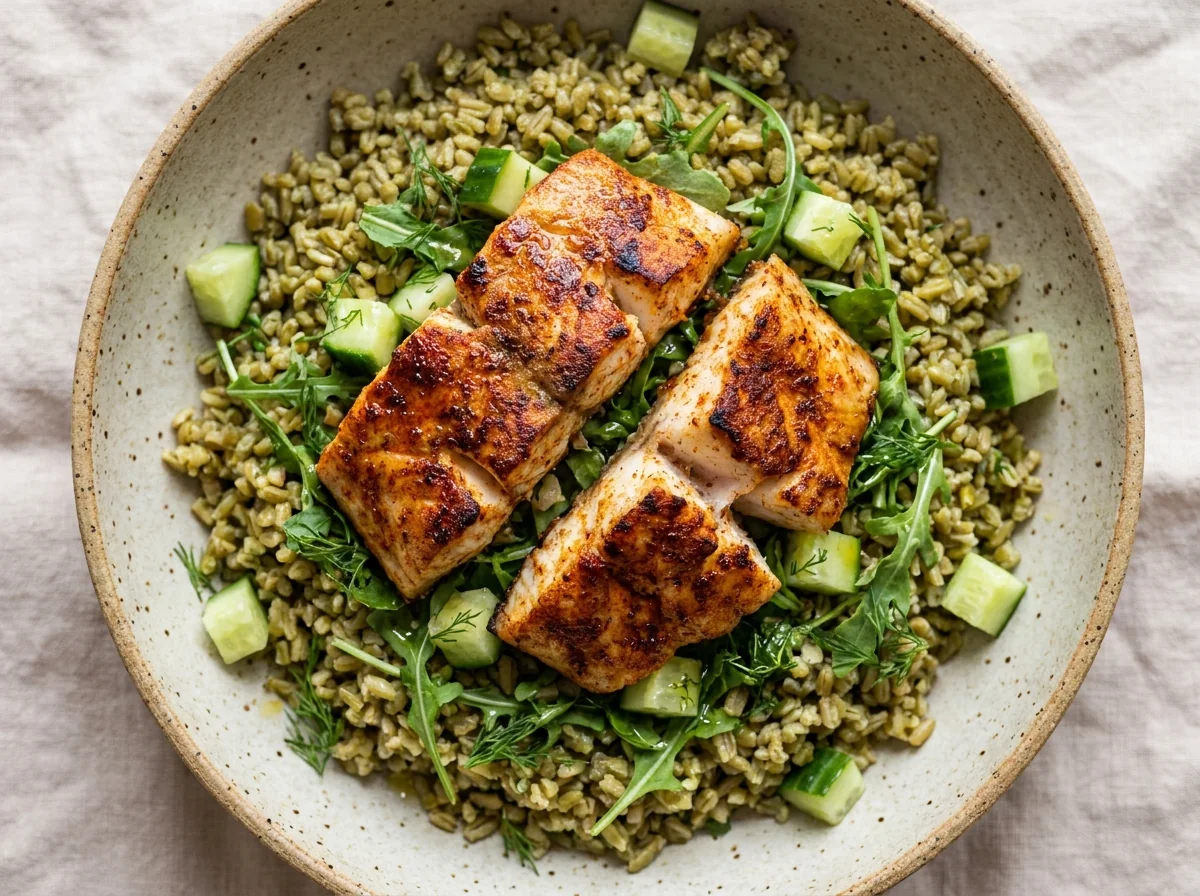
We build this bowl on the balanced plate model for one person: the grilled hammour is a lean marine protein that supplies omega-3 and supports muscle building, the freekeh is a complex starch rich in fiber, and the arugula, cucumber, and dill complete the vegetables.
We arabized it from a salmon and quinoa bowl, swapping the salmon for hammour and the quinoa for freekeh to bring it closer to the Gulf palate.
Preparation Steps
Boil the freekeh
Boil the freekeh in salted water until done, about eighteen minutes, then drain it so the salt of the cooking water is drained and only the absorbed amount remains, to be a complex starch rich in fiber.
Season the hammour
Pat the fillet dry and season it with half the olive oil, the paprika, garlic, cumin, and salt so it absorbs the flavor.
Grill the fish
Grill the hammour on a hot griddle or grill three to four minutes per side until it reaches 63 degrees inside (FSIS), as fish is a lean protein for muscle building.
Prepare the salad
Toss the arugula, cucumber, and dill with the rest of the oil and the lemon juice, so the vegetables complete the half of the bowl.
Arrange the bowl
Place the freekeh as a base, arrange the salad over it, then the grilled hammour, and serve immediately.
Blood Sugar Impact
The glycemic index (GI) measures how quickly a food raises blood sugar, while the glycemic load (GL) measures how much a full serving raises it. Together they give the complete picture.
Glycemic Index
GI
39Low
Low0–55Medium56–69High70+
A low value (≤55) means a gradual rise in blood sugar — the most suitable range for diabetes and insulin resistance.
Glycemic Load
GL
14Medium
Low0–10Medium11–19High20+
Glycemic load reflects the impact of the full serving. To lower it: take half a serving, or pair the recipe with a source of protein and fiber.
Nutritional Information
Per ServingMakes 1 servings · one serving is about 340 g of raw ingredients
Calories483 kcal24%of Daily Value*
Protein38 g76%of Daily Value*
Carbohydrates46 g17%of Daily Value*
Fat17 g22%of Daily Value*
Fiber11 g39%of Daily Value*
Sodium399 mg17%of Daily Value*
* Percent Daily Values are based on a 2,000-calorie diet per FDA food-label reference values — your daily needs may be higher or lower. Values are derived from the recipe's ingredients via the USDA database.
Troubleshooting
The most common problems when preparing Grilled Hammour Bowl with Freekeh & Arugula, and how to fix them:
The fish fell apart
Flip it only once after it releases from the griddle on its own, and do not rush it.
The freekeh is hard
Add a few more minutes of boiling and make sure it is submerged in water until tender.
Storage and Make-Ahead
Refrigerating
Keep the freekeh and fish in an airtight container for up to two days, with the salad separate.
Reheating
Reheat the hammour gently so it does not dry out, and serve the arugula fresh.
Tested Ingredient Substitutions
Original Ingredient
Tested Substitute
Ratio
Flavor Difference
hammour
sheari or farmed hammour
same weight, 150 g
More available; we cook it to 63 degrees as well
freekeh
coarse bulgur
same weight, 55 g
Cooks faster; we boil and drain it the same way
arugula
baby spinach
same weight, 30 g
Lighter flavor we add fresh
dill
parsley
same weight, 5 g
More available; we chop it finely
How Much Does It Make? Scaling Guide
Ingredient
1/2 serving
1 serving (base)
2 servings
Hammour fillet
75 g
150 g
300 g
Dry freekeh
28 g
55 g
110 g
Olive oil
7.5 ml
15 ml
30 ml
Leafy greens
50 g
100 g
200 g
EEINA Nutrition Tip
We let the hammour come to room temperature for ten minutes before grilling so it cooks evenly, and we grill it without too much moving so a golden surface forms.
Add This Recipe to Your Plan
The EEINA app saves your favorite recipes, calculates them from their real ingredients, and shows your daily numbers toward your goal. Try it free now.