Hail Kbebah · vine leaves stuffed with rice, meat, and tomato and rolled into a distinctive square shape, then layered with meat and cooked in a tomato, lemon, and pomegranate-molasses broth. A northern Hail dish, with values from the Basaqr Saudi study.
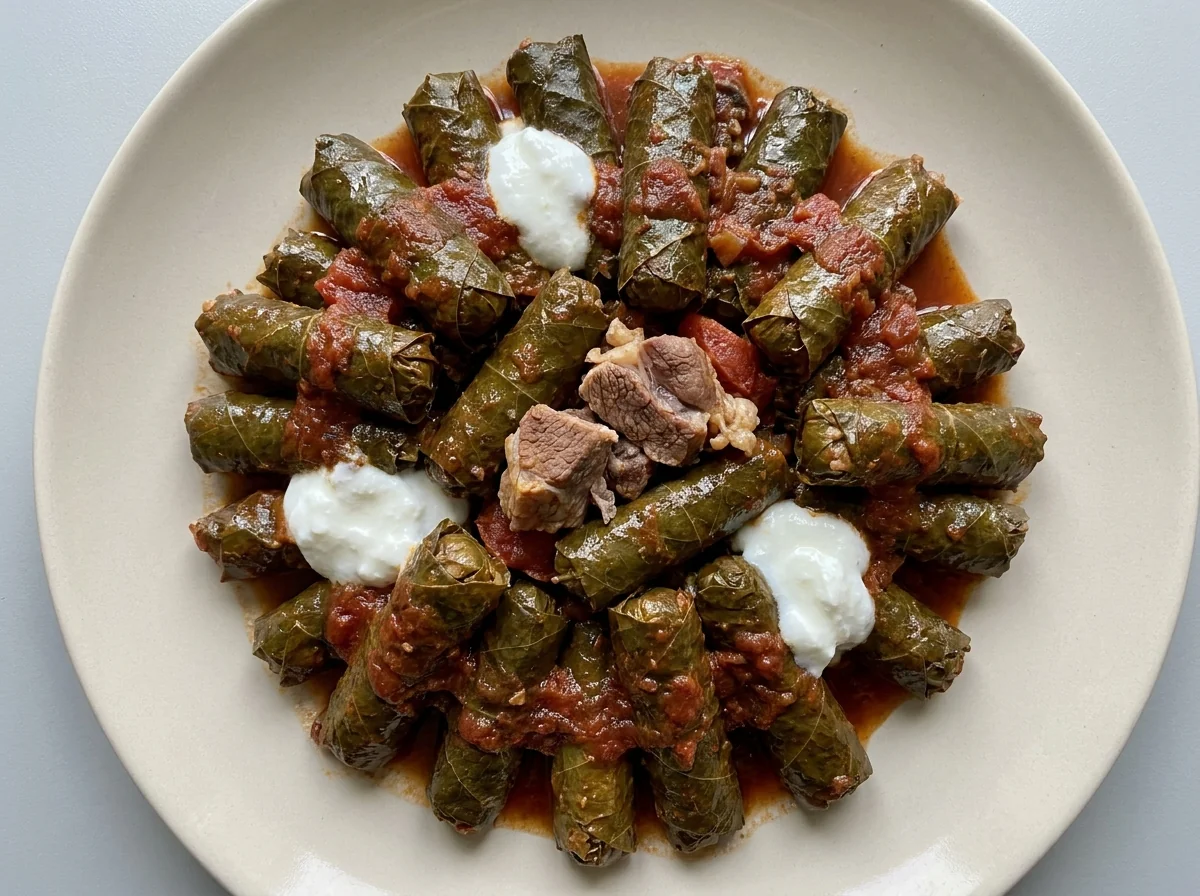
Kbebah Hail is a northern dish from the Hail region: stuffed vine leaves rolled into a distinctive square shape rather than the usual fingers. They are filled with rice, meat, and tomato and cooked with meat in a tart broth of pomegranate molasses and lemon.
Its secret is a tight square roll and a firm arrangement under a heavy plate. EEINA's version keeps the method, and its values are from the Basaqr Saudi study.
Preparation Steps
Prepare the filling
Wash the rice and mix it with the ground meat, grated tomato, onion, tomato paste, oil, spices, salt, and pepper until the filling is uniform.
Fill and roll into a square
Place a little filling on a vine leaf and roll it into the square shape that distinguishes Kbebah Hail rather than the finger shape.
Layer with the meat
Arrange the meat pieces in the base of the pot, and arrange the Kbebah rolls tightly over them in layers.
Cook in the broth
Add the tomato broth, water, lemon juice, and pomegranate molasses to cover, place a heavy plate on top to keep them firm, and cook over low heat for one and a half to two hours until the rice and meat are done.
Flip and serve
Let the pot rest a little, then invert it onto a serving dish, and serve the Kbebah hot with laban.
Blood Sugar Impact
The glycemic index (GI) measures how quickly a food raises blood sugar, while the glycemic load (GL) measures how much a full serving raises it. Together they give the complete picture.
Glycemic Index
GI
60Medium
Low0–55Medium56–69High70+
A low value (≤55) means a gradual rise in blood sugar — the most suitable range for diabetes and insulin resistance.
Glycemic Load
GL
25High
Low0–10Medium11–19High20+
Glycemic load reflects the impact of the full serving. To lower it: take half a serving, or pair the recipe with a source of protein and fiber.
Nutritional Information
Per ServingMakes 6 servings · one serving is about 345 g of raw ingredients
Calories318 kcal16%of Daily Value*
Protein13 g26%of Daily Value*
Carbohydrates45 g16%of Daily Value*
Fat10 g13%of Daily Value*
Fiber4 g14%of Daily Value*
Sodium494 mg21%of Daily Value*
* Percent Daily Values are based on a 2,000-calorie diet per FDA food-label reference values — your daily needs may be higher or lower. Values are derived from the recipe's ingredients via the USDA database.
Troubleshooting
The most common problems when preparing Hail Kbebah, and how to fix them:
The Kbebah falls apart
The roll is loose or the arrangement is slack. Roll tightly, arrange them touching, and place a heavy plate on top.
The rice is undercooked
Too little broth or too short a cooking time. Adjust the broth to cover and cook over low heat until the rice inside the rolls is done.
A bitter taste from the vine leaves
Salty leaves, or they were not washed. Wash the vine leaves and soak them if salted before filling.
The tartness is unbalanced
Too much pomegranate molasses or lemon. Add them gradually and taste to the desired tartness.
Storage and Make-Ahead
Refrigerator (4°)
Three days in an airtight container, and the flavor improves the next day.
Freezer (-18°)
One month cooked in an airtight container. Thaw in the refrigerator and reheat gently.
Reheating
Reheat over low heat with a sprinkle of water or broth. Do not leave cooked food out of the refrigerator more than two hours [3].
Tested Ingredient Substitutions
Original Ingredient
Tested Substitute
Ratio
Flavor Difference
Ground meat
Ground chicken
same weight
A leaner version
White rice
Brown rice
same weight
Adds fiber and lowers the glycemic index
Pomegranate molasses
Extra lemon juice
to taste
A tartness substitute when unavailable
Fresh vine leaves
Jarred vine leaves
same weight
An available substitute, rinsed of salt before use
How Much Does It Make? Scaling Guide
Number of servings
Vine leaves
Rice
Ground meat
3 (half recipe)
250 g
1 cup
150 g
6 (base)
500 g
2 cups
300 g
12 (gathering)
1 kg
4 cups
600 g
EEINA Nutrition Tip
Vine leaves are rich in antioxidants, and pomegranate molasses adds tartness and beneficial plant compounds. The dish is balanced between rice, meat, and vegetables; its glycemic load is lowered by raising the meat and vegetable ratio over the rice and adjusting the salt.
Add This Recipe to Your Plan
The EEINA app saves your favorite recipes, calculates them from their real ingredients, and shows your daily numbers toward your goal. Try it free now.
That it is stuffed vine leaves rolled into a square shape, not fingers, and cooked with meat in a tart broth of pomegranate molasses and lemon, from the heritage of the Hail region.
Why the square shape?
It is the signature of Kbebah Hail versus the usual vine-leaf roll, and a mark of skill in preparing it.
Is it diet-friendly?
Balanced if the meat and vegetables are raised over the rice, brown rice and ground chicken are used, and the salt and pomegranate molasses are adjusted.
What is it served with?
Served hot, inverted onto the dish, with laban and salad.
Sources: University of Sydney · Gulf GSO · Our methodology · Updated on