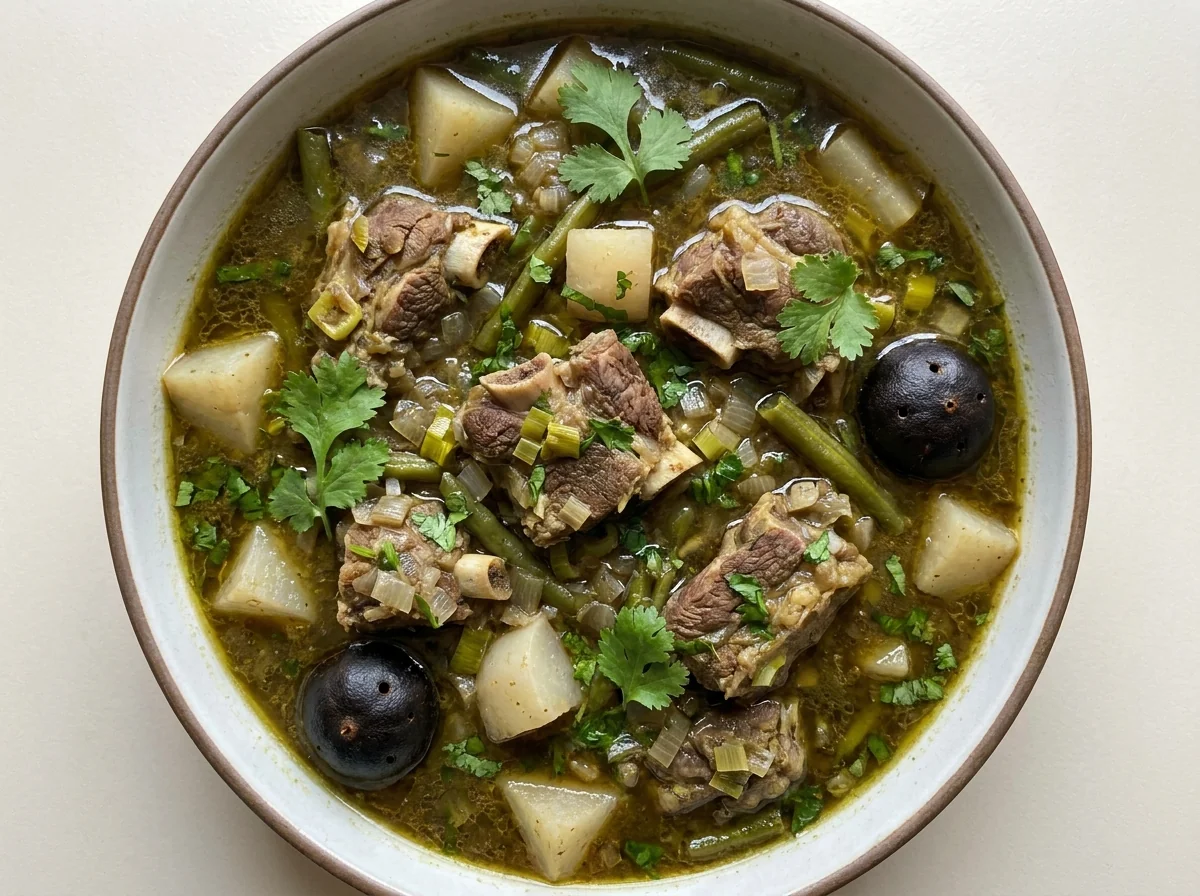
Marag shabzi · A Gulf meat stew dominated by vegetables and green herbs (turnip, leek, coriander, fenugreek, and green beans) in a tomato broth with Loomi. A fiber-rich, moderate-calorie dish, its values drawn from the Bahrain tables.
Marag shabzi is an old Bahraini and Gulf dish, its name from the Persian word "sabzi" meaning green herbs, a trace of the Gulf's proximity to Persia. It is distinguished by the dominance of vegetables and green herbs over the meat: turnip, leek, coriander, fenugreek, and green beans in a tomato broth with Loomi.
Its secret is adding the green herbs at the end of cooking so their flavor stays alive. EEINA's version keeps its character, and its values come from the Bahrain tables, making it rich in fiber and moderate in calories.
Preparation Steps
Sear the meat
Heat a little oil in a wide pot, and sear the bone-in meat pieces over high heat until they take on a brown color. The searing builds the depth of flavor in the broth.
Sauté the onion and garlic
Add the chopped onion and the chopped leek and stir until they wilt, then add the crushed garlic and the spices and stir until fragrant.
Build the broth
Add the tomato paste, the pierced Loomi, the hot water, and the salt, and cover the pot over low heat for about an hour until the meat is tender.
Add the vegetables
Add the chopped turnip and the green beans, and continue cooking for fifteen to twenty minutes until the vegetables are tender without falling apart.
Add the green herbs
Add the fresh coriander and fenugreek in the last ten minutes, as they are the green soul of shabzi, and adjust the salt and acidity.
Serve
Serve the stew hot in a deep bowl with white rice or bread, scooping the vegetables and meat with their broth.
Blood Sugar Impact
The glycemic index (GI) measures how quickly a food raises blood sugar, while the glycemic load (GL) measures how much a full serving raises it. Together they give the complete picture.
Glycemic Index
GI
35Low
Low0–55Medium56–69High70+
A low value (≤55) means a gradual rise in blood sugar — the most suitable range for diabetes and insulin resistance.
Glycemic Load
GL
2Low
Low0–10Medium11–19High20+
Glycemic load reflects the impact of the full serving. To lower it: take half a serving, or pair the recipe with a source of protein and fiber.
Nutritional Information
Per ServingMakes 8 servings · one serving is about 430 g of raw ingredients
Calories267 kcal13%of Daily Value*
Protein15 g30%of Daily Value*
Carbohydrates18 g7%of Daily Value*
Fat15 g19%of Daily Value*
Fiber13 g46%of Daily Value*
Sodium996 mg43%of Daily Value*
* Percent Daily Values are based on a 2,000-calorie diet per FDA food-label reference values — your daily needs may be higher or lower. Values are derived from the recipe's ingredients via the USDA database.
Troubleshooting
The most common problems when preparing Marag Shabzi with Meat and Vegetables, and how to fix them:
The meat is tough
It was not cooked long enough before adding the vegetables. Bone-in meat needs about an hour over low heat until tender.
The vegetables are mushy
They were added too early or cooked too long. Add the turnip and beans after the meat is tender, and watch until they soften without dissolving.
The herb flavor is faded
The coriander and fenugreek were added too early so their flavor evaporated. Add them only in the last ten minutes.
The broth is greasy
The meat's fat melted into it. Skim off the floating fat layer, and choose lean cuts.
The broth is too heavy or too thin
The amount of water is off. Start with four cups and adjust: marag shabzi's consistency is medium, between a soup and a stew.
Storage and Make-Ahead
Fridge (4°)
Three days in an airtight container, and its flavor improves the next day.
Freezer (-18°)
One month in an airtight container. Thaw it in the fridge and reheat it over low heat.
Reheating
Reheat it over low heat with a splash of water if it thickened. Do not leave it out of the fridge more than two hours [2].
Tested Ingredient Substitutions
Original Ingredient
Tested Substitute
Ratio
Flavor Difference
Bone-in meat
Lean boneless meat
same weight
Cooks faster and is leaner, with a lighter broth flavor
Turnip
Zucchini or potato
same weight
An available alternative for those who do not like the taste of turnip
Fresh fenugreek
Chopped spinach
same weight
For those who cannot find fresh fenugreek
Tomato paste
Fresh grated tomatoes
twice the amount
A fresher flavor with lighter acidity
How Much Does It Make? Scaling Guide
Number of servings
Meat
Turnip
Water
4 (half the recipe)
350 g
400 g
2 cups
8 (base)
700 g
800 g
4 cups
16 (gathering)
1.4 kg
1.6 kg
8 cups
EEINA Nutrition Tip
Dishes in which vegetables and legumes dominate over meat raise the fiber and reduce the saturated fat. Fresh fenugreek and coriander add flavor and beneficial plant compounds. The dish's glycemic load is low because its high fiber slows the absorption of its sugar.
Add This Recipe to Your Plan
The EEINA app saves your favorite recipes, calculates them from their real ingredients, and shows your daily numbers toward your goal. Try it free now.
The name is from the Persian word "sabzi" meaning green herbs, and it reflects the dominance of vegetables and herbs over the meat in this stew.
What distinguishes marag shabzi from other Gulf stews?
The abundance of vegetables and green herbs in it (turnip, leek, coriander, fenugreek, and beans) against a smaller amount of meat, making it rich in fiber.
Is it suitable for someone watching their weight?
Yes, it is moderate in calories and high in fiber that prolongs fullness, provided the accompanying rice portion is controlled.
Can I make it plant-based?
Yes, omit the meat and add chickpeas or white beans as a protein source, and use vegetable broth.
Sources: USDA · University of Sydney · Gulf GSO · Our methodology · Updated on