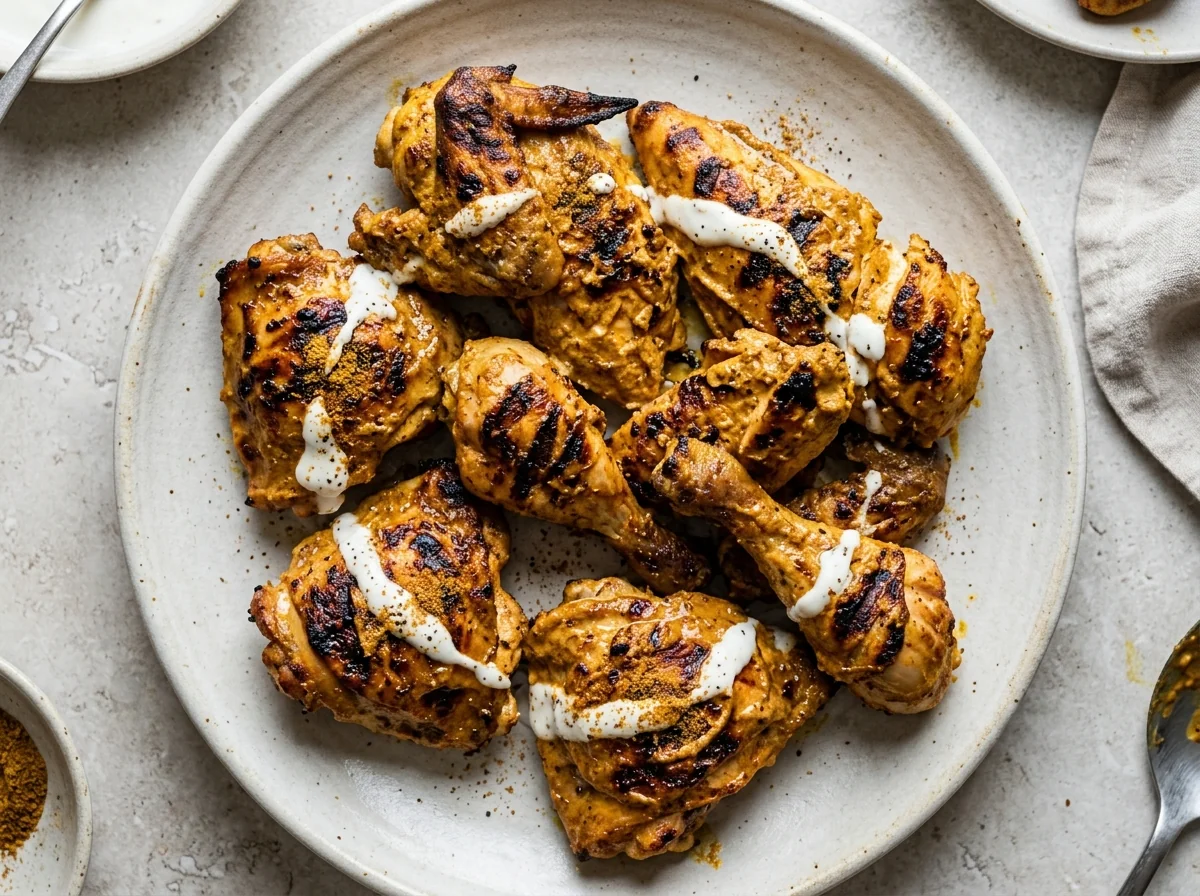
A yogurt marinade with turmeric, chicken spice, garlic powder, olive oil, and vinegar. The cut chicken soaks in it overnight in the refrigerator, then browns on the grill or in the oven. The acidity of the yogurt and vinegar is what tenderizes the meat before grilling.
The acidity of the yogurt and vinegar works on the surface of the meat and tenderizes it, and the overnight soak gives the spices time to sink in instead of sitting on the skin. The ketchup here is not for sweetness but for its sugar, which helps the chicken brown on the grill.
Preparation Steps
Mix the marinade
Mix the yogurt with the turmeric, chicken spice, garlic powder, olive oil, vinegar, salt, ketchup, and black pepper in a bowl.
Marinate the chicken
Add the cut chicken to the marinade, cover the bowl, and leave the chicken overnight in the refrigerator.
Grill
Brown the chicken on the grill or in the oven, whichever you prefer.
Blood Sugar Impact
The glycemic index (GI) measures how quickly a food raises blood sugar, while the glycemic load (GL) measures how much a full serving raises it. Together they give the complete picture.
Glycemic Index
GI
36Low
Low0–55Medium56–69High70+
A low value (≤55) means a gradual rise in blood sugar — the most suitable range for diabetes and insulin resistance.
Glycemic Load
GL
2Low
Low0–10Medium11–19High20+
Glycemic load reflects the impact of the full serving. To lower it: take half a serving, or pair the recipe with a source of protein and fiber.
Nutritional Information
Per ServingMakes 4 servings · one serving is about 385 g of raw ingredients
Calories736 kcal37%of Daily Value*
Protein78 g156%of Daily Value*
Carbohydrates5 g2%of Daily Value*
Fat43 g55%of Daily Value*
Fiber0 g0%of Daily Value*
Sodium867 mg38%of Daily Value*
Potassium688 mg15%of Daily Value*
Phosphorus503 mg40%of Daily Value*
* Percent Daily Values are based on a 2,000-calorie diet per FDA food-label reference values — your daily needs may be higher or lower. Values are derived from the recipe's ingredients via the USDA database.
Troubleshooting
The most common problems when preparing Yogurt Marinade for Grilled Chicken, and how to fix them:
The chicken burned outside and stayed raw inside
The heat is too high and the pieces are thick. Move the pieces away from direct heat or lower the grill, and check that the meat at the bone reaches 74°C.
The marinade slid off the chicken
The pieces were wet when marinated. Pat the chicken dry with paper towels before coating it so the marinade clings to the surface.
The chicken came out overly sour
It marinated longer than a night. The source sets one night, which is enough to tenderize the meat and let the spices sink in.
The chicken did not brown
The grill was not preheated or the pieces were crowded. Preheat the grill before adding the chicken and space the pieces out so their steam escapes.
Storage and Make-Ahead
Marinating ahead
The chicken keeps in its marinade in the refrigerator for one night, as in the source, and no longer.
Refrigerator (4°C)
Grilled chicken keeps in a sealed container for up to 3 days.
Freezing
Freeze the chicken raw in its marinade for up to two months, and thaw it in the refrigerator overnight before grilling.
Reheating
In the oven or on the grill for a few minutes; the microwave dries out grilled meat.
Tested Ingredient Substitutions
Original Ingredient
Tested Substitute
Ratio
Flavor Difference
Full-fat yogurt
Fat-free yogurt
245 g
Less fat, and its tenderizing power stays the same because it comes from the acidity, not the fat.
Ketchup
Tomato paste with a drizzle of honey
15 g paste with 5 g honey
Less added sugar and simpler ingredients, and it does the same browning job.
Cut whole chicken
Boneless chicken thighs
1200 g
Faster to cook and less prone to drying out than breasts.
White vinegar
Lemon juice
15 ml
Similar acidity with a softer flavor, and the more common choice in Gulf marinades.
How Much Does It Make? Scaling Guide
Servings
Chicken
Yogurt
Olive oil
2 servings (half batch)
600 g
120 g
30 ml
4 servings (base recipe)
1200 g
245 g
60 ml
8 servings (double)
2400 g
490 g
120 ml
EEINA Nutrition Tip
Do not marinate longer than one night: the acidity of the yogurt and vinegar keeps breaking down the surface of the meat, and the chicken comes out overly soft with a mushy texture. And wipe the excess marinade off the pieces before grilling so they brown instead of steaming in their liquid.
Add This Recipe to Your Plan
The EEINA app saves your favorite recipes, calculates them from their real ingredients, and shows your daily numbers toward your goal. Try it free now.
The source leaves that open: 'on the grill or in the oven, whichever you prefer'. The cue to rely on is the meat at the bone reaching 74°C, which is more accurate than any temperature setting because it varies with the thickness of the pieces.
Are two hours enough instead of overnight?
They give surface flavor only. The full night is what lets the acidity and spices reach deep into the meat, and it is what the source specifies.
Does this marinade work for red meat?
Yogurt tenderizes red meat as well, but the spice used here is a chicken spice mix. For red meat, swap the spices for ones that suit it.
Why ketchup in a chicken marinade?
That is how the source lists it. Its sugar helps the surface brown on the grill, and the tomato acidity backs up the work of the yogurt and vinegar.
Sources: USDA · University of Sydney · Our methodology · Updated on