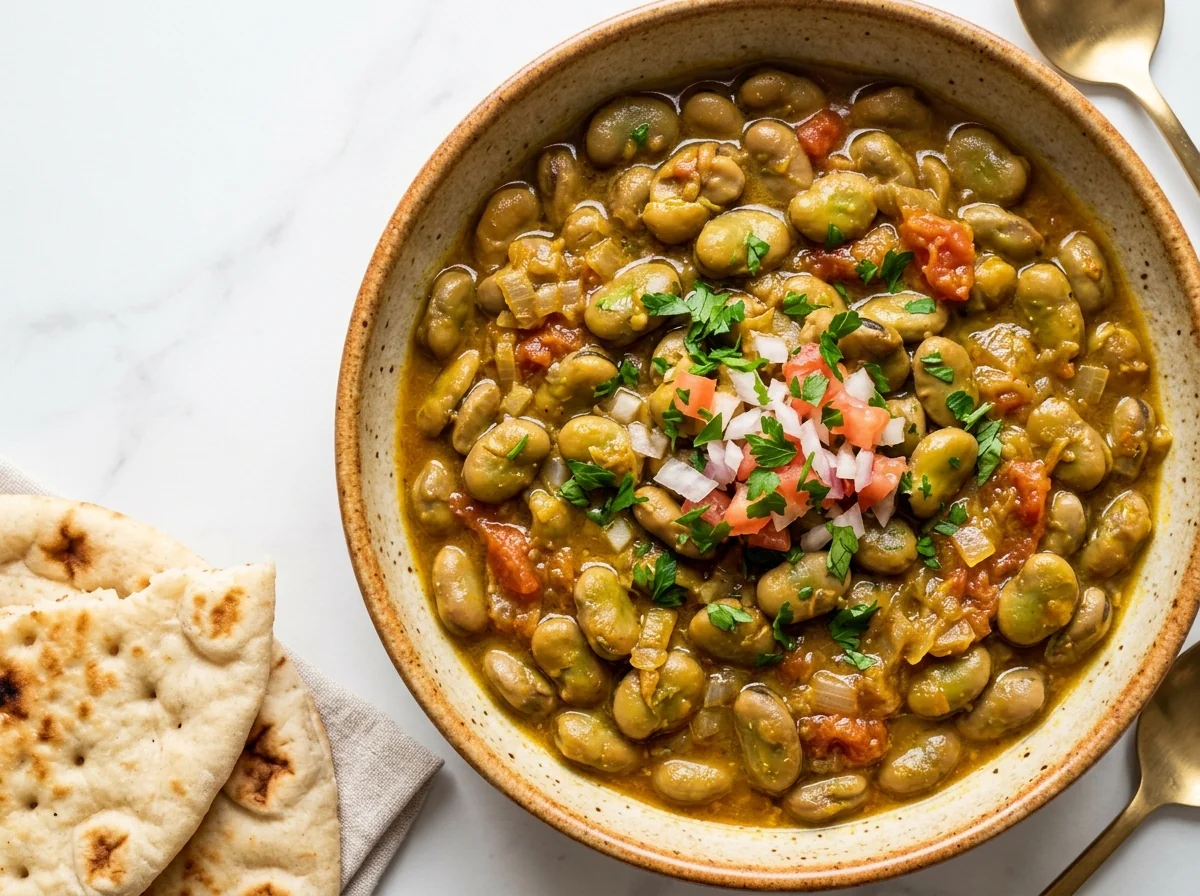
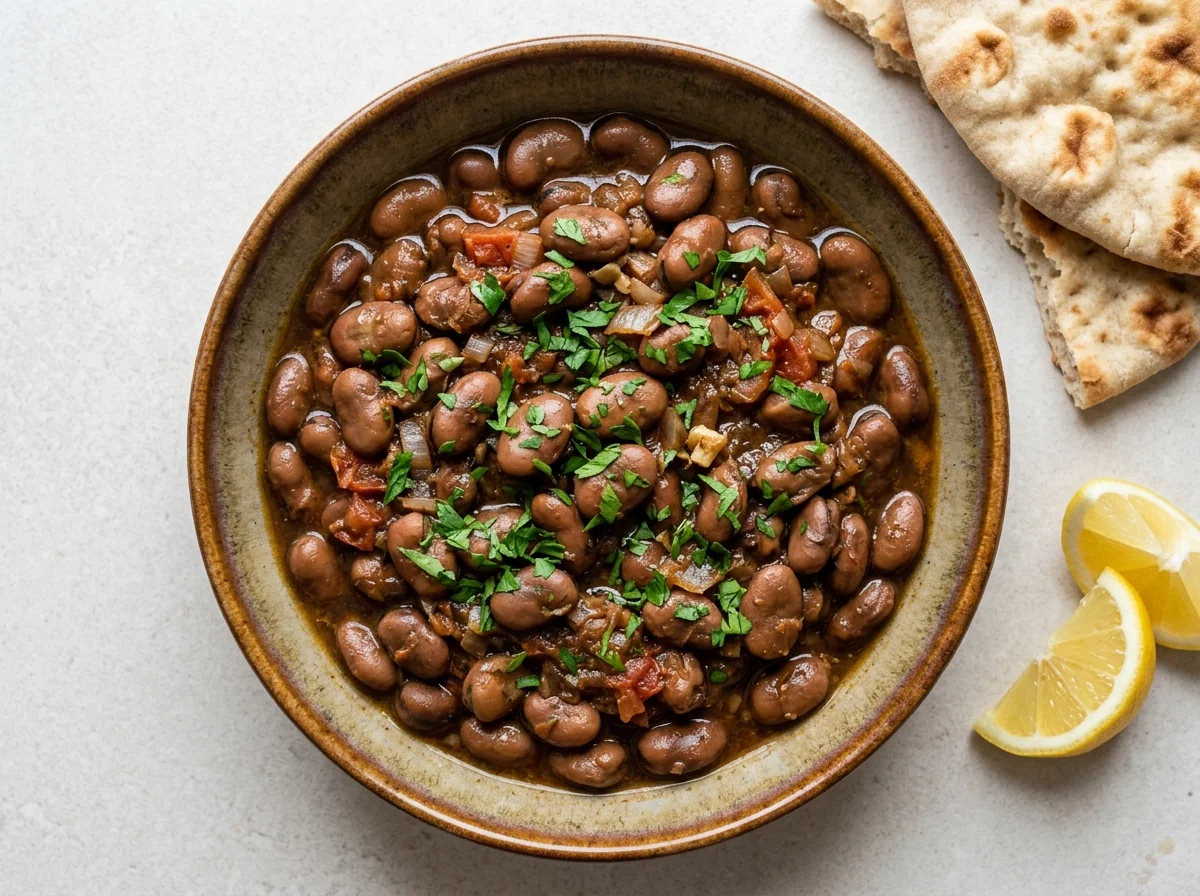
Fresh fava beans in ghee is one of the original Hijazi suhoor dishes, prepared in the fresh fava bean season in early winter.
In Hijaz, local ghee is added to give the dish a rich flavor and a historical depth that goes back hundreds of years.
Preparation Steps
Boil the fava beans
In a large pot, boil water with a pinch of salt and cook the fresh fava beans for 10 minutes (fresh) or 5 minutes (frozen). Drain them and reserve a cup of the cooking water.
Brown the onion in ghee
In a wide pan, warm the local ghee and cook the onion for five minutes until it turns golden.
Add the tomato and spices
Add the tomato, garlic, cumin, and turmeric and leave for five minutes until they thicken.
Fold in the beans
Add the fava beans with half a cup of the cooking water. Mash half of them with the back of a spoon and leave for three more minutes.
Serve
Pour the beans into a plate and garnish with a knob of ghee and chopped parsley. Serve with warm tamees bread.
Blood Sugar Impact
The glycemic index (GI) measures how quickly a food raises blood sugar, while the glycemic load (GL) measures how much a full serving raises it. Together they give the complete picture.
Glycemic Index
GI
40Low
Low0–55Medium56–69High70+
A low value (≤55) means a gradual rise in blood sugar — the most suitable range for diabetes and insulin resistance.
Glycemic Load
GL
20High
Low0–10Medium11–19High20+
Glycemic load reflects the impact of the full serving. To lower it: take half a serving, or pair the recipe with a source of protein and fiber.
Nutritional Information
Per ServingMakes 2 servings · one serving is about 340 g of raw ingredients
Calories471 kcal24%of Daily Value*
Protein20 g40%of Daily Value*
Carbohydrates63 g23%of Daily Value*
Fat16 g21%of Daily Value*
Fiber12 g43%of Daily Value*
Sodium1144 mg50%of Daily Value*
* Percent Daily Values are based on a 2,000-calorie diet per FDA food-label reference values — your daily needs may be higher or lower. Values are derived from the recipe's ingredients via the USDA database.
Troubleshooting
The most common problems when preparing Fresh Fava Beans with Local Ghee, Hijazi Style, and how to fix them:
The beans are tough
Add more cooking water and leave for 5 more minutes. Fresh beans need 15 minutes of boiling.
The taste is flat
Add an extra spoon of ghee and a pinch of cumin before serving.
The onion burned
Lower the heat from the start and stir constantly. Ghee burns faster than oil.
The beans are watery
Mash more beans and leave uncovered on the heat for five minutes.
Storage and Make-Ahead
Refrigerator (4°C)
Two days in a container. Reheat with a spoon of water.
Freezer (-18°C)
One month. Let it thaw naturally.
Tested Ingredient Substitutions
Original Ingredient
Tested Substitute
Ratio
Flavor Difference
Fresh fava beans
Frozen fava beans
1:1
Available all year.
Local ghee
Butter
1:1
A lighter but poorer version.
Tamees bread
Arabic bread
1:1
More widely available.
How Much Does It Make? Scaling Guide
Ingredient
2 people
4 people
6 people
Green fava beans
400 g
800 g
1200 g
Ghee
30 g
60 g
90 g
Onion
70 g
140 g
210 g
Tomato
100 g
200 g
300 g
EEINA Nutrition Tip
Fresh fava beans need their outer skin peeled, which is a long process. Frozen peeled fava beans are a practical option that preserves the flavor.
Add This Recipe to Your Plan
The EEINA app saves your favorite recipes, calculates them from their real ingredients, and shows your daily numbers toward your goal. Try it free now.