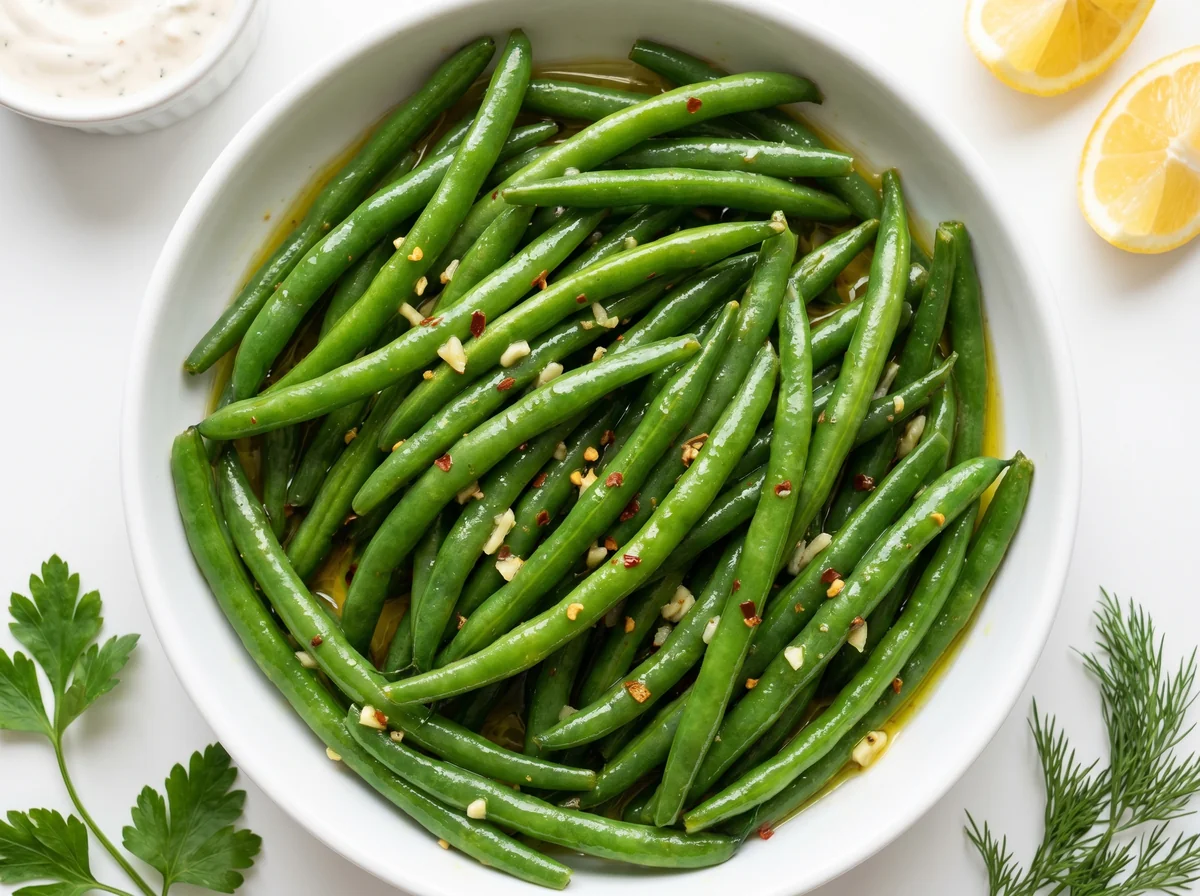
A Levantine vegan dish — green beans slow-cooked with tomatoes, garlic, onion and olive oil, served cold as a refreshing meze. Low glycaemic load, rich in fibre, and free from common allergens.
Loubieh bi zeit — green beans in olive oil — is a beloved Levantine vegan dish, part of the family of vegetables cooked in olive oil (okra bi zeit, stuffed grape leaves bi zeit, fresh fava beans bi zeit) that are simmered in olive oil and tomatoes and eaten cold, forming a pillar of Levantine vegetarian cooking and Christian fasting traditions.
The green beans are cooked with tomatoes, garlic, onion and olive oil and served cold on the meze table, during fasting and in summer. They reflect the genius of Levantine cooking in transforming vegetables into richly flavoured dishes with olive oil, and its love of cold, refreshing plates.
Preparation Steps
Prep the beans
Clean the green beans, remove the tips and the side string if present, then cut into pieces. Fresh, tender beans are the star of this dish (frozen can be used). Wash and drain.
Saute the onion and garlic
Brown the chopped onion in olive oil until softened, then add the crushed garlic and stir until fragrant. Onion and garlic form the flavour base of loubieh bi zeit.
Add the beans
Add the cut beans and toss with the onion, garlic and oil for a few minutes until coated and beginning to wilt, absorbing the flavour of the oil and garlic.
Add tomatoes and simmer
Add the grated tomatoes, tomato paste, salt and a little water. Cover the pot and simmer over low heat until the beans are tender and have absorbed the sauce, about 30 minutes. Gentle covered simmering tenderises the beans and enriches them.
Add the acid
Add lemon juice or pomegranate molasses at the end — the refreshing acidity is the signature touch of Levantine oil dishes — taste and adjust the salt. Let the sauce reduce slightly until it coats the beans.
Serve
Let the beans cool (they are eaten cold or at room temperature — a classic cold oil dish) and serve with bread and olive oil. This is a beloved Levantine vegan dish (from the family of vegetables cooked in oil such as okra bi zeit and stuffed grape leaves bi zeit), popular during fasting seasons, as meze and in summer. The beans with tomatoes, garlic and olive oil are a refreshing treat, a light and healthy dish that reflects the traditions of Levantine vegetarian cooking.
Blood Sugar Impact
The glycemic index (GI) measures how quickly a food raises blood sugar, while the glycemic load (GL) measures how much a full serving raises it. Together they give the complete picture.
Glycemic Index
GI
36Low
Low0–55Medium56–69High70+
A low value (≤55) means a gradual rise in blood sugar — the most suitable range for diabetes and insulin resistance.
Glycemic Load
GL
7Low
Low0–10Medium11–19High20+
Glycemic load reflects the impact of the full serving. To lower it: take half a serving, or pair the recipe with a source of protein and fiber.
Nutritional Information
Per ServingMakes 4 servings · one serving is about 285 g of raw ingredients
Calories236 kcal12%of Daily Value*
Protein5 g10%of Daily Value*
Carbohydrates25 g9%of Daily Value*
Fat14 g18%of Daily Value*
Fiber6 g21%of Daily Value*
Sodium86 mg4%of Daily Value*
Potassium641 mg14%of Daily Value*
Phosphorus111 mg9%of Daily Value*
* Percent Daily Values are based on a 2,000-calorie diet per FDA food-label reference values — your daily needs may be higher or lower. Values are derived from the recipe's ingredients via the USDA database.
Troubleshooting
The most common problems when preparing Green Beans in Olive Oil, and how to fix them:
The beans are tough
Not cooked long enough or they are old beans. Simmer covered over low heat until completely tender. Choose fresh, tender beans — old, large pods are tough and stringy, so shell them.
The beans have lost their green colour
Cooked too long. Cook only until tender — prolonged cooking fades the green to a dull olive. A dull colour is acceptable in an oil dish but do not overdo it.
Bland taste
Not enough garlic, tomatoes or acid. Use more garlic, onion and tomato paste, and add lemon juice or pomegranate molasses at the end to freshen and balance. Salt and tomato paste deepen the flavour.
Too oily
Too much oil. Use a moderate amount of olive oil (quarter cup for half a kilo) — the dish does not need to be drowned. The oil is enough for sauteing and flavour.
Watery sauce
Too much water or the sauce did not reduce. Simmer uncovered for a short time at the end until the sauce thickens and coats the beans. Tomato paste helps the consistency. Use only a little water — just enough to tenderise the beans.
Storage and Make-Ahead
Refrigerator (4°)
Loubieh bi zeit keeps in an airtight container in the refrigerator for 3 to 4 days and actually improves in flavour (it is eaten cold anyway). Add a drizzle of olive oil and a squeeze of lemon at serving. Ideal for advance preparation.
Prep ahead
An excellent dish for advance preparation (eaten cold and improves with rest). Prepare and refrigerate — ready as meze for several days. Practical for entertaining, fasting, summer and weekly meal prep.
Freezer
Can be frozen for up to two months (green beans handle freezing well). Thaw and serve cold or reheat lightly. Using frozen green beans makes this dish available year-round.
Food safety
Cook the beans until fully tender. Store the dish refrigerated (it contains garlic) and do not leave it at room temperature for more than two hours. Wash the beans thoroughly and use clean utensils.
Tested Ingredient Substitutions
Original Ingredient
Tested Substitute
Ratio
Flavor Difference
Green beans
Broad flat beans or frozen green beans
same amount
Flat beans and frozen beans are practical alternatives; choose fresh tender beans for the best texture, and use frozen out of season.
Lemon juice
Pomegranate molasses
to taste
Pomegranate molasses has a distinctive sweet-sour Levantine tang (common in oil dishes); lemon juice is a simpler alternative. Both refresh the dish.
Vegan (oil-based)
Add meat (green beans with meat)
as desired
Adding meat turns it into a green bean stew (eaten hot over rice), whereas the oil version stays vegan and cold (this dish).
How Much Does It Make? Scaling Guide
Servings
Beans
Tomatoes
Olive oil
2 (half recipe)
250 g
2 tomatoes
2 tablespoons
4 (base)
500 g
3 tomatoes
1/4 cup
8 (feast)
1 kg
6 tomatoes
1/2 cup
EEINA Nutrition Tip
Loubieh bi zeit is one of the healthiest meze dishes: green beans are a low-calorie vegetable rich in fibre, vitamin C, vitamin K, folate and antioxidants; tomatoes provide lycopene; garlic is beneficial; olive oil is a healthy fat; and the glycaemic load is very low. Excellent for heart health and weight management (a vegan dish). The only challenge is the amount of olive oil — healthy but calorie-dense — so control the quantity.
Add This Recipe to Your Plan
The EEINA app saves your favorite recipes, calculates them from their real ingredients, and shows your daily numbers toward your goal. Try it free now.
What is the difference between loubieh bi zeit and loubieh with meat?
Loubieh bi zeit is vegan (beans, tomatoes, garlic, onion and olive oil), eaten cold as meze or during fasting. Loubieh with meat is a stew cooked with meat and eaten hot over rice. Loubieh bi zeit belongs to the family of Levantine cold vegetable-in-oil dishes.
Is loubieh bi zeit healthy?
Yes — it is one of the healthiest meze dishes: green beans are rich in fibre, vitamins C and K, folate and are low in calories; tomatoes provide lycopene; olive oil is a healthy fat; and the glycaemic load is very low. Excellent for heart health and weight. Simply control the amount of oil — it is a nourishing, light vegan dish, an excellent choice for fasting and healthy diets.
Is it eaten cold or warm?
Loubieh bi zeit is eaten cold or at room temperature (a cold oil dish, like other Levantine vegetable-in-oil dishes), and improves with rest. Served on the meze table, during fasting and in summer, scooped up with bread. This distinguishes it from the hot green bean stew.
What are other Levantine vegetable-in-oil dishes?
A group of Levantine vegan dishes cooked in olive oil and tomatoes and eaten cold, including: loubieh bi zeit, okra bi zeit, fresh fava beans bi zeit, stuffed grape leaves bi zeit. Popular during fasting, as meze and in summer — healthy, refreshing, reflecting the traditions of Levantine vegetarian cooking with olive oil.