Hummus — nearly complete plant protein. A satisfying snack, GI 25 very low, suitable for all dietary plans. The secret is authentic Saudi sesame tahini and fresh lemon.
Hummus with tahini is a Levantine-Hijazi dish older than many nations. It merges plant protein (chickpeas) with healthy fats (tahini) to deliver a balanced meal in two tablespoons.
In the Hijaz especially — Mecca, Jeddah, Taif — Hummus is served in almost every home for breakfast or as a starter. The Jeddawi version uses more tahini than the Lebanese.
Preparation Steps
Prepare the chickpeas
If using canned, rinse them thoroughly under water to reduce sodium significantly. If using dried, boil for about an hour with half a teaspoon of baking soda until completely tender.
Blend the tahini first
In the blender, combine the tahini, garlic, lemon, and cumin, and blend for one minute until creamy. This step is the secret to a silky-smooth texture.
Add the chickpeas
Add the Hummus to the blender and run on high speed, adding cold water one tablespoon at a time until the Hummus is smooth and creamy.
Taste and adjust
Taste and add salt, lemon, or tahini to preference. The ideal texture is creamy but holds its shape.
Serve
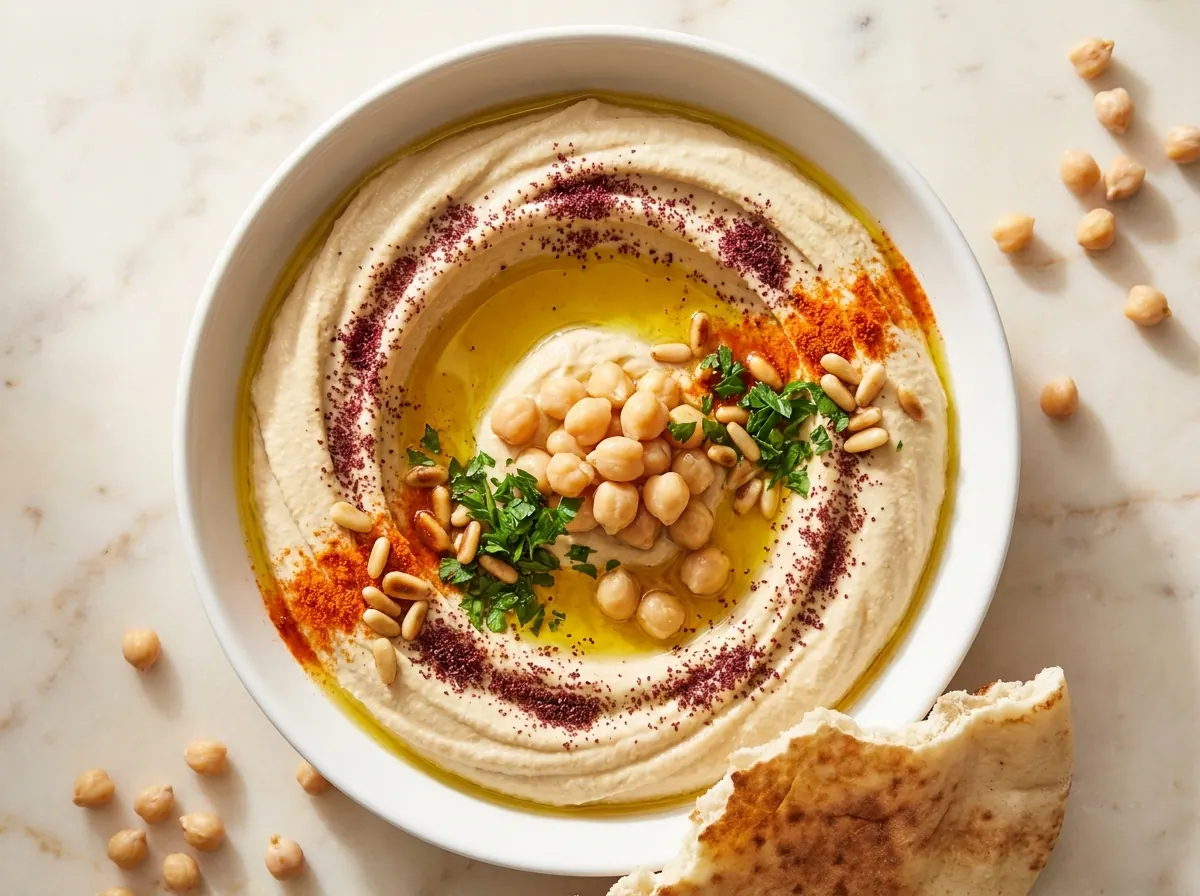
Scoop into a deep dish and swirl the surface with the back of a spoon, then drizzle with olive oil and top with whole chickpeas, parsley, and smoked paprika. Serve with Arabic flatbread.
Blood Sugar Impact
The glycemic index (GI) measures how quickly a food raises blood sugar, while the glycemic load (GL) measures how much a full serving raises it. Together they give the complete picture.
Glycemic Index
GI
25Low
Low0–55Medium56–69High70+
A low value (≤55) means a gradual rise in blood sugar — the most suitable range for diabetes and insulin resistance.
Glycemic Load
GL
4Low
Low0–10Medium11–19High20+
Glycemic load reflects the impact of the full serving. To lower it: take half a serving, or pair the recipe with a source of protein and fiber.
Nutritional Information
Per ServingMakes 6 servings · one serving is about 115 g of raw ingredients
Calories202 kcal10%of Daily Value*
Protein7 g14%of Daily Value*
Carbohydrates21 g8%of Daily Value*
Fat11 g14%of Daily Value*
Fiber6 g21%of Daily Value*
Sodium459 mg20%of Daily Value*
Potassium156 mg3%of Daily Value*
Phosphorus131 mg10%of Daily Value*
* Percent Daily Values are based on a 2,000-calorie diet per FDA food-label reference values — your daily needs may be higher or lower. Values are derived from the recipe's ingredients via the USDA database.
Troubleshooting
The most common problems when preparing Hijazi Hummus with Tahini, and how to fix them:
Hummus is grainy, not smooth
Not cooked enough, or skins were not removed. For the classic Levantine silky texture: soak dried chickpeas overnight, cook with a pinch of baking soda until a grain presses flat between your fingers. Rub the skins off under running water before blending — they float to the surface and can be skimmed off with a sieve.
Bitter, heavy tahini flavor
The tahini is old or its oils oxidized in the open container. Fresh tahini has a creamy, mildly sweet flavor and a uniform light beige color. For storage after opening: stir well (oil floats to the top), store inverted in the refrigerator — it keeps for six months with excellent flavor.
Texture is dry or separated
Not enough liquid. Smooth Hummus needs very cold water (not warm) added tablespoon by tablespoon while blending until creamy. Cold water binds the tahini oils and smooths the texture, while warm water breaks them apart.
Flat flavor with no depth
Fresh lemon is missing, or cumin is absent. The classic flavor comes from the balance of three things: fresh tart lemon (not bottled), a small bruised garlic clove, and a pinch of ground cumin. Salt is added last, to taste.
Surface lost its sheen after serving
Left uncovered and dry air drew moisture from the surface. Fix: drizzle a thin layer of extra-virgin olive oil over the surface right before serving [1]. The oil protects the surface and adds a tangy, fruity note.
Hummus feels heavy on the stomach
Skins were not removed, or the portion was too large. The skins are the hardest part to digest. A traditional Levantine technique: long soaking, baking soda, and skin removal all reduce bloating and smooth the texture at the same time.
Storage and Make-Ahead
Refrigerator (4°C)
Finished Hummus: four to five days in an airtight container with a thin layer of olive oil on top. Cooked chickpeas without blending: three days covered in their cooking liquid in an airtight container.
Freezer (-18°C)
Blended Hummus: up to two months in an airtight container. Thaw overnight in the refrigerator, then stir with a tablespoon of cold water to restore texture. Cooked chickpeas: six months in a freezer bag spread as individual grains.
Meal prep
Soaking: overnight (8-12 hours) in cold water on the counter. Cooking: one to two days ahead, stored with their liquid in the refrigerator. Final blending: up to one hour before serving at most to maintain the fresh texture.
Serving
Serve at room temperature — very cold Hummus suppresses the tahini and lemon flavors. Remove from the refrigerator 20 minutes before serving. Do not leave out for more than two hours per USDA recommendation [2].
Tested Ingredient Substitutions
Original Ingredient
Tested Substitute
Ratio
Flavor Difference
Soaked dried chickpeas
Ready-to-use canned chickpeas
2 cups soaked dried ≈ 3 small cans
Less dense texture, needs longer blending, less depth of flavor
Nutty flavor, better for those who dislike tahini's bitterness
Fresh lemon
White vinegar
Each tbsp lemon → 1.5 tbsp vinegar
Sharper without the lemon fragrance — better for those who prefer less citrus
Ground cumin
Ground coriander
Same amount
Lighter, less earthy flavor — a variation for Hummus enthusiasts
Raw garlic
Roasted garlic
1 roasted clove ≈ 1/2 raw clove
Sweeter and mellower, without raw garlic's sharpness — better for entertaining
How Much Does It Make? Scaling Guide
Number of servings
Dry Chickpeas
Tahini
Lemon
Mixing time
2 (individual × 2)
0.5 cup
2 tbsp
0.5 lemon
2 min
4 (base)
1 cup
4 tbsp
1 lemon
3–4 min
8 (large family)
2 cups
8 tbsp
2 lemons
5–6 min
12 (large gathering)
3 cups
12 tbsp
3 lemons
In 2 batches × 4 min
EEINA Nutrition Tip
The secret to a silky texture: 1) Cold water (not warm) makes it smoother. 2) Long blending (3-4 minutes) matters more than the ingredients. 3) Add the chickpeas last (after the tahini) — it blends better.
Add This Recipe to Your Plan
The EEINA app saves your favorite recipes, calculates them from their real ingredients, and shows your daily numbers toward your goal. Try it free now.