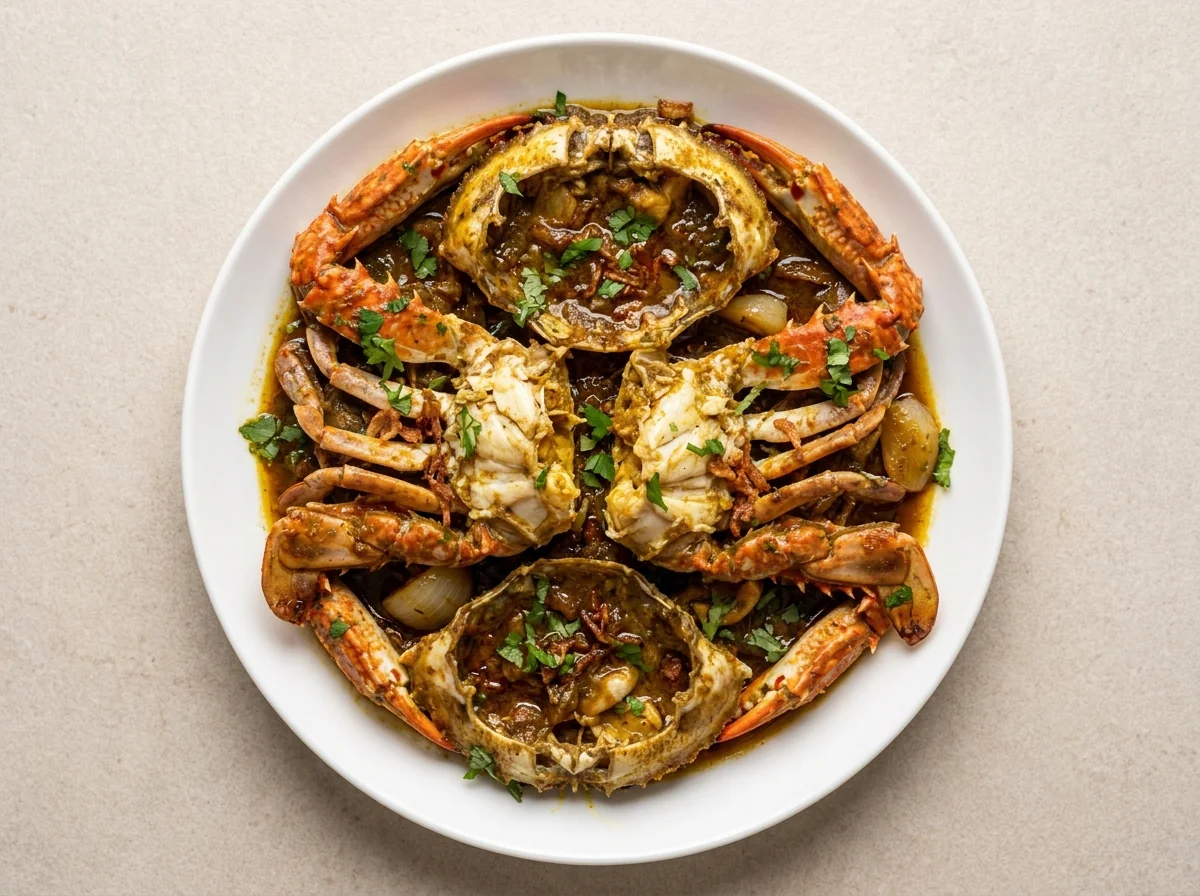
We make gabgoba the way it is made in the homes of the Emirati coast when crab is in its short season, cooked fresh in a sauce of onion, garlic, Emirati bzar, and turmeric until the flavor of the sea and the spices wraps around it.
It is a seasonal dish served in the evenings and eaten with the fingertips, one of the dishes that gathers the family around the pleasure of peeling the crab and sharing its sauce.
Preparation Steps
Cleaning the crab
We clean the fresh crab well, scrub its shell and remove what is not edible, then wash it and drain it, for its cleanliness is the foundation of the dish's flavor.
The sauce base
We heat the absorbed frying oil and saute the chopped onion with the garlic until they wilt and turn golden, then add the turmeric, bzar, pepper, and dried lime and stir until the spices become fragrant.
Cooking the crab
We add the crab to the base and turn it until it is coated with the spices, then add the water and salt, cover the pot, and leave it over medium heat for about fifteen minutes until it is cooked and turns red.
Thickening the sauce
We uncover the pot and let the sauce boil until it thickens and clings to the crab, for the concentrated sauce is what distinguishes Gulf gabgoba.
Serving
We add the fresh cilantro and stir a final minute, then serve the crab in its sauce hot, eaten with the fingertips as is the custom.
Blood Sugar Impact
The glycemic index (GI) measures how quickly a food raises blood sugar, while the glycemic load (GL) measures how much a full serving raises it. Together they give the complete picture.
Glycemic Index
GI
7Low
Low0–55Medium56–69High70+
A low value (≤55) means a gradual rise in blood sugar — the most suitable range for diabetes and insulin resistance.
Glycemic Load
GL
1Low
Low0–10Medium11–19High20+
Glycemic load reflects the impact of the full serving. To lower it: take half a serving, or pair the recipe with a source of protein and fiber.
Nutritional Information
Per ServingMakes 4 servings · one serving is about 525 g of raw ingredients
Calories349 kcal17%of Daily Value*
Protein55 g110%of Daily Value*
Carbohydrates10 g4%of Daily Value*
Fat8 g10%of Daily Value*
Fiber2 g7%of Daily Value*
Sodium1077 mg47%of Daily Value*
* Percent Daily Values are based on a 2,000-calorie diet per FDA food-label reference values — your daily needs may be higher or lower. Values are derived from the recipe's ingredients via the USDA database.
Troubleshooting
The most common problems when preparing Emirati Gulf Crab in Sauce (Gabgoba), and how to fix them:
The crab meat is rubbery
We reduce the cooking time, for crab cooks quickly and its meat toughens if it lingers on the heat.
The sauce is watery
We uncover the pot and let it boil until the water evaporates and it thickens and clings to the crab.
The dried lime flavor is overpowering
We reduce the whole dried lime, for it grows more bitter the longer it cooks in the sauce.
Storage and Make-Ahead
Refrigerator
Keep it with its sauce in an airtight container for up to two days, and reheat it gently over low heat.
No freezing
We do not prefer freezing cooked crab because its meat loses its texture, and it is best cooked fresh and eaten the same day.
Tested Ingredient Substitutions
Original Ingredient
Tested Substitute
Ratio
Flavor Difference
fresh crab
cleaned frozen crab
same weight, 1200 g
Fresh is better in texture and flavor, and frozen is a substitute out of season
Emirati bzar
cumin, coriander, cinnamon, and pepper
same weight, 8 g
A homemade blend close to ready-made bzar
frying oil
ghee
same weight, 20 g
Ghee is closer to the traditional flavor
fresh cilantro
parsley
same weight, 20 g
The flavor differs a little but stays refreshing
How Much Does It Make? Scaling Guide
Ingredient
Half the amount
The amount (base)
Double
Gulf crab
600 g
1200 g
2400 g
onion
150 g
300 g
600 g
garlic
10 g
20 g
40 g
Emirati bzar
4 g
8 g
16 g
whole black dried lime
6 g
12 g
24 g
turmeric
3 g
6 g
12 g
EEINA Nutrition Tip
Cook the crab fresh in its season and do not overcook it, for overcooking makes its meat rubbery, and its doneness does not exceed a quarter of an hour over medium heat.
Add This Recipe to Your Plan
The EEINA app saves your favorite recipes, calculates them from their real ingredients, and shows your daily numbers toward your goal. Try it free now.