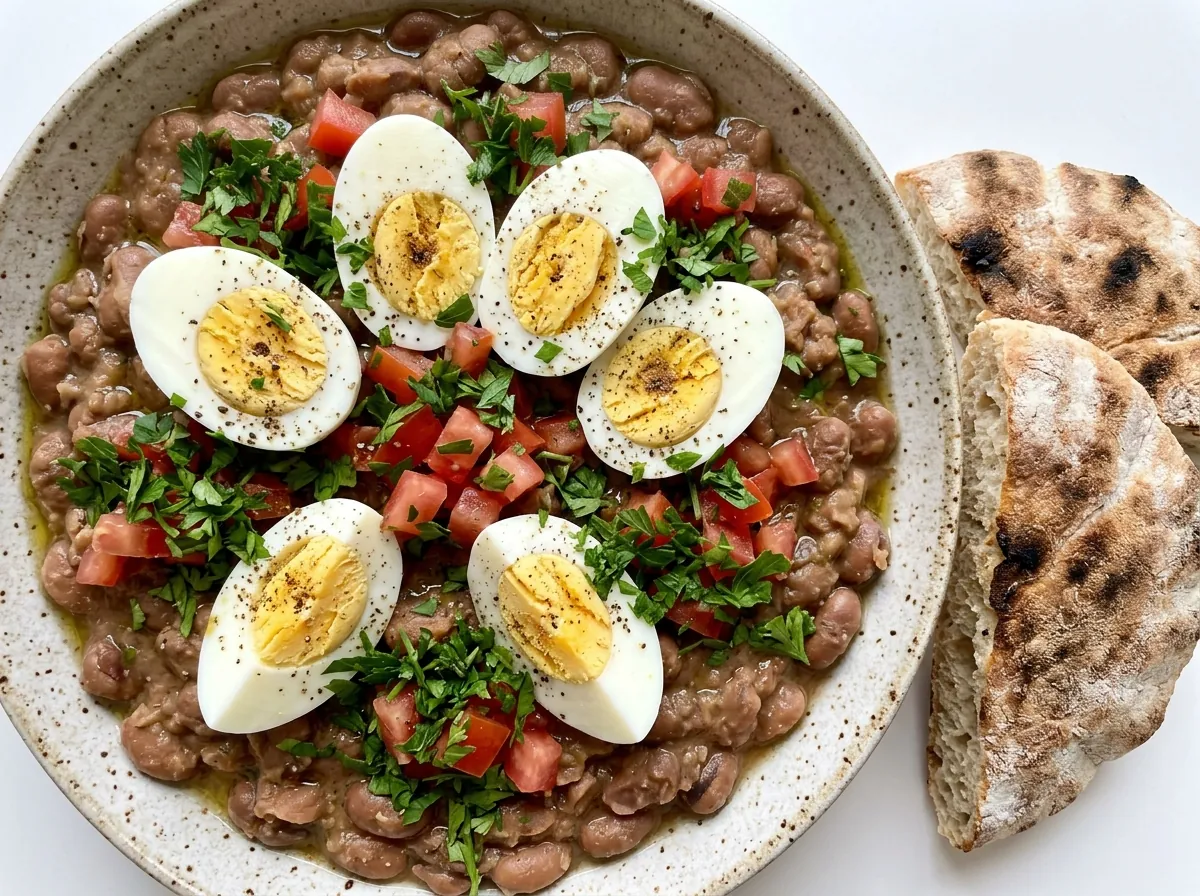
Fava beans with boiled eggs is a classic Egyptian suhoor combination: the starchy beans nourish while the eggs complete the protein, bringing together amino acids that are hard to find in a single plant-based dish.
On farmers' tables, a cracked egg laid over cooked fava beans was a sign of generosity.
Preparation Steps
Heat the beans
In a small pot over low heat, warm the drained fava beans with 1/4 cup water and three tablespoons of olive oil. Mash half the beans with the back of a spoon until a soft creamy texture forms.
Add garlic and cumin
Add the crushed garlic, ground cumin, and a pinch of black pepper. Stir over the heat for two minutes until the cumin aroma rises with the steam and infuses the beans.
Season with salt and lemon
Remove the pot from the heat and add the salt and lemon juice. Stir. Adding lemon at the end preserves its lively acidity, which heat would dull.
Arrange the eggs
Boil the eggs ahead of time, chill them, and cut each in half lengthwise. Arrange the egg halves around the rim of a shallow plate after pouring the beans into the center.
Garnish and serve
Sprinkle the chopped tomato and parsley over the surface and drizzle a thin thread of extra virgin olive oil on top. Serve immediately with warm country bread.
Blood Sugar Impact
The glycemic index (GI) measures how quickly a food raises blood sugar, while the glycemic load (GL) measures how much a full serving raises it. Together they give the complete picture.
Glycemic Index
GI
41Low
Low0–55Medium56–69High70+
A low value (≤55) means a gradual rise in blood sugar — the most suitable range for diabetes and insulin resistance.
Glycemic Load
GL
20High
Low0–10Medium11–19High20+
Glycemic load reflects the impact of the full serving. To lower it: take half a serving, or pair the recipe with a source of protein and fiber.
Nutritional Information
Per ServingMakes 2 servings · one serving is about 350 g of raw ingredients
Calories517 kcal26%of Daily Value*
Protein26 g52%of Daily Value*
Carbohydrates61 g22%of Daily Value*
Fat20 g26%of Daily Value*
Fiber12 g43%of Daily Value*
Sodium1018 mg44%of Daily Value*
* Percent Daily Values are based on a 2,000-calorie diet per FDA food-label reference values — your daily needs may be higher or lower. Values are derived from the recipe's ingredients via the USDA database.
Troubleshooting
The most common problems when preparing Fava Beans with Boiled Eggs and Cumin, and how to fix them:
The beans lose the lemon acidity
The heat killed the acidity. Cool the beans for five minutes before adding the lemon and stir gently.
The egg is over-boiled and its yolk turns greenish gray
The cooking time was too long. Ten minutes of boiling is enough. Chill it right away in ice water.
The taste is flat
There is too little cumin. Add an extra pinch of cumin and black pepper to every plate.
The oil beads up on the surface
You used cold oil straight from the refrigerator. Warm it for a few seconds so it forms a thin thread that slips into the beans.
Storage and Make-Ahead
Refrigerator (4°C)
Two days in an airtight container. Reheat with a spoon of water over low heat.
Not suitable for freezing
Cooked fava beans lose their texture after thawing and turn rubbery.
Tested Ingredient Substitutions
Original Ingredient
Tested Substitute
Ratio
Flavor Difference
Boiled eggs
Scrambled eggs or omelet
1:1
You lose the complete protein but gain a creamier texture.
Canned fava beans
Dried beans soaked 12 hours and boiled
200 g dried
Less sodium and deeper flavor.
Cumin
Ground dried coriander
1:1
Different flavor but the digestive warmth is preserved.
How Much Does It Make? Scaling Guide
Ingredient
2 people
4 people
6 people
Foul medames
400 g
800 g
1200 g
Boiled eggs
2 eggs
4 eggs
6 eggs
Olive oil
30 ml
60 ml
90 ml
Lemon
20 ml
40 ml
60 ml
Cumin
4 g
8 g
12 g
EEINA Nutrition Tip
Boil the eggs ten minutes before suhoor and chill them in ice water so they peel easily. Add them over the beans at the very last moment so the yolk stays firm and does not slide off.
Add This Recipe to Your Plan
The EEINA app saves your favorite recipes, calculates them from their real ingredients, and shows your daily numbers toward your goal. Try it free now.
Yes, fava beans are rich in folic acid which is important in pregnancy, and eggs provide complete protein. Reduce the salt and choose low-sodium beans.
Why chill the eggs right after boiling?
So the yolk stays firm and bright yellow. Quick chilling prevents the greenish gray ring around the yolk.
How many calories per plate?
About 410 calories per serving with a whole egg. That includes 18 g of protein and 12 g of healthy fats.
Is it suitable for people taking blood thinners?
This needs a doctor's advice because of the cumin. It usually remains safe at home-cooking amounts.