Bayd bi laban is one of the venerable home dishes of the Levant.
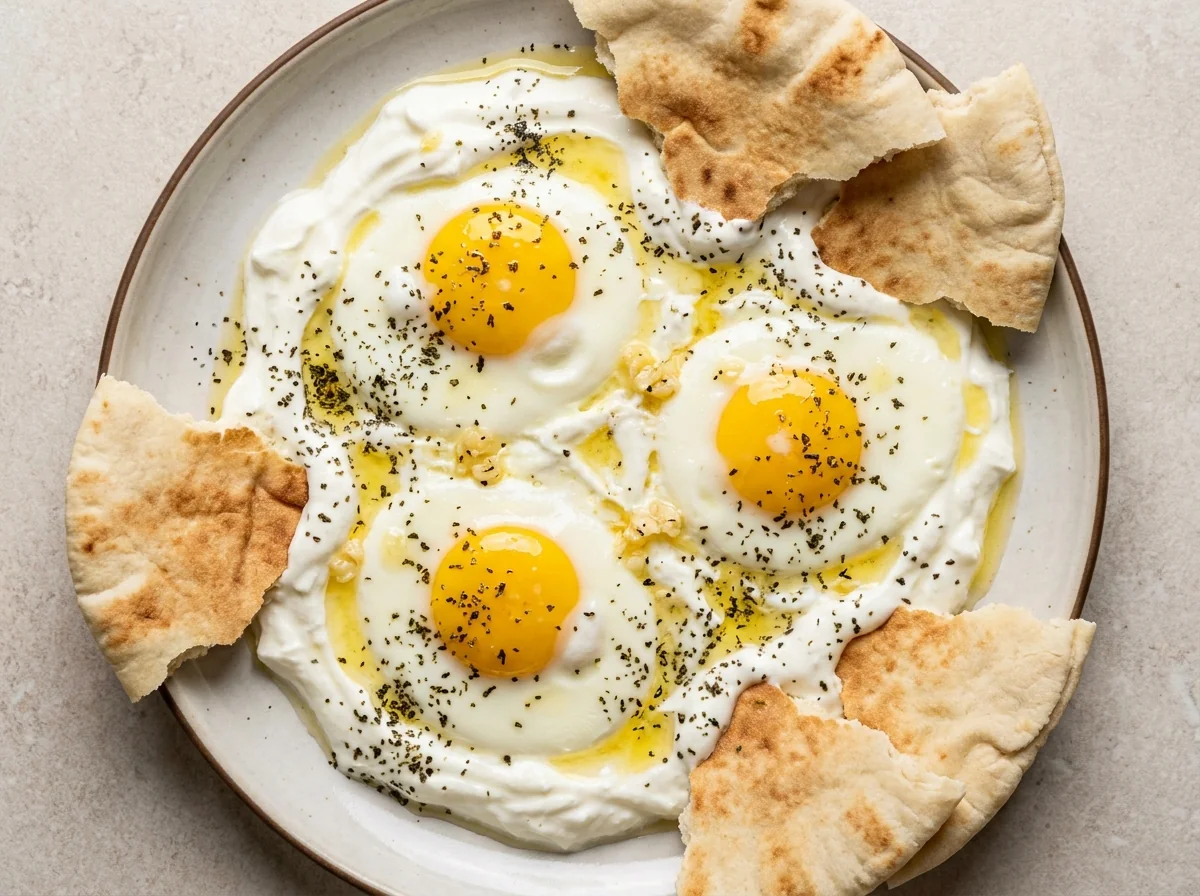
Sunny-side-up eggs reclining on garlic yogurt and bathed in mint ghee. Its speed and lightness made it a constant guest at Levantine Suhoor tables.
Preparation Steps
Prepare the garlic yogurt. The base
In the deep serving dish itself, whisk the yogurt with the crushed garlic and a pinch of salt until smooth. Leave it at room temperature. Cold yogurt from the fridge will shock the hot eggs.
Fry the eggs sunny-side up, gently
In a pan, melt the ghee over medium-low heat and crack the eggs. Cook them until the white sets fully and the yolk stays soft, trembling slightly. About three minutes, with the edges an enticing golden.
Settle the eggs over the yogurt
With a wide spatula, gently move the hot eggs over the lake of garlic yogurt. The meeting of the hot and the lukewarm is the heart of this Levantine dish.
Perfume with mint in the ghee
In the same pan, heat what is left of the ghee for a few seconds and add the dried mint; it sizzles and its aroma rises at once, then drizzle it over the eggs and yogurt in lines that open the appetite.
Serve right away with bread
Eat it hot, dipping the bread into the yolk and the yogurt together. A bite that gathers warmth, tang, and aroma all at once.
Blood Sugar Impact
The glycemic index (GI) measures how quickly a food raises blood sugar, while the glycemic load (GL) measures how much a full serving raises it. Together they give the complete picture.
Glycemic Index
GI
46Low
Low0–55Medium56–69High70+
A low value (≤55) means a gradual rise in blood sugar — the most suitable range for diabetes and insulin resistance.
Glycemic Load
GL
12Medium
Low0–10Medium11–19High20+
Glycemic load reflects the impact of the full serving. To lower it: take half a serving, or pair the recipe with a source of protein and fiber.
Nutritional Information
Per ServingMakes 2 servings · one serving is about 290 g of raw ingredients
Calories390 kcal20%of Daily Value*
Protein22 g44%of Daily Value*
Carbohydrates27 g10%of Daily Value*
Fat22 g28%of Daily Value*
Fiber1 g4%of Daily Value*
Sodium372 mg16%of Daily Value*
Potassium423 mg9%of Daily Value*
Phosphorus376 mg30%of Daily Value*
* Percent Daily Values are based on a 2,000-calorie diet per FDA food-label reference values — your daily needs may be higher or lower. Values are derived from the recipe's ingredients via the USDA database.
Troubleshooting
The most common problems when preparing Levantine Eggs with Yogurt and Garlic, and how to fix them:
The yogurt separated and curdled
We heated it on the stove or poured the eggs while the ghee oil was boiling violently. The yogurt never sees the fire in this dish.
The garlic is too sharp
Use less of it, or crush it with the salt into a fine paste so it spreads more gently.
The yolk cooked through and set
The heat was high. Medium-low and three minutes keep it liquid and golden for dipping.
The mint burned and blackened
The ghee was smoking. Take the pan off the heat, then add the mint. The residual heat of the ghee is enough for it.
Storage and Make-Ahead
Right away
A dish of the moment. It is not prepped ahead nor stored.
Partial prep
Garlic yogurt keeps for a day in the fridge (take it out half an hour ahead), and the eggs are fried fresh at the time.
Not suitable for freezing
With all its ingredients.
Tested Ingredient Substitutions
Original Ingredient
Tested Substitute
Ratio
Flavor Difference
Sunny-side-up eggs
Eggs boiled 6 minutes, cut into halves
1:1
For those who fear a runny yolk
Dried mint
Sweet smoked paprika in the ghee
2 g
An Aleppo-style red version
Plain yogurt
Greek yogurt thinned with a spoon of water
1:1
Thicker and richer
Ghee
Olive oil
1:1
Lighter. It loses a little of the Levantine warmth
How Much Does It Make? Scaling Guide
Ingredient
2 servings
1 serving
4 servings
Eggs
4
2
8
Yogurt
300 g
150 g
600 g
Garlic
8 g
4 g
16 g
EEINA Nutrition Tip
The yogurt's temperature is pivotal: cold from the fridge it breaks the pleasure of the dish, and heated on the stove it separates and curdles. Room temperature is the golden middle.
Add This Recipe to Your Plan
The EEINA app saves your favorite recipes, calculates them from their real ingredients, and shows your daily numbers toward your goal. Try it free now.
In the Levant, yes. Light and quick to prepare, and it brings together egg protein and yogurt calcium before a day of fasting.
Yogurt with eggs... is it heavy?
The opposite for most people: the tang of the yogurt cuts the richness of the egg. Whoever is bothered by raw garlic can halve it.
Is it the same as Turkish cilbir?
Its relative: the Turkish one is poached eggs with paprika butter, and the Levantine one is sunny-side-up eggs with mint ghee. Two methods and two identities.
What is the most suitable bread?
Fresh soft Arabic flatbread for dipping. Toasted bread cuts the yogurt and does not catch it.