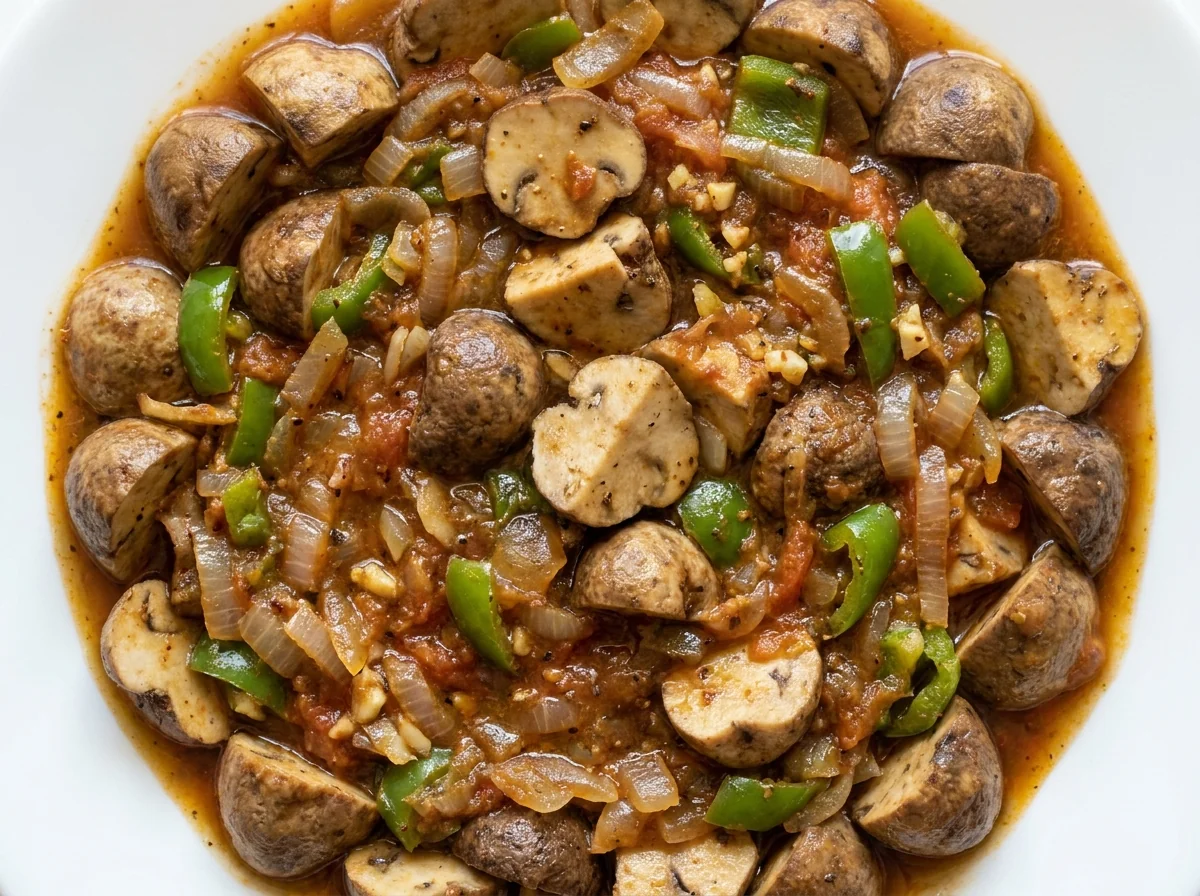
Faqa is a truffle that grows in the deserts of Najd after the spring rains; people search for it beneath the ground, and it is counted among the season's treasures.
We cook it the way desert households do, sautéing it with onion, pepper, and spices in a pan, so its gentle, earthy flavor comes through. It is a light, low-calorie dish we serve alongside rice or in bread, and its short season is enough to keep us craving it all year long.
Preparation Steps
Cleaning the truffle
Wash the desert truffle repeatedly until all the dirt and sand are gone, for it grows underground, then gently peel its outer skin and cut it into quarters.
Sautéing the onion and garlic
Heat the olive oil in a pan over medium heat, and sauté the onion and garlic until they wilt and their fragrance rises.
Adding the pepper
Add the chopped green pepper and stir it until it softens slightly while keeping some of its crunch.
Cooking the truffle
Add the desert truffle, the spices, cumin, black pepper, and salt and stir, then add the grated tomatoes and the water, and cover the pan over gentle heat for about half an hour until the truffle is cooked and has absorbed the flavor.
Serving
Uncover it and let the remaining water evaporate until the broth thickens, then serve the truffle hot with white rice or inside a loaf of bread.
Blood Sugar Impact
The glycemic index (GI) measures how quickly a food raises blood sugar, while the glycemic load (GL) measures how much a full serving raises it. Together they give the complete picture.
Glycemic Index
GI
34Low
Low0–55Medium56–69High70+
A low value (≤55) means a gradual rise in blood sugar — the most suitable range for diabetes and insulin resistance.
Glycemic Load
GL
8Low
Low0–10Medium11–19High20+
Glycemic load reflects the impact of the full serving. To lower it: take half a serving, or pair the recipe with a source of protein and fiber.
Nutritional Information
Per ServingMakes 4 servings
Calories201 kcal10%of Daily Value*
Protein6 g12%of Daily Value*
Carbohydrates28 g10%of Daily Value*
Fat7 g9%of Daily Value*
Fiber4 g14%of Daily Value*
Sodium214 mg9%of Daily Value*
* Percent Daily Values are based on a 2,000-calorie diet per FDA food-label reference values — your daily needs may be higher or lower. Values are derived from the recipe's ingredients via the USDA database.
Troubleshooting
The most common problems when preparing Sautéed Desert Truffle (Fuqa) with Onion and Pepper, and how to fix them:
The truffle is sandy when eaten
It was not washed well, so wash it again several times and peel its outer skin before cutting.
The truffle is watery and too soft
Leave it uncovered over gentle heat until its water evaporates, for the truffle releases a lot of water while cooking.
The flavor is bland
Brown the onion well and add more spices, for the truffle's flavor is delicate and needs something to bring it out.
Storage and Make-Ahead
Refrigerator
Keep it cooked in an airtight container for up to two days.
Freezing
Freeze the raw, cleaned truffle for up to six months, and cook it without thawing whenever we crave it.
Tested Ingredient Substitutions
Original Ingredient
Tested Substitute
Ratio
Flavor Difference
desert truffle
white mushrooms or local mushrooms
same weight, 500 g
The texture is close and the flavor lighter than the truffle's earthy taste
sweet green pepper
mixed colored peppers
same weight, 100 g
A touch of color and a sweeter note
olive oil
local ghee
same amount, 20 ml
A flavor closer to the desert table
grated tomatoes
a spoonful of tomato paste
to taste, 15 g
For a darker, thicker broth
How Much Does It Make? Scaling Guide
Ingredient
half the amount
full amount (base)
double
Desert truffle (faqa)
250 g
500 g
1000 g
Onion
60 g
120 g
240 g
Sweet green pepper
50 g
100 g
200 g
Garlic
5 g
10 g
20 g
Olive oil
10 ml
20 ml
40 ml
Salt
1 g
2 g
4 g
EEINA Nutrition Tip
The desert truffle grows under the soil so it carries a lot of sand, which is why we wash it several times in a row and rub it gently until the water runs completely clear, for a single grain of sand spoils the whole dish.
Add This Recipe to Your Plan
The EEINA app saves your favorite recipes, calculates them from their real ingredients, and shows your daily numbers toward your goal. Try it free now.
Faqa is a desert truffle that grows underground after the spring rains in Najd and the desert, and it is among the most prized foods of the season and the richest in plant protein.
Why is desert truffle expensive?
Because it is seasonal and short-lived, grows naturally in the desert, is gathered by hand, and cannot be farmed like other crops.
How do I clean the sand off the desert truffle?
Wash it several times in fresh changes of water and rub it gently; some people soak it briefly, then peel its outer skin before cutting.