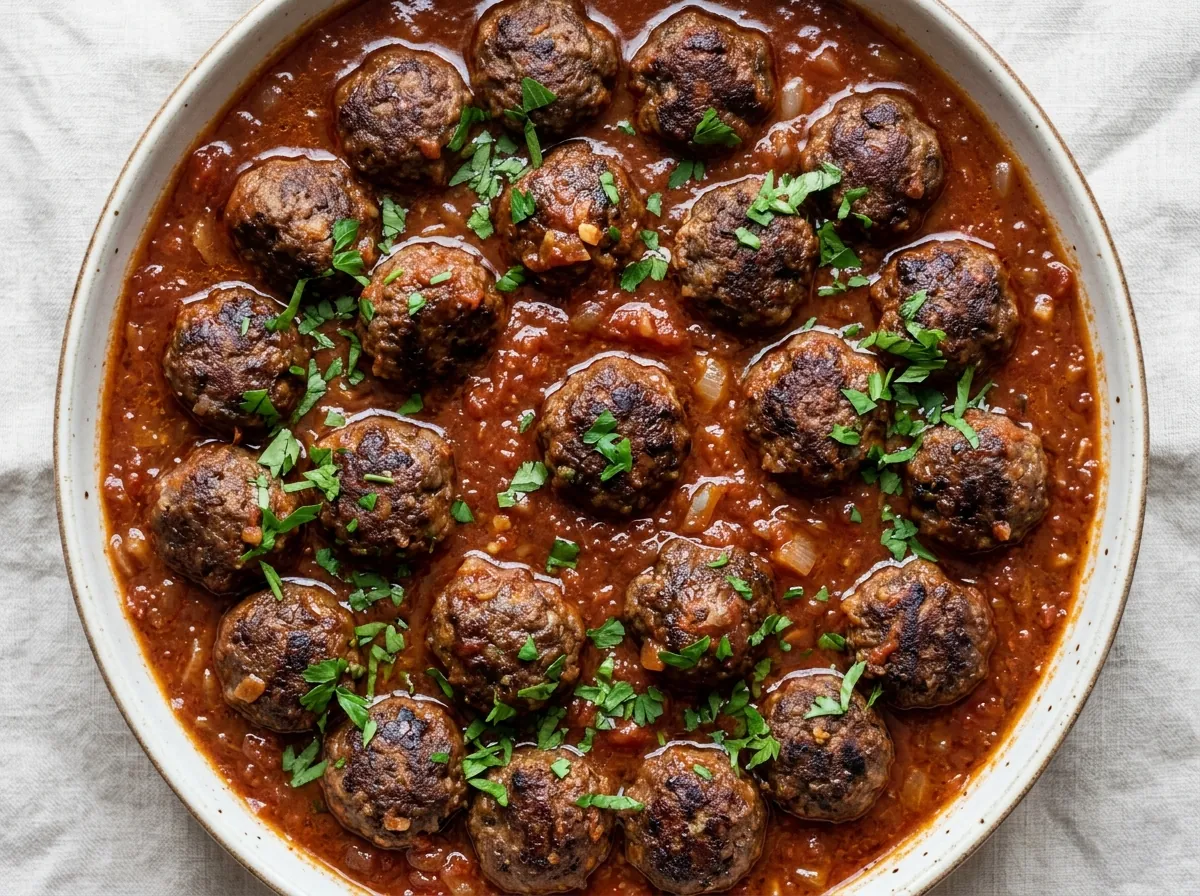
Dawood Basha is meatballs in tomato sauce, and this version differs by one step: coating the balls in flour before frying.
The flour grips the surface so it browns quickly and seals in the juices, then dissolves into the sauce and thickens it without any added starch.
Preparation Steps
Knead the meatballs
Mix the ground meat with the grated onion, garlic, salt, black pepper and mixed spices, and knead until even. The onion is grated rather than chopped so its water melts into the meat and keeps the balls tender.
Shape and coat in flour
Roll the meat into even balls, then pass them through the flour until covered on every side. That layer of flour is what holds the ball's shape in the oil and stops it breaking up.
Fry the balls
Fry the balls in hot oil until browned outside, then lift and drain them. They need not cook through here, since they finish in the sauce.
Fry the aromatics
Put the oil in a pot over the heat, then add the onion and garlic and stir until softened.
Cook the sauce
Add the tomato paste and grated tomatoes and leave the sauce until it reduces and thickens, then season with salt, black pepper and mixed spices.
Add the balls and serve
Add the fried meatballs to the sauce and leave them to take up the flavor, and serve dawood basha hot with a sprinkle of parsley.
Blood Sugar Impact
The glycemic index (GI) measures how quickly a food raises blood sugar, while the glycemic load (GL) measures how much a full serving raises it. Together they give the complete picture.
Glycemic Index
GI
44Low
Low0–55Medium56–69High70+
A low value (≤55) means a gradual rise in blood sugar — the most suitable range for diabetes and insulin resistance.
Glycemic Load
GL
10Low
Low0–10Medium11–19High20+
Glycemic load reflects the impact of the full serving. To lower it: take half a serving, or pair the recipe with a source of protein and fiber.
Nutritional Information
Per ServingMakes 4 servings · one serving is about 365 g of raw ingredients
Calories765 kcal38%of Daily Value*
Protein25 g50%of Daily Value*
Carbohydrates26 g9%of Daily Value*
Fat63 g81%of Daily Value*
Fiber3 g11%of Daily Value*
Sodium390 mg17%of Daily Value*
* Percent Daily Values are based on a 2,000-calorie diet per FDA food-label reference values — your daily needs may be higher or lower. Values are derived from the recipe's ingredients via the USDA database.
Troubleshooting
The most common problems when preparing Dawood Basha with Floured Meatballs, and how to fix them:
The balls fell apart in the oil
The flour did not cover them fully or the oil was not hot. Coat them well and check the oil temperature before lowering them in.
The sauce is watery
It was not cooked down enough. Leave it over medium heat until the oil separates on the surface.
The balls are dry inside
They were fried too long. Browning the outside is enough, and the sauce finishes the cooking.
The flour taste comes through
The coating is too thick. Shake off the excess before frying so a thin layer remains.
Storage and Make-Ahead
Serving
Hot, with rice or bread.
Fridge (4C)
Three days in a sealed container, and the sauce tastes better the next day.
Freezing
Two months sealed with its sauce, thawed in the fridge before reheating.
Reheating
Over low heat with a splash of water so the sauce does not dry out.
Tested Ingredient Substitutions
Original Ingredient
Tested Substitute
Ratio
Flavor Difference
Lamb
Ground beef
500 g
Leaner and milder, and needs a little more oil when kneading.
Frying
Oven
200C
Arrange the coated balls on a tray, brush with oil, twenty minutes, and the fat drops sharply.
Fresh tomatoes
Canned peeled tomatoes
600 g
Available year round and more consistently acidic, and they need shorter cooking.
Flour
Cornstarch
40 g
A lighter, crisper coating, but it will not thicken the sauce the way flour does.
How Much Does It Make? Scaling Guide
Servings
Meat
Tomatoes
Flour
2 servings (half the amount)
250 g
300 g
32 g
4 servings (base)
500 g
600 g
63 g
8 servings (double)
1000 g
1200 g
125 g
EEINA Nutrition Tip
Chill the meat mixture for ten minutes before shaping. Cold meat holds together between the palms, so the balls come out even and do not stick to your hands.
Add This Recipe to Your Plan
The EEINA app saves your favorite recipes, calculates them from their real ingredients, and shows your daily numbers toward your goal. Try it free now.
How is this different from the Dawood Basha we already have?
That one kneads parsley into the balls, cooks them in a sauce with pomegranate molasses and toasted pine nuts, and serves them with rice. This one coats the balls in half a cup of flour and fries them, and its sauce is grated tomato and paste with no molasses and no pine nuts. The amounts and the method both differ.
Why coat the meatballs in flour?
That is what the source calls for. The flour grips the surface so the balls brown before their juices escape, and whatever clings to them dissolves into the sauce and thickens it.
Must the meat be fried before the sauce?
In this recipe yes, and the frying is what gives the crust and its flavor. To cut the fat, bake them instead and then add them to the sauce.
How far does this batch go?
Four servings as the source estimates, from half a kilo of meat with six hundred grams of tomatoes.
Sources: USDA · University of Sydney · Our methodology · Updated on