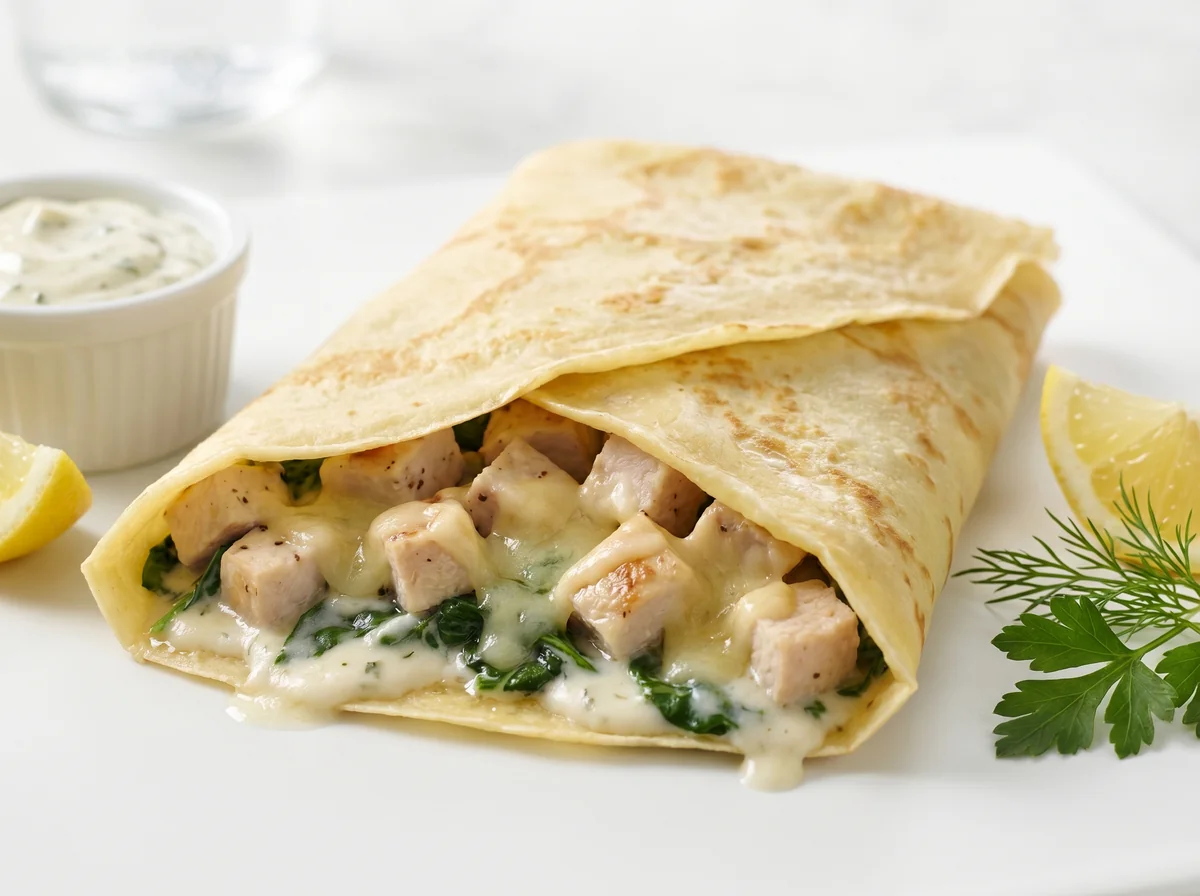
Savory crepe with whole-wheat batter stuffed with chicken, mushrooms, spinach, and a little cheese · high protein and fiber. A famous French breakfast or lunch in a healthy version.
The crepe is a versatile French dish: thin batter stuffed sweet or savory.
EEINA's savory version uses whole-wheat flour and stuffs it with chicken, mushrooms, spinach, and a little cheese, so it comes out a balanced, high-protein meal instead of the sweetened white crepe.
Preparation Steps
Prepare the batter
Whisk the flour, eggs, milk, and a pinch of salt until the mixture is smooth with no lumps, the consistency of pouring cream, then leave it to rest for fifteen minutes. Resting makes the crepe more tender and easier to spread.
Fry the mushrooms
Heat the oil and sauté the garlic and mushrooms for about three minutes until the mushrooms soften and their water evaporates. Evaporating the mushroom water keeps the filling from going wet.
Add the spinach and chicken
Add the spinach and stir for a minute until it wilts, then the shredded chicken, salt, pepper, and nutmeg, and set the filling aside. The nutmeg gives the filling a warm flavor.
Fry the crepe
Heat a non-stick skillet over medium heat and grease it with a splash of oil, pour in a ladle of batter and swirl the skillet to spread it thin, and cook it for one to two minutes until the edges dry and the base takes on color, then flip it and cook the other side for half a minute.
Fill
Place an amount of the chicken filling on half the crepe and a sprinkle of cheese, then fold the crepe in half then into quarters, and leave it a few seconds on the warm skillet until the cheese melts and it holds together.
Serve
Serve the crepe warm with a green side salad or yogurt. It works as a filling breakfast or a light, protein-rich lunch.
Blood Sugar Impact
The glycemic index (GI) measures how quickly a food raises blood sugar, while the glycemic load (GL) measures how much a full serving raises it. Together they give the complete picture.
Glycemic Index
GI
48Low
Low0–55Medium56–69High70+
A low value (≤55) means a gradual rise in blood sugar — the most suitable range for diabetes and insulin resistance.
Glycemic Load
GL
11Medium
Low0–10Medium11–19High20+
Glycemic load reflects the impact of the full serving. To lower it: take half a serving, or pair the recipe with a source of protein and fiber.
Nutritional Information
Per ServingMakes 4 servings · one serving is about 275 g of raw ingredients
Calories355 kcal18%of Daily Value*
Protein31 g62%of Daily Value*
Carbohydrates26 g9%of Daily Value*
Fat14 g18%of Daily Value*
Fiber4 g14%of Daily Value*
Sodium483 mg21%of Daily Value*
Potassium667 mg14%of Daily Value*
Phosphorus445 mg36%of Daily Value*
* Percent Daily Values are based on a 2,000-calorie diet per FDA food-label reference values — your daily needs may be higher or lower. Values are derived from the recipe's ingredients via the USDA database.
Troubleshooting
The most common problems when preparing Chicken and Vegetable Crepe, and how to fix them:
The crepe tore when flipped
The batter is thick or the crepe was not cooked enough before flipping. Make the batter the consistency of pouring cream, and flip it only after the edges dry and the base takes on color. Use a non-stick skillet.
The batter has lumps
The flour was added all at once or not whisked enough. Whisk well (or in a blender), and leave the batter to rest 15 minutes then stir it before use. Straining removes any remaining lumps.
The crepe is thick like a pancake
The batter is too dense. The crepe needs a much thinner batter than a pancake. Add milk until it becomes like the consistency of pouring cream, and spread it thin by swirling the skillet.
The filling is watery
The mushrooms and spinach released water that did not evaporate. Sauté the mushrooms until their water dries, and the spinach until it wilts and its liquid evaporates before adding the chicken, so it does not wet the crepe.
The crepe stuck to the skillet
The skillet was not hot or there was not enough fat. Heat the skillet well and grease it with a splash of oil before each crepe, and wait until the edges dry before trying to flip.
Storage and Make-Ahead
Fridge (4°)
Empty crepes: 3 days with parchment paper between the pieces. Filling: two days separately. Fill and reheat at serving time for the best texture.
Freezer (-18°)
Empty crepes freeze for two months with parchment paper between the pieces. Thaw and fill fresh. The filling freezes for two months too.
Make ahead
Fry a batch of crepes and prepare the filling in advance and keep them separate. Filling and reheating takes only minutes at serving time (ideal for weekly breakfast).
Reheating
In a skillet over low heat or a medium oven for a few minutes until hot. The microwave makes the crepe soft. Do not leave it out of the fridge for more than two hours [2].
Tested Ingredient Substitutions
Original Ingredient
Tested Substitute
Ratio
Flavor Difference
Whole-wheat flour
Oat or chickpea flour
same amount
Chickpea flour is gluten-free and higher in protein, with a deeper flavor
Chicken filling
Tuna, mixed vegetables, or cheese
same weight
Alternative fillings; vegetables are a vegetarian option
Milk
Unsweetened plant-based milk
same amount
For the dairy-free version (the cheese can be omitted too)
Mushrooms and spinach
Zucchini, pepper, and onion
same weight
Any vegetable sautéed until dry before filling
Cheese
Omit it or plant-based cheese
—
To reduce fat or for the dairy-free version
How Much Does It Make? Scaling Guide
Servings
Flour
Eggs
Milk
Chicken
2 (single × 2)
1/2 cup
1 egg
3/4 cup
150 g
4 (base)
1 cup
2 eggs
1.5 cups
300 g
6 (family)
1.5 cups
3 eggs
2.25 cups
450 g
8 (guests)
2 cups
4 eggs
3 cups
600 g
EEINA Nutrition Tip
Whole-wheat flour instead of white adds fiber and softens the crepe's effect on blood sugar, and filling it with protein and vegetables slows absorption. We stick to one or two crepes per serving, and avoid sweetened sweet fillings for people with diabetes.
Add This Recipe to Your Plan
The EEINA app saves your favorite recipes, calculates them from their real ingredients, and shows your daily numbers toward your goal. Try it free now.
The savory crepe with whole-wheat flour and a protein filling has a low glycemic index (about 48) and moderate load. We stick to a moderate serving and avoid sweetened sweet fillings, and serve it with a salad.
What is the difference between a crepe and a pancake?
The crepe is much thinner and its batter more fluid and without baking powder, so it comes out tender and foldable. The pancake is denser and puffy. The crepe works for savory and sweet fillings.
How do I make it gluten-free?
Use chickpea flour or a gluten-free flour blend. Chickpea flour gives higher protein and a deeper flavor, and is an excellent choice for the savory crepe.
Is it good for workday breakfast?
Excellent. Fry a batch of crepes and prepare the filling on the weekend and freeze them, then fill and reheat each morning in minutes. A high-protein meal that keeps you full.
Can it be made vegetarian?
Yes, replace the chicken filling with sautéed vegetables and cheese or roast it, and use plant-based milk. The egg in the batter can be replaced with a flax egg.
Sources: USDA · University of Sydney · Gulf GSO · Our methodology · Updated on