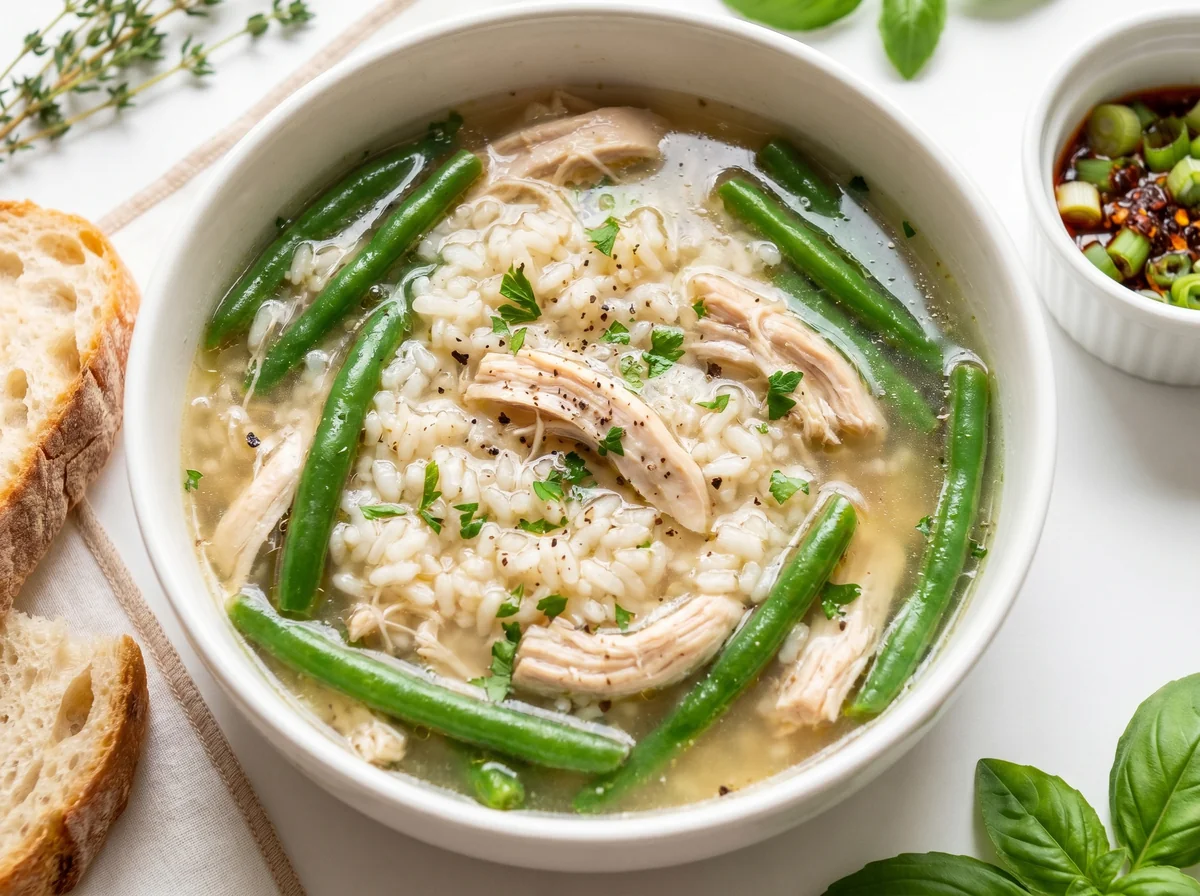
A kidney-friendly chicken and rice soup with green beans, made with homemade unsalted broth instead of stock cubes — light, warming, and gentle on the body.
Light soup has always been part of the Gulf table, especially on winter evenings and Ramadan iftars where it opens the meal.
This recipe reworks the classic chicken soup with a kidney-conscious eye: a slowly simmered homemade broth instead of sodium- and phosphate-laden stock cubes, low-phosphorus white rice, and a measured amount of green beans — enough for colour and texture without overloading potassium. Lemon, sautéed onion, and cumin build a warm flavour that makes up for the missing salt, so the soup tastes familiar yet is gentler on the body.
Preparation Steps
Poach the chicken breast
Place the chicken breast in a pot with 1500 ml of cold water over medium heat. Bring to a boil, then reduce the heat and simmer for 25 minutes until fully cooked, reaching an internal temperature of 74°C with clear (not pink) juices when pierced — this ensures safety and tenderness. Skim off any foam that rises to the surface to keep the broth clear.
Strain the broth and shred the chicken
Lift the chicken out and let it cool slightly, then shred it into small pieces. Strain the broth through a fine-mesh sieve into a clean bowl to remove any impurities — you get a clean flavour base with no salty stock cubes.
Sauté the onion and carrot
In the same pot, heat the tablespoon of olive oil over medium heat. Add the chopped onion and grated carrot and stir for 4 minutes until the onion softens and becomes translucent without browning. Gentle sautéing releases the vegetables' natural sweetness and builds flavour without needing salt.
Add the broth and rice
Return the strained broth to the pot and add the washed white rice, cumin, and black pepper. Bring to a gentle simmer, then reduce the heat and cook for 12 minutes until the rice begins to soften. Cooking the rice directly in the broth gives it a cohesive texture and deep flavour.
Add the green beans
Add the cut green beans and cook for 6 minutes until just tender but still bright green with a slight bite. The limited quantity and short cooking time preserve their texture without overdoing it.
Return the chicken and finish the seasoning
Return the shredded chicken to the pot and cook for 2 minutes until heated through. Remove from the heat and stir in the fresh lemon juice — it lifts the flavour and reduces the need for most of the salt. Taste and add salt sparingly, following your doctor's guidance.
Serve
Ladle the soup hot into bowls, garnish with chopped parsley, and serve immediately. The heat and fresh lemon bring out its light, refreshing flavour.
Blood Sugar Impact
The glycemic index (GI) measures how quickly a food raises blood sugar, while the glycemic load (GL) measures how much a full serving raises it. Together they give the complete picture.
Glycemic Index
GI
60Medium
Low0–55Medium56–69High70+
A low value (≤55) means a gradual rise in blood sugar — the most suitable range for diabetes and insulin resistance.
Glycemic Load
GL
12Medium
Low0–10Medium11–19High20+
Glycemic load reflects the impact of the full serving. To lower it: take half a serving, or pair the recipe with a source of protein and fiber.
Nutritional Information
Per ServingMakes 4 servings · one serving is about 550 g of raw ingredients
Calories221 kcal11%of Daily Value*
Protein19 g38%of Daily Value*
Carbohydrates22 g8%of Daily Value*
Fat6 g8%of Daily Value*
Fiber2 g7%of Daily Value*
Sodium242 mg11%of Daily Value*
Potassium449 mg10%of Daily Value*
Phosphorus208 mg17%of Daily Value*
* Percent Daily Values are based on a 2,000-calorie diet per FDA food-label reference values — your daily needs may be higher or lower. Values are derived from the recipe's ingredients via the USDA database.
Troubleshooting
The most common problems when preparing Chicken, Rice and Green Bean Low-Sodium Soup, and how to fix them:
The broth tastes bland without salt
Gradually add more lemon juice and a pinch of extra cumin or black pepper. Sauté the onion a little longer until lightly golden — it releases a deeper flavour that compensates for the missing salt.
The rice has absorbed the broth and the soup has become thick
Add 150–250 ml of hot water and stir over low heat until it returns to a liquid consistency. Rice continues to absorb liquid, especially when cooled and reheated.
The green beans turned mushy and lost their colour
Add them in the last few minutes only (6 minutes is enough) and avoid a long rolling boil. Bright green colour signals proper cooking and the right texture.
A layer of foam or fat appeared on the surface of the broth
Skim it off with a spoon during the poaching step. The foam is coagulated protein that clouds the broth; removing it gives a cleaner-looking soup without affecting safety.
The chicken came out dry and tough
Do not keep simmering past 74°C; over-boiling dries out chicken breast. Remove it as soon as it is cooked and shred it back into the pot at the end to reheat without overcooking.
Storage and Make-Ahead
Refrigerator
Store in an airtight container for up to 3 days. Cool within 2 hours of cooking to avoid the bacterial danger zone (4–60°C).
Freezer
Freeze in airtight containers for up to 2 months. Ideally freeze before adding the rice, as rice tends to soften further after freezing and reheating.
Reheating
Reheat gently over low heat with a splash of hot water to restore the consistency, until it comes to a light simmer and reaches 74°C in the centre.
Advance prep
Poach the broth and shred the chicken a day ahead and store them separately in the fridge, then finish the soup fresh at serving time for the best rice and bean texture.
Tested Ingredient Substitutions
Original Ingredient
Tested Substitute
Ratio
Flavor Difference
Chicken breast
Skinless turkey breast
1:1
A comparable low-fat, high-protein option that stays within the relatively lower-phosphorus animal protein choices suitable for a renal diet.
White rice
Thin vermicelli or small pasta
1:1 by weight
A low-phosphorus, low-potassium swap with a similar texture. Avoid brown rice and bulgur on a strict renal diet due to their higher phosphorus content.
Green beans
Diced zucchini
1:1
Zucchini is low in potassium and very mild — an excellent swap for anyone who needs stricter potassium control. Add in the last 6 minutes as well.
Lemon juice
Mild apple cider vinegar
Half the quantity
Provides the acidity that lifts flavour and reduces the need for salt. Start small and taste, as vinegar is sharper than lemon.
Onion and carrot
Leek and zucchini
1:1
A lighter-flavoured option for those who prefer to reduce carrot; leek gives a gentle sweetness in place of the onion.
How Much Does It Make? Scaling Guide
Ingredient
4 servings
8 servings
12 servings
Chicken breast (g)
300
600
900
Water (ml)
1500
3000
4500
White rice (g)
80
160
240
Green beans (g)
100
200
300
Onion (piece)
1
2
3
Lemon juice (tablespoon)
2
4
6
EEINA Nutrition Tip
If you follow a strict renal diet, you can reduce the potassium in the green beans further by blanching them in a separate pot of water for 2 minutes and draining before adding (the soak-and-boil technique reduces water-soluble potassium). Make fresh lemon juice your first ally for lifting flavour — it is low in sodium and noticeably reduces your need for salt.
Add This Recipe to Your Plan
The EEINA app saves your favorite recipes, calculates them from their real ingredients, and shows your daily numbers toward your goal. Try it free now.
It is designed to be low in sodium, potassium, and phosphorus through homemade broth, white rice, and a limited amount of green beans. However, it is supportive rather than therapeutic, and your individual needs depend on your stage of disease and whether you are on dialysis — consult your nephrologist and renal dietitian before including it in your diet plan.
Why white rice and not brown, when brown is generally healthier?
In the specific context of a renal diet, white rice is preferred because it is lower in phosphorus and potassium than brown rice and whole grains. General nutrition rules do not always apply to a kidney diet, which requires restricting these minerals.
How do I boost flavour without salt or stock cubes?
Rely on fresh lemon juice, well-sautéed onion, cumin, black pepper, and parsley. These flavours build a warm depth that makes up for most of the salt. Add salt only in the smallest amount your doctor allows.
Can I use more green beans?
The quantity is intentionally limited (100 g for four servings) to manage potassium. If your diet allows more flexibility you can increase it slightly, but on a strict plan stick to the amount or swap it for zucchini, which is lower in potassium.
Is the soup suitable for diabetics as well?
It contains white rice, so monitor your rice portion if you are managing blood sugar. Enjoy it as part of a balanced meal in a moderate quantity, and consult your dietitian to fit the carbohydrate serving into your meal plan.