Dinner · Global Healthy Cuisine · Contemporary Gulf
Celery Vegetable Diet Soup
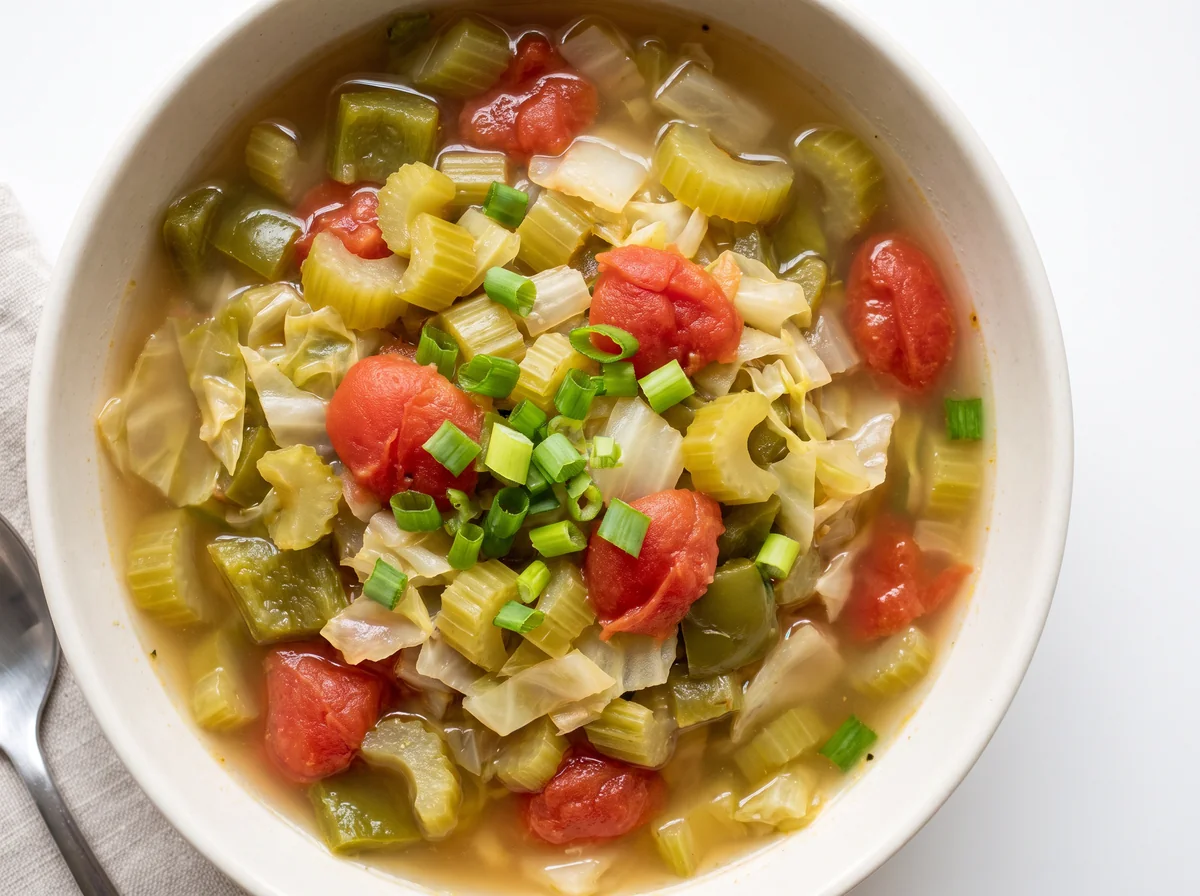
A light vegetable soup led by celery and joined by cabbage, tomatoes, and green pepper, blended after cooking into a smooth, warm bowl with very few calories. An honest filling dish for anyone watching their weight — good as a starter or a light dinner.
Blended diet soups made from several vegetables are a familiar dish in our kitchens, and this is a tidy version of one from Sayidaty Kitchen: celery leads the flavor, with cabbage, tomatoes, and green pepper filling out the body, then a blend brings them together in one smooth bowl.
We halved the original's oil and switched it to olive oil, and settled for one low-sodium stock cube instead of two — the taste stayed, the salt and fat lightened.
Preparation Steps
Sauté the green onions and celery
Heat the olive oil in a pot over medium heat, then add the green onions and celery and stir for about 3 minutes until they soften and become fragrant, without letting them brown.
Add the rest of the vegetables
Add the green pepper, cabbage, and chopped tomatoes, and stir the mixture for about 4 minutes until the cabbage wilts and the tomatoes begin to release their juices.
Add the water and stock
Dissolve the stock cube in the hot water and pour it over the vegetables until covered. Raise the heat to a boil, then lower it, cover the pot, and let the soup simmer gently for about 12 minutes until the vegetables are completely tender.
Blend the soup
Take the pot off the heat and let it settle for two minutes, then blend the mixture with an immersion blender until the texture is smooth. If you like small chunks, blend only half the amount and leave the rest as is.
Season and serve
Return the pot to low heat for 10 minutes, and season with the salt and black pepper — tasting before adding more, as the stock cube already carries salt. Serve hot.
Blood Sugar Impact
The glycemic index (GI) measures how quickly a food raises blood sugar, while the glycemic load (GL) measures how much a full serving raises it. Together they give the complete picture.
Glycemic Index
GI
13Low
Low0–55Medium56–69High70+
A low value (≤55) means a gradual rise in blood sugar — the most suitable range for diabetes and insulin resistance.
Glycemic Load
GL
1Low
Low0–10Medium11–19High20+
Glycemic load reflects the impact of the full serving. To lower it: take half a serving, or pair the recipe with a source of protein and fiber.
Nutritional Information
Per ServingMakes 4 servings · one serving is about 425 g of raw ingredients
Calories71 kcal4%of Daily Value*
Protein2 g4%of Daily Value*
Carbohydrates8 g3%of Daily Value*
Fat4 g5%of Daily Value*
Fiber3 g11%of Daily Value*
Sodium582 mg25%of Daily Value*
* Percent Daily Values are based on a 2,000-calorie diet per FDA food-label reference values — your daily needs may be higher or lower. Values are derived from the recipe's ingredients via the USDA database.
Troubleshooting
The most common problems when preparing Celery Vegetable Diet Soup, and how to fix them:
The taste is more sour than pleasant because of the tomatoes
Cook the soup a few extra minutes after blending so the acidity settles, or next time add a small grated carrot with the vegetables — the carrot's natural sweetness balances the tomato acidity without added sugar.
The texture is watery and thin
Leave it uncovered over low heat for about 10 minutes so some water evaporates, or reduce the water to 3 cups next time. Cabbage and celery carry no starch, so its body is naturally lighter than potato soups.
The cabbage smell is strong
Usually caused by over-long cooking. Keep to the stated cooking time and do not extend the boil — the longer cabbage cooks, the stronger its sulfurous smell. A squeeze of lemon juice at serving also softens the smell.
The soup is salty
The ready-made cube carries a lot of salt. Always taste before adding salt, and if it turns out too salty, add a cup of hot water and let it boil a few minutes, or simmer a raw potato cube in it and then remove it.
Storage and Make-Ahead
Refrigerator (4°C)
Keeps in an airtight container for up to 3 days after cooling completely. Reheat over low heat, stirring, until heated through, and do not leave it at room temperature for more than two hours before chilling.
Freezing (-18°C)
Freezes well for up to two months in a freezer-safe container with room left for expansion. Dairy-free blended vegetable soups keep their texture after thawing. Thaw overnight in the refrigerator, then heat to a gentle boil.
Reheating
Over low heat with constant stirring, or in the microwave for two minutes with a stir halfway. Add a splash of water if it thickened in storage, and do not reheat the same portion more than once.
Tested Ingredient Substitutions
Original Ingredient
Tested Substitute
Ratio
Flavor Difference
Stock cube
Homemade vegetable stock
4 cups of stock instead of the water and cube
Gives full control over the sodium and a cleaner flavor — the best choice for anyone watching their salt.
Green pepper
Cubed zucchini
Same weight, 120 g
For those who dislike the pepper's flavor; zucchini is neutral in taste and keeps the same low calories.
Cabbage
Chopped broccoli
Same volume, 1 cup
Adds similar fiber and a deeper green color, and its cooking smell is gentler than cabbage's.
Olive oil
Cooking oil spray
2 sprays instead of the tablespoon
Cuts the calories further for those who want the absolute minimum, while keeping a light sauté for the vegetables.
How Much Does It Make? Scaling Guide
Servings
Celery
Cabbage
Tomatoes
Water
2 servings
1 cup (100 g)
½ cup (45 g)
1 piece (120 g)
2 cups (500 ml)
4 servings
2 cups (200 g)
1 cup (90 g)
2 pieces (240 g)
4 cups (1000 ml)
6 servings
3 cups (300 g)
1½ cups (135 g)
3 pieces (360 g)
6 cups (1500 ml)
EEINA Nutrition Tip
Make it the start of the meal, not the whole of it: a light bowl of soup before the main dish helps you feel full early, so the total amount eaten drops. And for anyone who wants to turn it into a complete dinner, adding a light protein — sliced grilled chicken breast or two spoonfuls of boiled chickpeas after blending — is enough.
Add This Recipe to Your Plan
The EEINA app saves your favorite recipes, calculates them from their real ingredients, and shows your daily numbers toward your goal. Try it free now.
It is close to that idea, but without the claim. No soup burns fat; weight loss happens through a calorie deficit across your whole eating pattern, and this soup makes that easier because it fills the stomach with few calories.
Can I leave it unblended?
Yes. The original method blends it, but leaving it in small chunks is a perfectly acceptable choice, and it gives longer chewing that may increase the feeling of fullness. What matters is that the vegetables are fully cooked before serving.
Is it enough on its own as dinner?
On its own, it is a light dish low in protein. To make it a balanced dinner, add a protein source such as grilled chicken, a boiled egg, or chickpeas — protein together with fiber raises satiety through to the morning.
How many days can I rely on it for dieting?
Do not build an entire regimen on one soup. It is a supporting element within a balanced pattern that includes protein, whole grains, and healthy fats; soup-only regimens lose nutritional balance quickly.