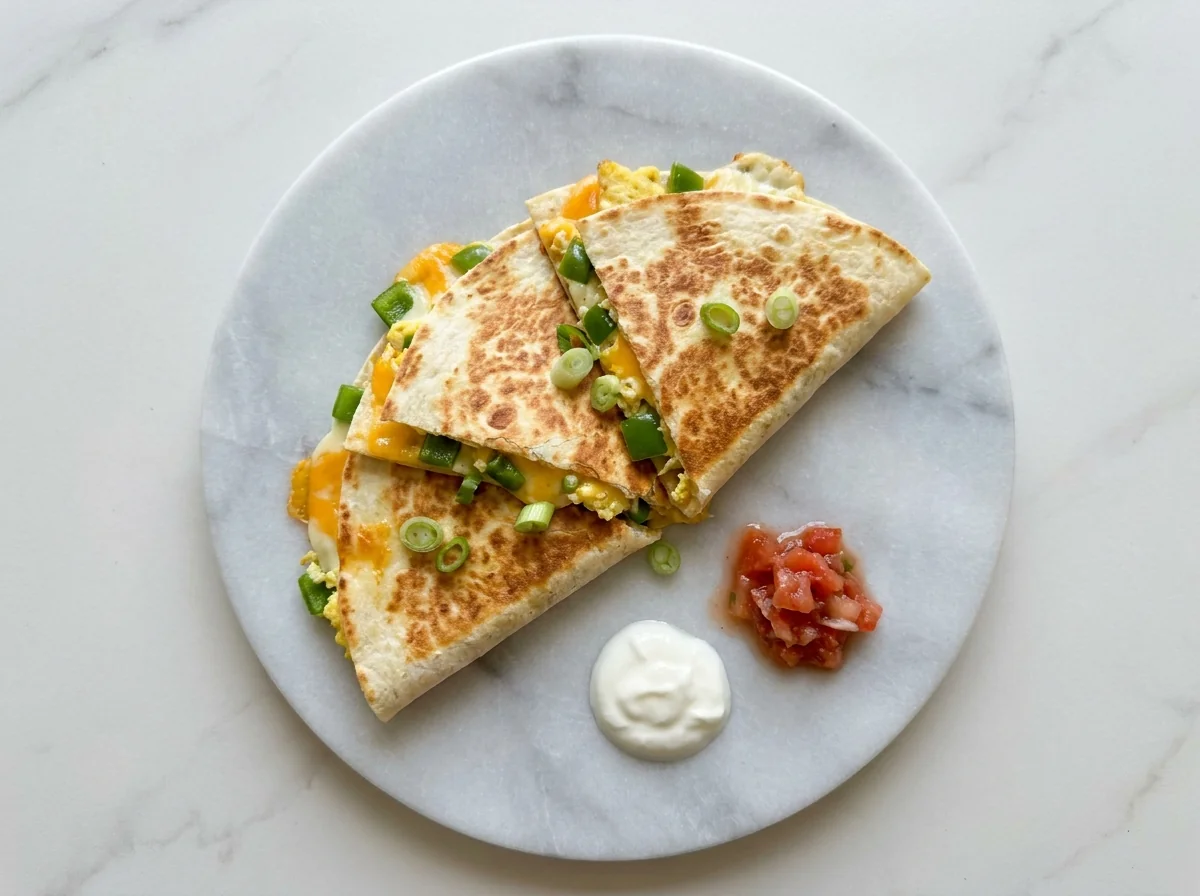
The Mexican quesadilla with a breakfast filling, scrambled eggs and cheese between two faces of a toasted tortilla, is one of the most successful quick morning dishes in cafes around the world, and it is different from the meat and cheese quesadilla found in our library.
Preparation Steps
Wash, chop the vegetables, and whisk them with the eggs
Wash the bell pepper and green onion and chop them finely, and whisk the eggs with the salt and pepper, then stir the chopped vegetables into them. The fine chopping cooks in the heat of the eggs themselves without pre-frying, which is what makes the preparation quick.
Cook the eggs softly
Pour the eggs into a pan with half the butter over medium-low heat, and stir with a silicone spoon until soft, cooked curds form. Lift them while they still shine slightly, as the coming heat of the toasting completes their cooking.
Build the quesadilla into a half-moon shape
Spread half the amount of cheese over half of each tortilla, then the eggs, then the rest of the cheese, so the cheese under and over the eggs melts and binds the filling so it doesn't slip, then fold the empty half over the filling.
Toast both sides
Toast each half-moon in the same pan with the remaining butter for two minutes per side with a light press of the spoon, until golden crispy spots appear on the tortilla and the cheese melts inside.
Cut into triangles and serve
Let it rest for a minute, then cut each half-moon into three triangles, and serve with the yogurt or tomato salsa for dipping.
Blood Sugar Impact
The glycemic index (GI) measures how quickly a food raises blood sugar, while the glycemic load (GL) measures how much a full serving raises it. Together they give the complete picture.
Glycemic Index
GI
28Low
Low0–55Medium56–69High70+
A low value (≤55) means a gradual rise in blood sugar — the most suitable range for diabetes and insulin resistance.
Glycemic Load
GL
9Low
Low0–10Medium11–19High20+
Glycemic load reflects the impact of the full serving. To lower it: take half a serving, or pair the recipe with a source of protein and fiber.
Nutritional Information
Per ServingMakes 2 servings · one serving is about 235 g of raw ingredients
Calories530 kcal26%of Daily Value*
Protein25 g50%of Daily Value*
Carbohydrates35 g13%of Daily Value*
Fat32 g41%of Daily Value*
Fiber3 g11%of Daily Value*
Sodium823 mg36%of Daily Value*
Potassium293 mg6%of Daily Value*
Phosphorus485 mg39%of Daily Value*
* Percent Daily Values are based on a 2,000-calorie diet per FDA food-label reference values — your daily needs may be higher or lower. Values are derived from the recipe's ingredients via the USDA database.
Troubleshooting
The most common problems when preparing Breakfast Egg and Cheese Quesadilla, and how to fix them:
The filling slipped out when flipping
The two cheese layers were missing or the flip was rushed. Place the cheese under and over the eggs, and use a wide spatula that supports the whole half-moon.
The tortilla stayed pale
The pan wasn't hot or the butter was missing. Medium heat ready and a smear of butter for each side.
The eggs came out dry
They were cooked to full doneness before filling. Lift them while moist and glossy, as they finish cooking inside the quesadilla.
The cheese didn't bind the pieces
Too little cheese or it was cut immediately. Eighty grams is the minimum, and a minute of rest before cutting is essential.
Storage and Make-Ahead
Immediately
Eaten hot with the cheese melted, and this is its best state.
Wrapped to go
Wrapped in butter paper, it stays warm for half an hour and is eaten by hand.
In the fridge
Not recommended, as the eggs inside become rubbery when reheated.
Tested Ingredient Substitutions
Original Ingredient
Tested Substitute
Ratio
Flavor Difference
Wheat tortilla
Whole wheat tortilla
1:1
Higher fiber with a deeper flavor
Cheddar and mozzarella
Grated halloumi cheese
1:1
Higher saltiness and a texture that doesn't run
Butter
Oil spray
~
Lighter with a similar crispness
Vegetable filling
Sautéed mushrooms or spinach
~
The mix is free as long as the chopping is fine
How Much Does It Make? Scaling Guide
Ingredient
2 half-moons
1 half-moon
4 half-moons
Tortilla
2
1
4
Eggs
3
2
6
Cheese
80 g
40 g
160 g
EEINA Nutrition Tip
Lift the eggs from the pan while they are still moist and slightly glossy, as they finish cooking inside the quesadilla while it toasts. Eggs that go in fully cooked come out dry.
Add This Recipe to Your Plan
The EEINA app saves your favorite recipes, calculates them from their real ingredients, and shows your daily numbers toward your goal. Try it free now.
That one is a lunch meal with seasoned cooked meat, and this is a quick breakfast with soft eggs. The base is the same and the filling changes the identity and the timing.
Is it suitable as a breakfast on the go?
Yes, it is one of the most successful one-hand breakfasts: cohesive triangles that don't drip, provided the eggs are cooked, the cheese binds, and the wrap is tight.
How do I add more vegetables for a child who refuses vegetables?
Very fine chopping blends the vegetables into the eggs so they don't show to the eye while their nutritional benefit remains.
What is it dipped in?
Yogurt with lemon and coriander: a refreshing dip with far fewer calories than ready-made creamy sauces.