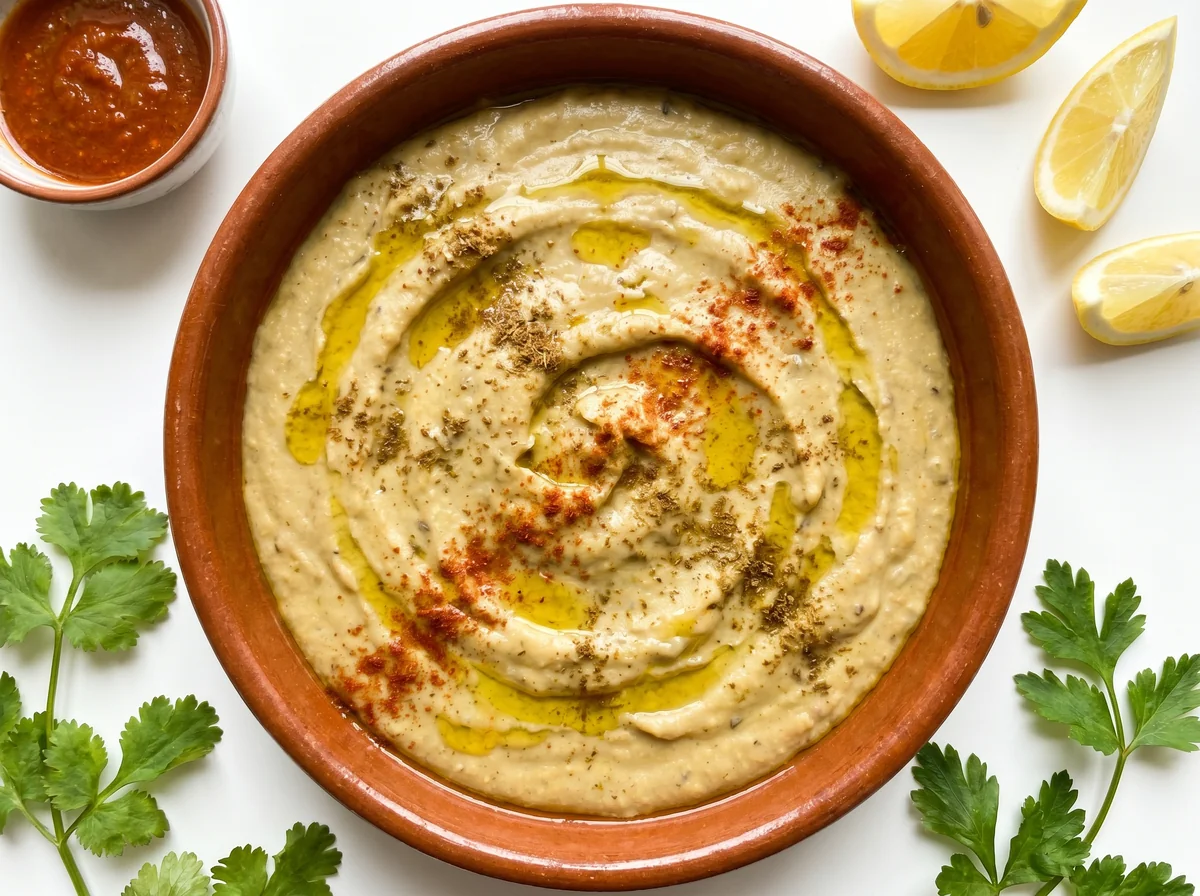
A popular Egyptian and Maghrebi dish — split fava beans boiled and mashed with fresh coriander, garlic, cumin, and olive oil into a creamy spread. High in fiber and plant protein, low glycemic index, free from common allergens.
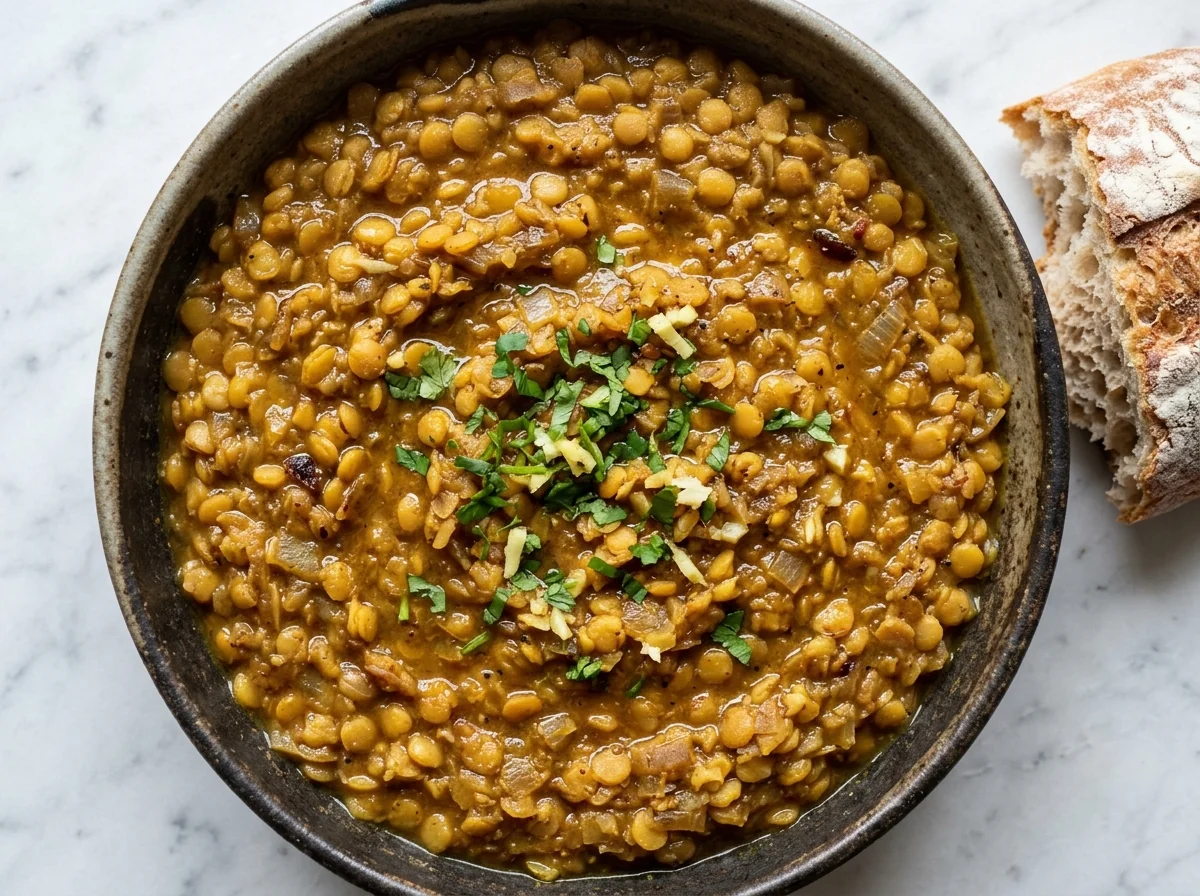
Bessara is a popular Egyptian and Maghrebi legume dish — its name comes from the word for split fava beans. In Egypt it is served thick and green with abundant herbs alongside bread, while in Morocco it is thinner, served as a warm soup in winter.
It is built on boiled mashed split fava beans with coriander, garlic, cumin, and olive oil. A rustic, economical, nourishing food — the farmer's breakfast that provides sustained energy and fiber — still present on popular Egyptian breakfast tables across the Nile Delta.
Preparation Steps
Boil the fava beans
Drain the soaked split fava beans, place them in a pot with water covering them by a few inches, and bring to a boil then lower the heat and skim the foam. Simmer for about 35 to 40 minutes until completely tender and easy to mash. Peeled split beans cook faster.
Add the herbs
In the last 10 minutes of cooking, add the fresh coriander, parsley, garlic, cumin, ground coriander, and a pinch of salt. The generous herbs give Bessara its green color and distinctive flavor — brief cooking sets the color and taste.
Mash
Blend the mixture with an immersion blender (or food processor) until smooth and creamy with no lumps. Add a little of the cooking water if it is too thick. The desired consistency is creamy and pourable like a thick soup or porridge.
Adjust consistency and season
Return the mash to the heat, add olive oil and lemon juice, and stir on low heat until well combined and heated through. Taste and adjust salt, cumin, and lemon. Bessara is served on the thick side and thickens further on cooling, so leave it a little wetter than needed.
Garnish
Pour the Bessara into a bowl, make a well in the center and pour in olive oil, then sprinkle with paprika or cumin and coriander. Some regions fry onions or garlic and add them on top. The olive oil and paprika garnish is its traditional look.
Serve
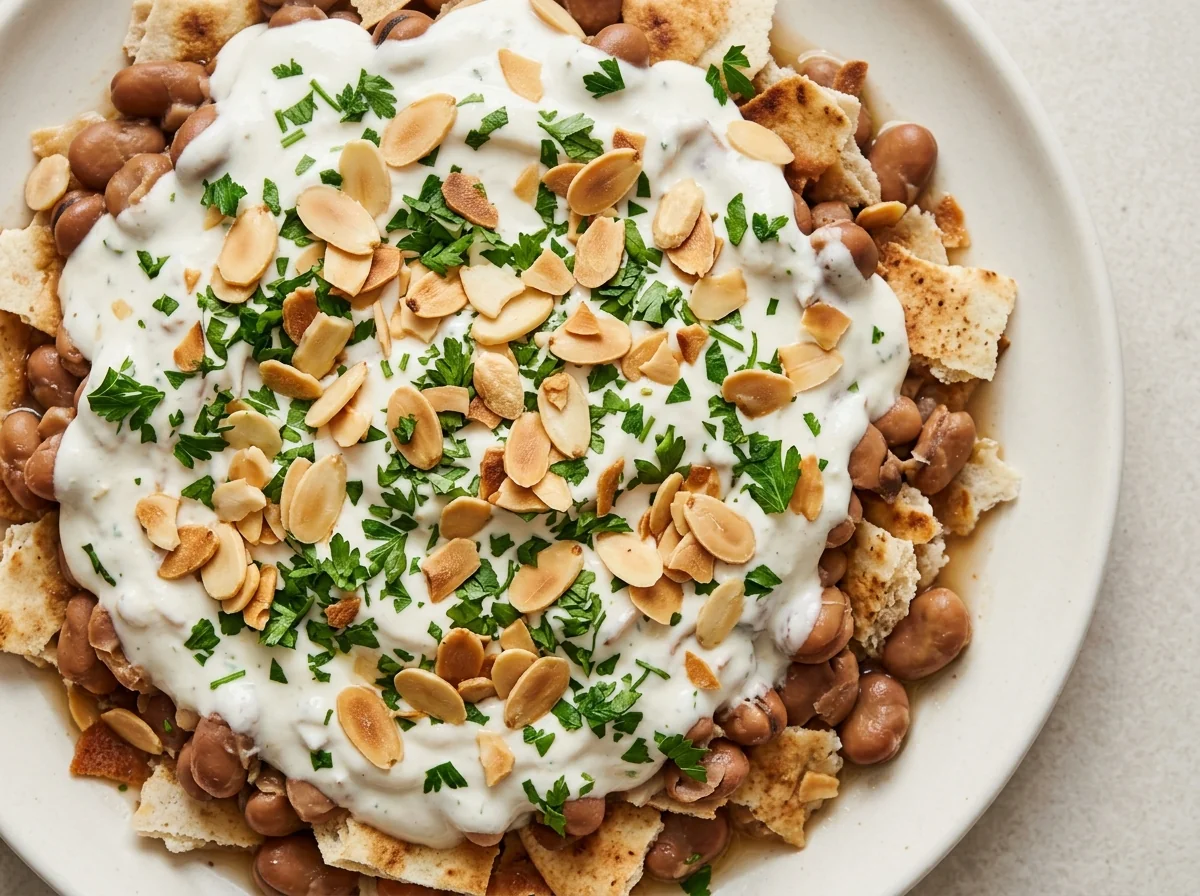
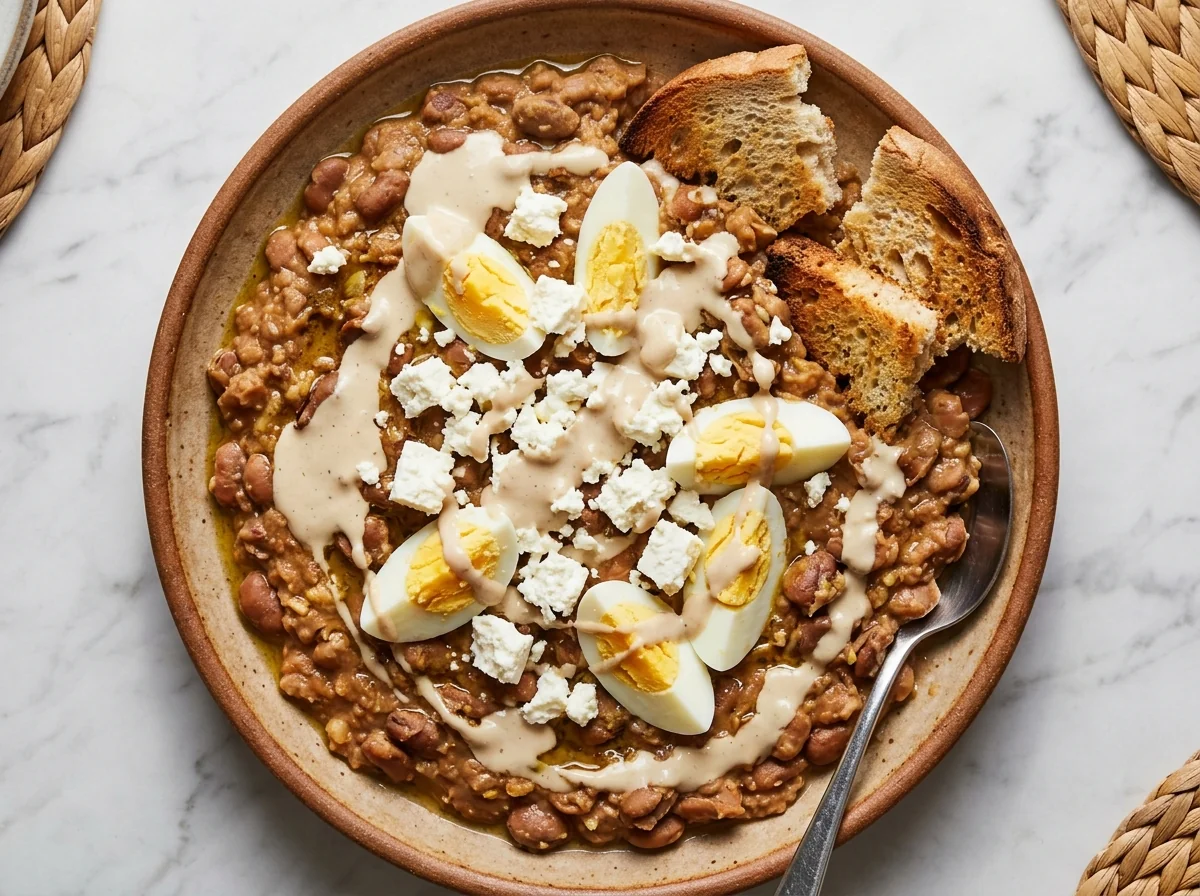
Serve Bessara warm with flatbread for dipping as a satisfying Egyptian countryside breakfast, or as part of a breakfast spread with Ful (stewed fava beans), falafel, and vegetables. In Morocco it is served thinner as a soup. It is an economical nutritious high-fiber legume dish.
Blood Sugar Impact
The glycemic index (GI) measures how quickly a food raises blood sugar, while the glycemic load (GL) measures how much a full serving raises it. Together they give the complete picture.
Glycemic Index
GI
26Low
Low0–55Medium56–69High70+
A low value (≤55) means a gradual rise in blood sugar — the most suitable range for diabetes and insulin resistance.
Glycemic Load
GL
6Low
Low0–10Medium11–19High20+
Glycemic load reflects the impact of the full serving. To lower it: take half a serving, or pair the recipe with a source of protein and fiber.
Nutritional Information
Per ServingMakes 4 servings · one serving is about 95 g of raw ingredients
Calories305 kcal15%of Daily Value*
Protein16 g32%of Daily Value*
Carbohydrates37 g13%of Daily Value*
Fat12 g15%of Daily Value*
Fiber15 g54%of Daily Value*
Sodium322 mg14%of Daily Value*
* Percent Daily Values are based on a 2,000-calorie diet per FDA food-label reference values — your daily needs may be higher or lower. Values are derived from the recipe's ingredients via the USDA database.
Troubleshooting
The most common problems when preparing Bessara, and how to fix them:
Bessara is light in color, not green
Not enough herbs or they were cooked too long after adding. Use plenty of coriander and parsley, and add them at the end of cooking not the beginning — long cooking fades their green color.
Bessara is lumpy and not smooth
Not blended well enough or the beans were not tender. Boil the beans until completely tender and blend with a blender until smooth with no lumps, adding cooking water as needed to help the blending.
Bessara is too thick
Not enough liquid or it thickened on cooling. Add cooking water or hot water gradually until the desired consistency. Bessara thickens on cooling, so leave it a little wetter.
Bland flavor
Not enough garlic, cumin, or lemon. These are Bessara's core flavors — be generous with them, and lemon juice at serving brightens the taste. Taste and adjust.
Bitter or heavy taste from the beans
They were not soaked or peeled. Use peeled split fava beans soaked overnight — the skin gives heaviness and bitterness. Soaking and peeling give a smoother texture and milder taste.
Storage and Make-Ahead
Refrigerator (4°C)
Bessara keeps in an airtight container for 3 days. It thickens on cooling, so reheat with a splash of water on low heat and stir. Add fresh olive oil when serving.
Freezer (-18°C)
Freeze for 3 months in portioned containers (legumes freeze well). Thaw and reheat with added water and stirring, and add fresh herbs to revive the color.
Meal prep
Soak the beans overnight, boil and mash in advance, then reheat with oil and lemon at serving time. The flavor actually improves with a little rest.
Reheating
Heat on low with added water to adjust consistency while stirring continuously so it does not stick. Add fresh olive oil and lemon juice when serving.
Tested Ingredient Substitutions
Original Ingredient
Tested Substitute
Ratio
Flavor Difference
Split fava beans
Frozen green fava beans or whole peeled fava beans
same amount
Green gives a brighter color; split peeled beans cook faster and have a smoother consistency
Olive oil
Reduce to 1 tablespoon per serving
1 spoon instead of 3
Reduces calories while keeping the flavor — olive oil is a healthy fat but calorie-dense
Thick (Egyptian style)
Thin it as a soup (Moroccan style)
add more water
The Moroccan version is thinner, served as a warm soup especially in winter
How Much Does It Make? Scaling Guide
Servings
Split fava beans
Coriander
Garlic
2 (half recipe)
¾ cup
half a bunch
2 cloves
4 (base)
1½ cups
1 large bunch
4 cloves
8 (large family)
3 cups
2 bunches
8 cloves
EEINA Nutrition Tip
Bessara is one of the smartest breakfasts nutritionally: fava beans are a high-fiber plant protein that prolongs fullness and regulates blood sugar, the glycemic index is low, the generous herbs add vitamins and antioxidants, and olive oil is a healthy fat. An excellent choice for monitoring blood sugar and weight. Watch only the olive oil (healthy but calorie-dense), and serve with whole wheat bread.
Add This Recipe to Your Plan
The EEINA app saves your favorite recipes, calculates them from their real ingredients, and shows your daily numbers toward your goal. Try it free now.
What is the difference between Egyptian and Moroccan Bessara?
The Egyptian version is thick and green with abundant herbs, eaten with bread for dipping. The Moroccan version is thinner, served as a warm soup in winter drizzled with olive oil and cumin. Both are made from mashed fava beans presented in different ways.
Is Bessara healthy?
Very much so: fava beans are a high-fiber plant protein that prolongs fullness and regulates blood sugar, the glycemic index is low, and the herbs and olive oil add nutritional value. An excellent choice for monitoring blood sugar and weight, and a filling vegan breakfast.
How do I preserve its green color?
Use plenty of coriander and parsley, and add them at the end of cooking not the beginning — long cooking fades the color. Blending with fresh herbs gives the brightest green.
Which fava beans should I use?
Peeled split fava beans (split in half without skin) are ideal — they cook faster and give a smoother texture and milder flavor. Soak them overnight before boiling. Beans with skin give heaviness and bitterness.