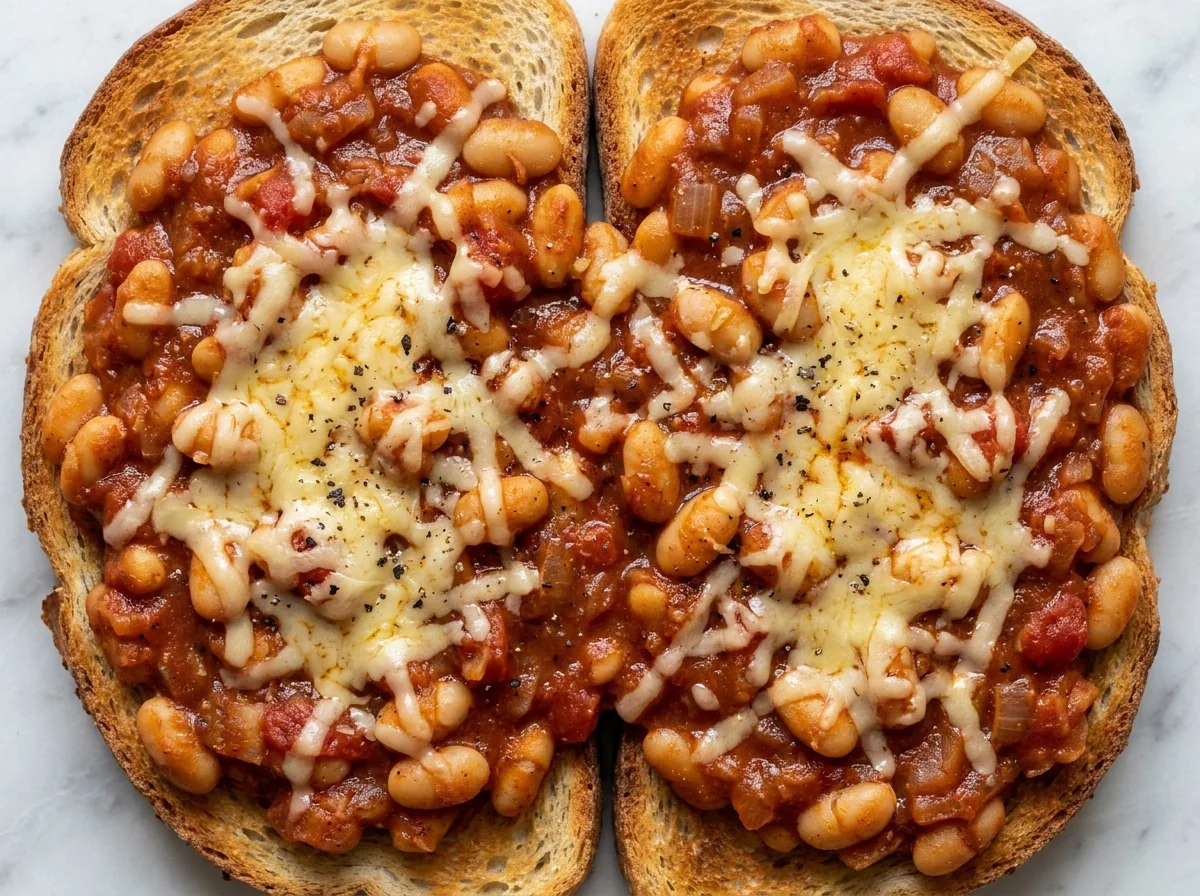
Beans on toast is a very famous British dish: breakfast, dinner, and student food for about a century, and the ready-made can of it is part of British memory.
Our home version from the bean batch rebuilds it with measured sugar, far less salt, and better taste.
Preparation Steps
Build the sweet-and-sour tomato sauce
Soften the chopped onion in the oil, then add the garlic and tomato paste, stirring for a minute until it browns a little, then the grated tomatoes, honey, vinegar, and smoked paprika. This balance of light sweet, light sour, and light smoky is the taste of the well-known English dish.
Add the beans and let them soak it up
Add the batch beans with half a cup of their cooking water, and leave them over low heat for fifteen minutes until the sauce thickens and coats every bean.
Mash a quarter of the beans
Mash a quarter of the beans with the back of the spoon inside the pot. The released starch thickens the sauce to the well-known thick consistency.
Toast the bread well
Toast the whole-wheat slices well because they will carry a wet sauce, and light toasting collapses under it.
Pour, add the cheese, and serve
Pour the hot beans over the toast and sprinkle the cheddar over them so it melts with the heat. Britain's famous breakfast and the students' economical meal: protein and fiber at very little cost.
Blood Sugar Impact
The glycemic index (GI) measures how quickly a food raises blood sugar, while the glycemic load (GL) measures how much a full serving raises it. Together they give the complete picture.
Glycemic Index
GI
40Low
Low0–55Medium56–69High70+
A low value (≤55) means a gradual rise in blood sugar — the most suitable range for diabetes and insulin resistance.
Glycemic Load
GL
25High
Low0–10Medium11–19High20+
Glycemic load reflects the impact of the full serving. To lower it: take half a serving, or pair the recipe with a source of protein and fiber.
Nutritional Information
Per ServingMakes 3 servings · one serving is about 350 g of raw ingredients
Calories542 kcal27%of Daily Value*
Protein27 g54%of Daily Value*
Carbohydrates78 g28%of Daily Value*
Fat14 g18%of Daily Value*
Fiber16 g57%of Daily Value*
Sodium883 mg38%of Daily Value*
* Percent Daily Values are based on a 2,000-calorie diet per FDA food-label reference values — your daily needs may be higher or lower. Values are derived from the recipe's ingredients via the USDA database.
Troubleshooting
The most common problems when preparing Beans on Toast: The Homemade English Version, and how to fix them:
The sauce ran off the toast
A quarter of the beans was not mashed. Mashing with the back of the spoon until the sauce thickens is an essential step for the consistency.
The tomato taste is sharp
The balance was missing. Honey and vinegar together adjust the acidity, and the light sweetness is part of the English dish's identity, not a mistake.
The toast collapsed under it
The toasting was light or the pouring came early. Toast well and pour at the moment of eating.
The beans all fell apart
The batch beans were cooked to mush. Use firm beans for this dish, and leave the mushy ones for soups.
Storage and Make-Ahead
Right away on the toast
Pour at the moment of eating so the bread does not get soggy.
The beans in their sauce
In the fridge for four days, and their firmness and taste improve, becoming a ready breakfast for the week.
In the freezer
In portions for two months, becoming a permanent homemade version of the can.
Tested Ingredient Substitutions
Original Ingredient
Tested Substitute
Ratio
Flavor Difference
White beans
Red beans from our batch or chickpeas
same amount
Legumes swap roles
The basic dish
Adding a fried egg on top
same amount
An upgrade in the style of the full English breakfast
Smoked paprika
A pinch of cumin
same amount
An Eastern flavor instead of smoky
The toast
A baked potato stuffed with the beans
same amount
Another famous English way
How Much Does It Make? Scaling Guide
Ingredient
3 servings
1.5 servings
6 servings
Beans
400 g
200 g
800 g
Tomatoes
240 g
120 g
480 g
Toast
6 slices
3
12
EEINA Nutrition Tip
Mash a quarter of the beans with the back of the spoon inside the pot. The sauce alone stays runny with the beans rolling in it, while the mashed quarter releases its starch and binds the sauce to the beans into a thick consistency that holds on the toast like the ready-made cans, while three quarters of the beans stay intact for the bite.
Add This Recipe to Your Plan
The EEINA app saves your favorite recipes, calculates them from their real ingredients, and shows your daily numbers toward your goal. Try it free now.
The store can has ~9 g of sugar and ~1000 mg of sodium roughly, while your version has 10 g of honey for the whole pot and the salt is in your hands: the same taste at half the sugar, a third of the salt, and real tomatoes.
How is it counted and how much does it cost?
The serving with its two slices is ~495 calories with ~20 g of plant protein and plenty of fiber, for less than three riyals.
Breakfast or dinner?
In Britain it is eaten at both times, and with us it works as an excellent light dinner and a different holiday breakfast.
Can the frozen batch beans go in directly?
Yes, they go into the sauce frozen with five extra minutes.