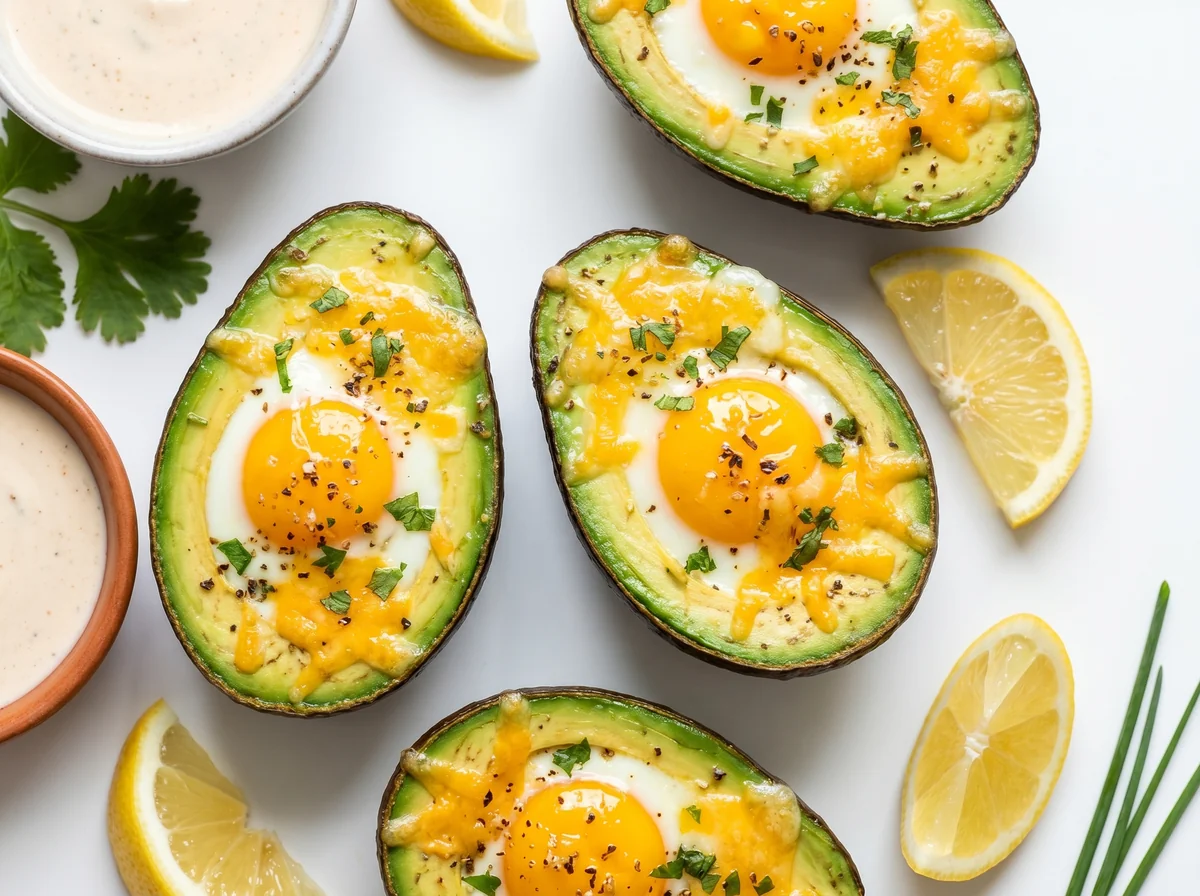
Halved avocados with their stone removed, hollowed slightly, and filled with a baked egg — a low-carb, high-fat breakfast with no bread, ready in under 20 minutes.
Baked egg avocado boats emerged from the low-carbohydrate breakfast wave that swept health-conscious cafes in the mid-2010s, when people sought an alternative to eggs on toast that preserved the richness without the bread. The concept is simple: the avocado half becomes a natural edible vessel that holds the egg while they bake together.
The white acquires a soft set like a poached egg; the avocado becomes warm and creamier. The dish found its way quickly to Saudi breakfast tables among those following keto or reducing carbohydrates, because it is filling without being heavy, and needs only two core ingredients found in every kitchen. From practical experience, the secret is in choosing a perfectly ripe avocado and a hollow wide enough for the egg — these two details separate a neat, intact boat from one that overflows in the oven.
Preparation Steps
Preheat the oven
Preheat the oven to 200°C with top and bottom heat on. Allow it to reach full temperature before inserting the avocado — a hot oven sets the egg white quickly before the avocado flesh softens too much.
Prepare the avocado boats
Halve the avocado lengthways and remove the stone. Enlarge the hollow with a spoon by scooping out about a tablespoon of flesh from each half. The hollow must be large enough to hold the egg without overflowing — the whole egg needs space for the white to spread.
Stabilize the boats
Arrange the avocado halves in a small baking dish so they lean against each other to stay upright, or place a small ball of scrunched parchment paper under each half to level it. A tilted boat will spill the egg before it can set.
Crack in the eggs
Crack one egg into a small cup first, then pour gently into the hollow of each avocado half — this avoids breaking the yolk. Season with salt and freshly ground black pepper. An intact yolk in the centre indicates the egg is well-placed for even cooking.
Bake
Place in the centre of the oven and bake for 15–18 minutes until the white is fully set and opaque, reaching at least 71°C for food safety. The yolk can remain runny or fully set according to preference. Look for fully white, non-translucent whites.
Season and serve
Remove the boats and immediately squeeze lemon juice over them, drizzle with olive oil, and garnish with the chopped chives. Serve immediately — the steam rising and surfaces gleaming with oil signal that the texture is at its best, before oxidation darkens the avocado flesh.
Blood Sugar Impact
The glycemic index (GI) measures how quickly a food raises blood sugar, while the glycemic load (GL) measures how much a full serving raises it. Together they give the complete picture.
Glycemic Index
GI
1Low
Low0–55Medium56–69High70+
A low value (≤55) means a gradual rise in blood sugar — the most suitable range for diabetes and insulin resistance.
Glycemic Load
GL
0Low
Low0–10Medium11–19High20+
Glycemic load reflects the impact of the full serving. To lower it: take half a serving, or pair the recipe with a source of protein and fiber.
Nutritional Information
Per ServingMakes 2 servings · one serving is about 160 g of raw ingredients
Calories257 kcal13%of Daily Value*
Protein9 g18%of Daily Value*
Carbohydrates11 g4%of Daily Value*
Fat22 g28%of Daily Value*
Fiber7 g25%of Daily Value*
Sodium273 mg12%of Daily Value*
Potassium594 mg13%of Daily Value*
Phosphorus158 mg13%of Daily Value*
* Percent Daily Values are based on a 2,000-calorie diet per FDA food-label reference values — your daily needs may be higher or lower. Values are derived from the recipe's ingredients via the USDA database.
Troubleshooting
The most common problems when preparing Baked Egg Avocado Boats, and how to fix them:
Egg overflowed outside the hollow during baking
The hollow was too small for the egg size. Scoop out a full tablespoon of flesh before cracking in the egg, or use a smaller egg. Pour the egg white in gradually, stopping when the hollow is full.
White is still translucent while the avocado edge started to darken
Oven temperature was too low or the dish was on a rack too far from the heat. Raise the oven to 200°C and place the dish on the middle rack. Cover the edges of the avocado loosely with a small piece of foil if they colour before the white is set.
Boat tilted and egg spilled before it set
The halves were not stabilized before going into the oven. Lean the halves against each other in a small dish, or support each one with a crumpled ball of parchment paper to keep it level.
Avocado became bitter after baking
Baked too long or the avocado was not yet ripe. Keep to 18 minutes maximum. Choose a fruit that yields slightly to gentle thumb pressure without being mushy. Overbaking an under-ripe avocado brings out its bitterness.
Avocado surface darkened quickly after serving
Natural oxidation on contact with air. Squeeze the lemon juice immediately before serving to slow it. Serve the boats straight out of the oven rather than leaving them uncovered.
Storage and Make-Ahead
Refrigerator
Store baked boats in a sealed container in the refrigerator at 4°C or below and eat within one day. Best eaten fresh; the avocado texture changes on refrigeration and the flesh tends to darken.
At room temperature
Do not leave egg-based cooked dishes outside the refrigerator for more than 2 hours (or 1 hour in temperatures above 32°C) per food safety guidelines.
Reheating
Warm gently in the oven at 150°C for a few minutes until heated through. Avoid the microwave on full power as it can dry the yolk and change the avocado's texture.
Freezing
Not recommended for baked avocado boats — avocado loses its texture and becomes watery on thawing, and baked egg changes structure when frozen.
Tested Ingredient Substitutions
Original Ingredient
Tested Substitute
Ratio
Flavor Difference
whole eggs
egg whites only (2 per whole egg)
2 tablespoons beaten white per egg
Lower in fat and cholesterol while retaining protein. Egg white sets slightly faster so watch the time carefully.
chives
flat-leaf parsley or fresh coriander, chopped
same amount (1 tablespoon)
A gentle aromatic alternative that provides freshness without the pungency of chives; suitable for those who prefer a milder flavor.
lemon juice
apple cider vinegar
1/2 teaspoon vinegar to 1 teaspoon lemon
Serves the same role of slowing avocado oxidation. Vinegar is sharper so use half the quantity.
black pepper
smoked paprika (bábrika)
same amount (1/4 teaspoon)
Gives a gentle smoky note instead of heat; suitable for those who prefer a quieter flavor.
olive oil (drizzle)
omit entirely
omit
The avocado is already rich in healthy fats so the drizzle is optional. Removing it reduces the calories without drying the dish.
How Much Does It Make? Scaling Guide
Number of servings
Avocado
eggs
chives
olive oil (drizzle)
Baking time
2 servings (original)
1 large
2
1 tbsp
1 tsp
15–18 min
4 servings
2
4
2 tbsp
2 tsp
16–19 min
6 servings
3 large
6
3 tbsp
1 tbsp
17–20 min
8 servings
4 large
8
4 tbsp
1.5 tbsp
18–21 min
EEINA Nutrition Tip
If you monitor your blood sugar, eat the whole boat including the avocado — do not leave the flesh. The avocado's fiber and healthy fats are what quiet the post-meal blood sugar rise. For a balanced breakfast, add a handful of leafy greens or cucumber slices alongside instead of bread, to maintain the low-carbohydrate character.
Add This Recipe to Your Plan
The EEINA app saves your favorite recipes, calculates them from their real ingredients, and shows your daily numbers toward your goal. Try it free now.
Yes — it relies on avocado (rich in monounsaturated fats) and egg (rich in protein), both low in carbohydrates. Avocado is among the most keto-suitable fruits because most of its carbohydrates are fiber, keeping the net carbs per serving low. Serve with leafy greens instead of bread to maintain the keto character.
How do I know the egg is fully cooked and safe?
The white should be fully set and non-translucent — completely white and non-glossy. For maximum safety, the egg should reach 71°C (food safety temperature for baked egg). At that temperature the white is fully set. If feeding pregnant women, elderly persons, or those with compromised immunity, bake until the yolk is set as well.
Do I need a perfectly ripe avocado?
Yes — a moderately ripe avocado is essential to the recipe's success. Choose one that yields slightly to gentle thumb pressure without being soft or hollow inside. An under-ripe avocado stays firm and tends toward bitterness after baking; an over-ripe one becomes watery and loses its shape.
Can I make these on the stovetop instead of the oven?
The oven is the ideal method as it cooks the egg evenly from all sides. On the stovetop, place the boats in a covered pan with a small amount of water over low heat to generate steam that helps cook the egg surface. The result is less consistent and the base of the avocado may scorch before the white is done.
What can I serve alongside for a complete breakfast?
Sliced tomatoes and cucumber, or a light leafy salad, complement the dish and add fiber and water without significant carbohydrates. For those not following keto, a slice of toasted wholegrain bread or a piece of low-sugar fruit works well alongside.