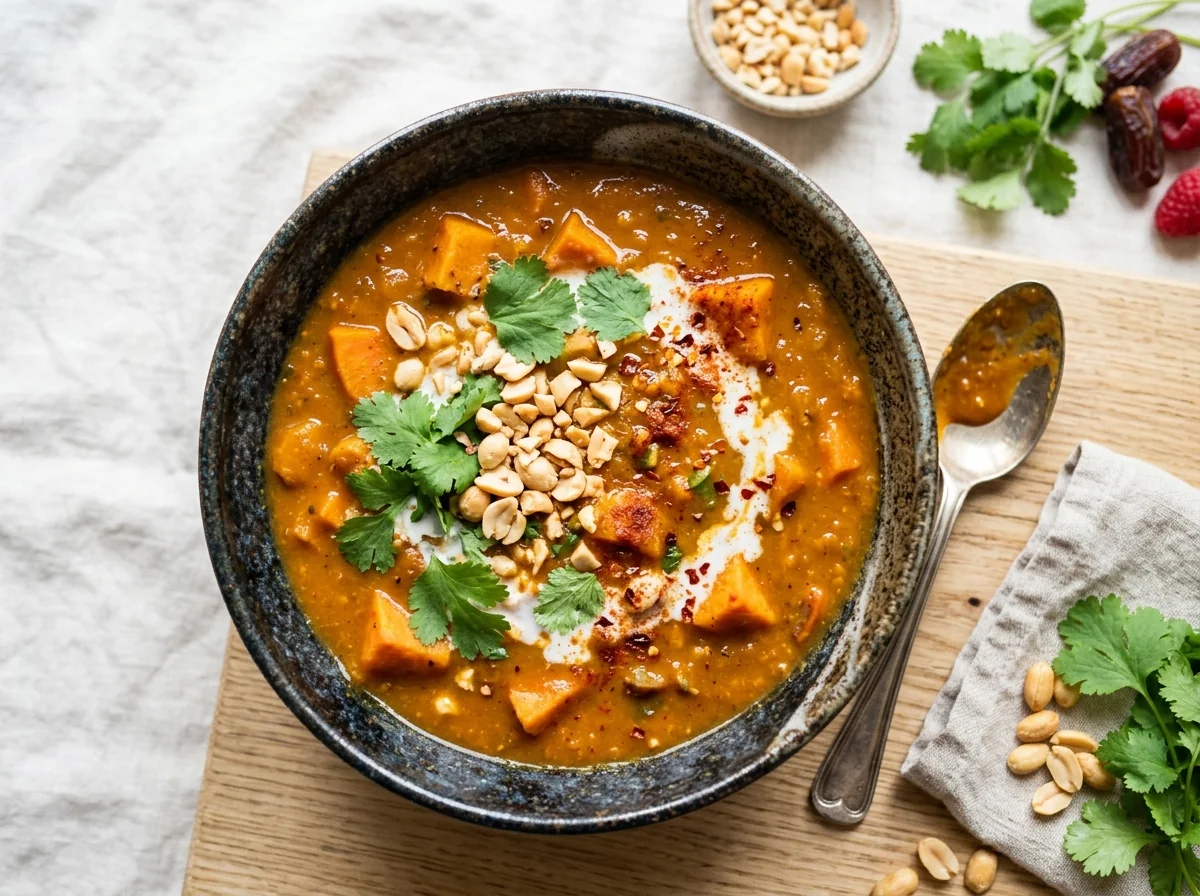
African Peanut Soup — a West African classic blending natural peanut butter with sweet potato and tomato into a creamy, rich, uniquely flavoured dinner soup.
Peanut soup (Mafé or Maafé) is a West African classic, especially beloved in Senegal and Mali.
It brings together peanut butter with sweet potato and tomato — creamy, rich, sweet-savoury — utterly unique. Deeply nourishing.
Preparation Steps
Heat the oil
Heat the oil in a large pot over medium heat.
Brown the onion
Add the onion and stir for 6 minutes until golden.
Add garlic and ginger
Add the garlic, ginger, cumin, coriander, and chilli and stir for 1 minute until fragrant.
Add tomato paste
Add the tomato paste and stir for 2 minutes until it turns deep red and the flavour blooms.
Add sweet potato
Add the sweet potato cubes and toss with the spice mixture for 2 minutes to coat.
Add stock and peanut butter
In a separate bowl, whisk the peanut butter with 200 ml of hot stock until fully dissolved. Add this mixture to the pot along with the remaining stock.
Cook
Stir well, bring to a boil, then reduce the heat. Simmer for 25–30 minutes over low heat, stirring every 10 minutes (peanut butter can catch on the bottom).
Check doneness
The sweet potato should be completely tender (easily pierced with a fork). The soup will have thickened and taken on a rich golden-red colour.
Season and serve
Taste and add salt and pepper if needed. Ladle into deep bowls, scatter fresh coriander and roasted peanuts on top, and serve with white rice or couscous.
Blood Sugar Impact
The glycemic index (GI) measures how quickly a food raises blood sugar, while the glycemic load (GL) measures how much a full serving raises it. Together they give the complete picture.
Glycemic Index
GI
37Low
Low0–55Medium56–69High70+
A low value (≤55) means a gradual rise in blood sugar — the most suitable range for diabetes and insulin resistance.
Glycemic Load
GL
9Low
Low0–10Medium11–19High20+
Glycemic load reflects the impact of the full serving. To lower it: take half a serving, or pair the recipe with a source of protein and fiber.
Nutritional Information
Per ServingMakes 6 servings · one serving is about 350 g of raw ingredients
Calories316 kcal16%of Daily Value*
Protein11 g22%of Daily Value*
Carbohydrates28 g10%of Daily Value*
Fat20 g26%of Daily Value*
Fiber5 g18%of Daily Value*
Sodium641 mg28%of Daily Value*
* Percent Daily Values are based on a 2,000-calorie diet per FDA food-label reference values — your daily needs may be higher or lower. Values are derived from the recipe's ingredients via the USDA database.
Troubleshooting
The most common problems when preparing African Peanut Soup, and how to fix them:
Soup separates (oil floats to the top)
The peanut butter was not dissolved in stock before adding. Always whisk it into a cup of hot stock first.
Peanut butter sticks to the bottom
The heat is too high. Very low heat with frequent stirring is the secret.
Flavour tastes flat
It needs acidity. Add 20 ml of lemon juice just before serving.
Soup is too thick
The peanut butter has absorbed the liquid. Add 200 ml of hot water and stir through.
Storage and Make-Ahead
Refrigerator
4 days in an airtight container. The flavours deepen and improve by the next day.
Freezer
Up to 3 months. The texture remains excellent after thawing.
Work lunch
Ideal — very filling, providing two hours of satiety.
Tested Ingredient Substitutions
Original Ingredient
Tested Substitute
Ratio
Flavor Difference
Sweet potato
Butternut squash (pumpkin)
1:1
A different sweetness
Peanut butter
Cashew butter
1:1
For peanut allergy
Vegetable stock
Chicken stock
1:1
Deeper flavour
Red chilli
Sweet paprika
1:2
If you prefer no heat
How Much Does It Make? Scaling Guide
Ingredient
6 servings
4 servings
12 servings
Natural peanut butter
150 g
100 g
300 g
Sweet potato
400 g
270 g
800 g
Vegetable stock
1.2 L
800 ml
2.4 L
EEINA Nutrition Tip
Use natural peanut butter (ingredients: peanuts and salt only). Commercially sweetened varieties containing hydrogenated vegetable oil do not dissolve well and alter the flavour.
Add This Recipe to Your Plan
The EEINA app saves your favorite recipes, calculates them from their real ingredients, and shows your daily numbers toward your goal. Try it free now.