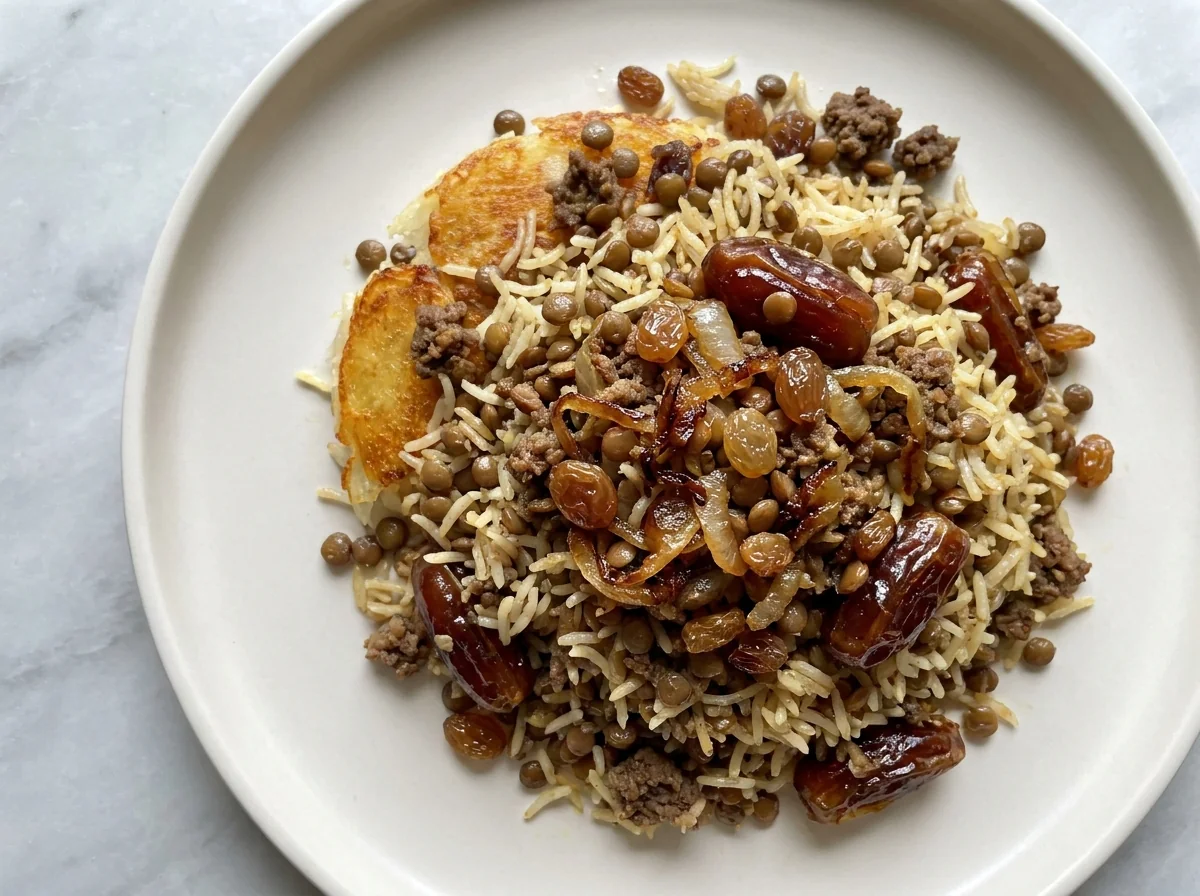
Adas Polo (lentil rice) is one of the most beloved festive rices on the Persian table, bringing together earthy lentils with the sweetness of dates and raisins and the aroma of cinnamon and saffron.
Its balance between savory and sweet made it a dish served at occasions and gatherings, and it is often crowned with browned ground meat to enrich it.
Preparation Steps
Soaking the lentils
Soak the lentils in cold water for ten minutes, then drain them; this shortens the boiling time and makes them cook evenly with the rice.
Boiling the lentils
Boil the lentils in boiling water for about twenty minutes until they soften without falling apart, then drain and rinse them with cold water to stop the cooking.
Dissolving the saffron
Dissolve the ground saffron in two spoonfuls of warm water so its golden color and aroma bloom before we add it to the rice.
Washing the rice
Wash the rice several times until the water runs clear; this removes the excess starch and gives us separate, fluffy grains.
Parboiling the rice
Boil plenty of salted water and parboil the rice for five to seven minutes until the edge softens while the core stays firm, then add the boiled lentils, toss gently, and drain the mixture.
Preparing the tahdig base
Heat the oil in the pot and arrange the potato slices on the bottom to form the tahdig (the crispy Persian rice crust), then spread a cup of the rice mixture blended with the saffron water over them.
Steaming the rice
Add the rest of the rice and lentil mixture in a mound, poke five holes with the handle of a spoon, scatter the butter pieces on top, cover the pot with a lid wrapped in a towel, and leave it over low heat for forty-five minutes until it steams and the crust forms.
Browning the meat
Sauté the onion in the oil until it wilts and turns golden, then add the ground meat and brown it until it loses its pink color and reaches its safe temperature, and season it with the turmeric, cinnamon, and pepper.
Sautéing the dates and raisins
Sauté the raisins in a little butter for a few minutes until they plump and glisten, then sauté the dates in the rest until they soften and become fragrant, sweetening the top layer.
Serving
Let the rice rest for ten minutes, then scoop it onto a plate, garnish it with the meat, dates, and raisins, and serve the crispy tahdig pieces on the side.
Blood Sugar Impact
The glycemic index (GI) measures how quickly a food raises blood sugar, while the glycemic load (GL) measures how much a full serving raises it. Together they give the complete picture.
Glycemic Index
GI
61Medium
Low0–55Medium56–69High70+
A low value (≤55) means a gradual rise in blood sugar — the most suitable range for diabetes and insulin resistance.
Glycemic Load
GL
66High
Low0–10Medium11–19High20+
Glycemic load reflects the impact of the full serving. To lower it: take half a serving, or pair the recipe with a source of protein and fiber.
Nutritional Information
Per ServingMakes 6 servings · one serving is about 255 g of raw ingredients
Calories750 kcal38%of Daily Value*
Protein23 g46%of Daily Value*
Carbohydrates116 g42%of Daily Value*
Fat22 g28%of Daily Value*
Fiber8 g29%of Daily Value*
Sodium233 mg10%of Daily Value*
* Percent Daily Values are based on a 2,000-calorie diet per FDA food-label reference values — your daily needs may be higher or lower. Values are derived from the recipe's ingredients via the USDA database.
Troubleshooting
The most common problems when preparing Persian Lentil Rice with Dates and Raisins (Adas Polo), and how to fix them:
The lentils are mushy and broken down
We overboiled them; boil them for twenty minutes only until the core softens, then rinse them with cold water immediately to stop the cooking.
The rice is clumpy and sticky
We did not wash it well or boiled it too long; wash it until the water runs clear and boil it for just five to seven minutes before steaming.
No tahdig crust forms
The heat is too low or the bottom is not oily enough; raise the heat a little for the first ten minutes and make sure there is enough oil under the potatoes.
The dish is dry and lacks aroma
We were stingy with the butter or saffron; distribute the butter over the rice before steaming and dissolve the saffron in advance so its color and aroma bloom.
Storage and Make-Ahead
Refrigerator
Keep it in an airtight container for up to three days, and separate the meat and dates from the rice if possible to preserve the texture.
Reheating
Sprinkle a little water and reheat it covered over low heat or in the microwave until it is heated through and turns soft again.
Freezer
Freeze the rice on its own for up to a month in an airtight container, and thaw it in the refrigerator before reheating.
Tested Ingredient Substitutions
Original Ingredient
Tested Substitute
Ratio
Flavor Difference
ground beef
ground lamb
same weight, 250 g
Gives a richer flavor closer to traditional Persian cooking.
tahdig potatoes
thin flatbread slices
same weight, 150 g
A traditional alternative that gives a crispy crust that cooks faster.
raisins
dried cranberries
same weight, 80 g
Adds a gentle tartness that cuts the sweetness for those who prefer it.
pitted dates
dried apricots
same weight, 150 g
Less sweet and more tart, suits anyone who wants a lighter, lower-sugar dish.
How Much Does It Make? Scaling Guide
Ingredient
Two servings
Four servings (base)
Eight servings
basmati rice
150 g
300 g
600 g
brown lentils
67 g
133 g
266 g
ground beef
83 g
167 g
334 g
pitted dates
50 g
100 g
200 g
raisins
27 g
53 g
106 g
EEINA Nutrition Tip
Boil the lentils until they soften without falling apart, because mushy lentils make the rice heavy and clumpy instead of staying separate and fluffy.
Add This Recipe to Your Plan
The EEINA app saves your favorite recipes, calculates them from their real ingredients, and shows your daily numbers toward your goal. Try it free now.