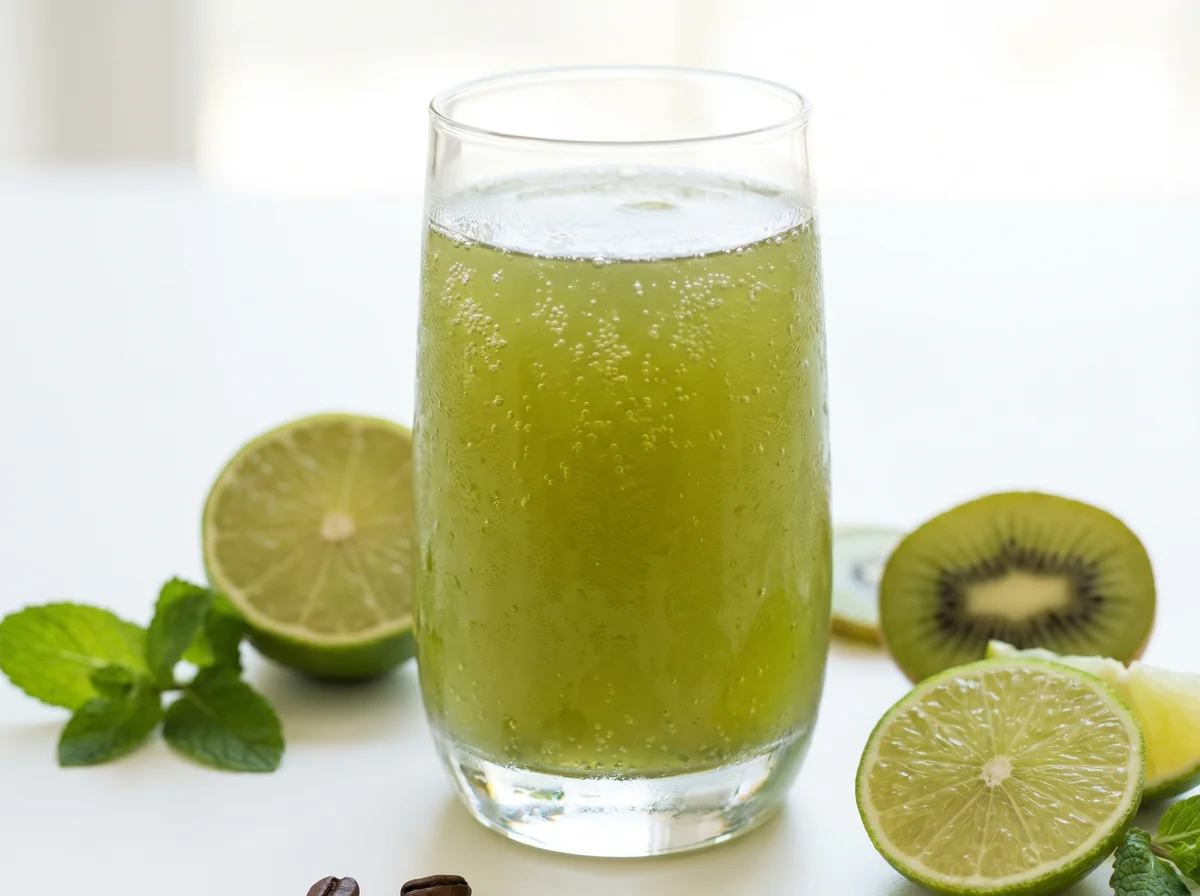
A homemade lightly fizzy fermented drink made from green tea and sugar, fermented with a SCOBY (symbiotic culture of bacteria and yeast) over 7 to 14 days. Makes approximately 8 servings of 250 ml each.
Kombucha is a fermented tea drink that originated in Northeast China (Manchuria) over two thousand years ago, then spread through East Asia and Russia and eventually across the world. At its core, it is simply sweetened tea fermented by a SCOBY — a thick, rubbery disc of live bacteria and yeast — which consumes the sugar, produces organic acids, a small amount of natural carbonation and trace alcohol, and transforms the tea into something pleasantly tart and lightly fizzy.
The green tea version has a gentler, more delicate flavour than the stronger black tea version. Kombucha arrived in Saudi Arabia and the Gulf with the global wellness movement, and while its health claims are often overstated, it is a genuinely pleasant, refreshing drink that many find agreeable.
Preparation Steps
Brew the sweetened tea
Bring 1 litre of water to the boil. Add the green tea bags and steep for 5 minutes, then remove the bags. Stir in the sugar until completely dissolved.
Cool to room temperature
Allow the sweetened tea to cool completely to room temperature (below 30 °C). Never add the SCOBY to hot liquid — heat kills it.
Add the SCOBY and starter liquid
Pour the cooled tea into a clean glass jar. Add the SCOBY and the starter liquid (plain kombucha from a previous batch or a shop-bought unflavoured kombucha).
Cover and ferment
Cover the jar with a breathable cloth or coffee filter secured with a rubber band. Place in a warm spot away from direct sunlight and ferment for 7–14 days, tasting from day 7.
Bottle and refrigerate
Once the kombucha reaches your preferred balance of sweet and tart, remove the SCOBY, pour the kombucha into sealed bottles, and refrigerate.
Serve
Serve chilled over ice. For added flavour, add a slice of ginger or a splash of lemon juice before serving.
Blood Sugar Impact
The glycemic index (GI) measures how quickly a food raises blood sugar, while the glycemic load (GL) measures how much a full serving raises it. Together they give the complete picture.
Glycemic Index
GI
63Medium
Low0–55Medium56–69High70+
A low value (≤55) means a gradual rise in blood sugar — the most suitable range for diabetes and insulin resistance.
Glycemic Load
GL
13Medium
Low0–10Medium11–19High20+
Glycemic load reflects the impact of the full serving. To lower it: take half a serving, or pair the recipe with a source of protein and fiber.
Nutritional Information
Per ServingMakes 8 servings · one serving is about 305 g of raw ingredients
Calories82 kcal4%of Daily Value*
Protein0 g0%of Daily Value*
Carbohydrates21 g8%of Daily Value*
Fat0 g0%of Daily Value*
Fiber0 g0%of Daily Value*
Sodium3 mg0%of Daily Value*
* Percent Daily Values are based on a 2,000-calorie diet per FDA food-label reference values — your daily needs may be higher or lower. Values are derived from the recipe's ingredients via the USDA database.
Troubleshooting
The most common problems when preparing Green Tea Kombucha, and how to fix them:
No fizz and the drink tastes like sweet tea
Fermentation has not started or the SCOBY is not active. Check that the starter liquid was acidic (properly made kombucha, not just water), the temperature is between 22 and 28°C, and the jar was not covered with an airtight lid. Wait a few more days and taste again.
Very sour, vinegar-like taste
Over-fermented. Fermentation went too long or the temperature was too warm. Next batch: taste from day 7 and bottle when pleasantly tart. Use this batch in salad dressings as you would vinegar.
Mould on the SCOBY or liquid (fuzzy coloured spots)
Contamination — discard the entire batch including the SCOBY and start fresh. Mould is fuzzy and coloured (green, black, pink); do not confuse it with the brown strings of yeast that are normal and harmless. Clean the jar thoroughly before starting again.
The liquid is very cloudy or has a lot of sediment
Normal — live yeast cultures create brown or tan strings and a slight cloudiness. Strain through a fine sieve before bottling. Sediment in the bottle after refrigeration is also normal and harmless; shake gently before drinking.
The SCOBY is very thin or slimy
The SCOBY is healthy even when thin. A new layer will grow on each batch. A slimy texture is normal — it is not mould. The SCOBY grows thicker over multiple batches.
The drink fizzes explosively when opened
Over-carbonated from a second fermentation that went too long or used too much fruit. Refrigerate first to slow carbonation, then open very slowly over a sink. Next time, shorten the second fermentation to 1 day.
Storage and Make-Ahead
Finished kombucha (refrigerator)
Store in sealed glass bottles in the refrigerator for up to 4 weeks. The flavour continues to develop slowly even when cold. Keep refrigerated at all times once bottled.
SCOBY hotel (between batches)
Store the SCOBY with sufficient starter liquid in a covered glass jar in the refrigerator for up to 4 weeks between batches. It goes dormant in the cold and revives when returned to room temperature.
Food safety
Fermented at room temperature — always with breathable cover (not airtight). Stop fermentation and refrigerate immediately once bottled. If you see fuzzy coloured mould, discard and start fresh. The natural acidity (pH below 3.5 when properly fermented) prevents harmful bacteria.
Avoid metal
Use only glass or food-grade ceramic containers for brewing and storage. Metal reacts with the acidity of kombucha and can leach into the drink.
Tested Ingredient Substitutions
Original Ingredient
Tested Substitute
Ratio
Flavor Difference
Green tea
Black tea, white tea or oolong
Same amount
Black tea produces a stronger, more traditional kombucha. White tea gives a very delicate flavour. Oolong is between the two. Herbal teas (without actual tea leaves) are not recommended as the sole base as the SCOBY needs the tannins in true tea.
White sugar
Cane sugar or raw cane sugar
Same amount
The SCOBY consumes the sugar regardless of type. Honey is not recommended as it has antimicrobial properties that can inhibit the SCOBY.
Second fermentation: ginger
Lemon, berry, pomegranate or apple
A few slices or tablespoons of juice
Experiment with flavours during second fermentation. Ginger is the most classic; citrus and pomegranate are popular Gulf-adapted options.
How Much Does It Make? Scaling Guide
Ingredient
batch 1 liter
Our batch: 2 liters
batch 4 liters
Filtered water
1 liter
2 liters
4 liters
Green tea
1 tbsp
2 tbsp
4 tbsp
White sugar
80 g
160 g
320 g
Mature starter liquid
120 ml
240 ml
480 ml
EEINA Nutrition Tip
An honest word about the health claims: kombucha is widely marketed as a probiotic drink with benefits for gut health, immunity, energy and more. The evidence is poor — no high-quality clinical trials in humans confirm these claims. It does contain live cultures, organic acids and some B vitamins, but whether these survive the stomach in meaningful quantities is uncertain. Drink it because you enjoy its taste and gentle fizz, not because it is medicine. Pregnant and breastfeeding women, and those with weakened immune systems, should consult a doctor before consuming it due to the fermentation and trace alcohol content. And be aware of the sugar content — about 20 g per serving — even though much is consumed by the SCOBY.
Add This Recipe to Your Plan
The EEINA app saves your favorite recipes, calculates them from their real ingredients, and shows your daily numbers toward your goal. Try it free now.
It contains live cultures (bacteria and yeast), but whether these survive the stomach acid in quantities sufficient to colonise the gut is not established by human clinical trials. We present it as a fermented beverage — not a proven probiotic supplement. Enjoy it for its taste.
Does homemade kombucha contain alcohol?
Yes, in trace amounts — typically 0.5% to 1% ABV, similar to some fermented juices and well-ripened fruits. Commercial kombucha is also in this range. Those who avoid all alcohol should be aware of this.
Is it safe for people with diabetes?
The GI is medium (63) and GL is moderate (13) per 250 ml serving. The sugar content is lower than it appears on the label because the SCOBY consumes much of it, but the exact residual amount varies. People with diabetes should monitor their individual response and consume in moderation.
Where do I get a SCOBY in Saudi Arabia?
From home brewers online (social media groups and craft food markets in Riyadh and Jeddah), some health food stores, or from a friend who already brews. A well-established SCOBY with starter liquid is essential — do not attempt to grow one without the right starter culture.