What Are Low-Calorie Sweeteners?
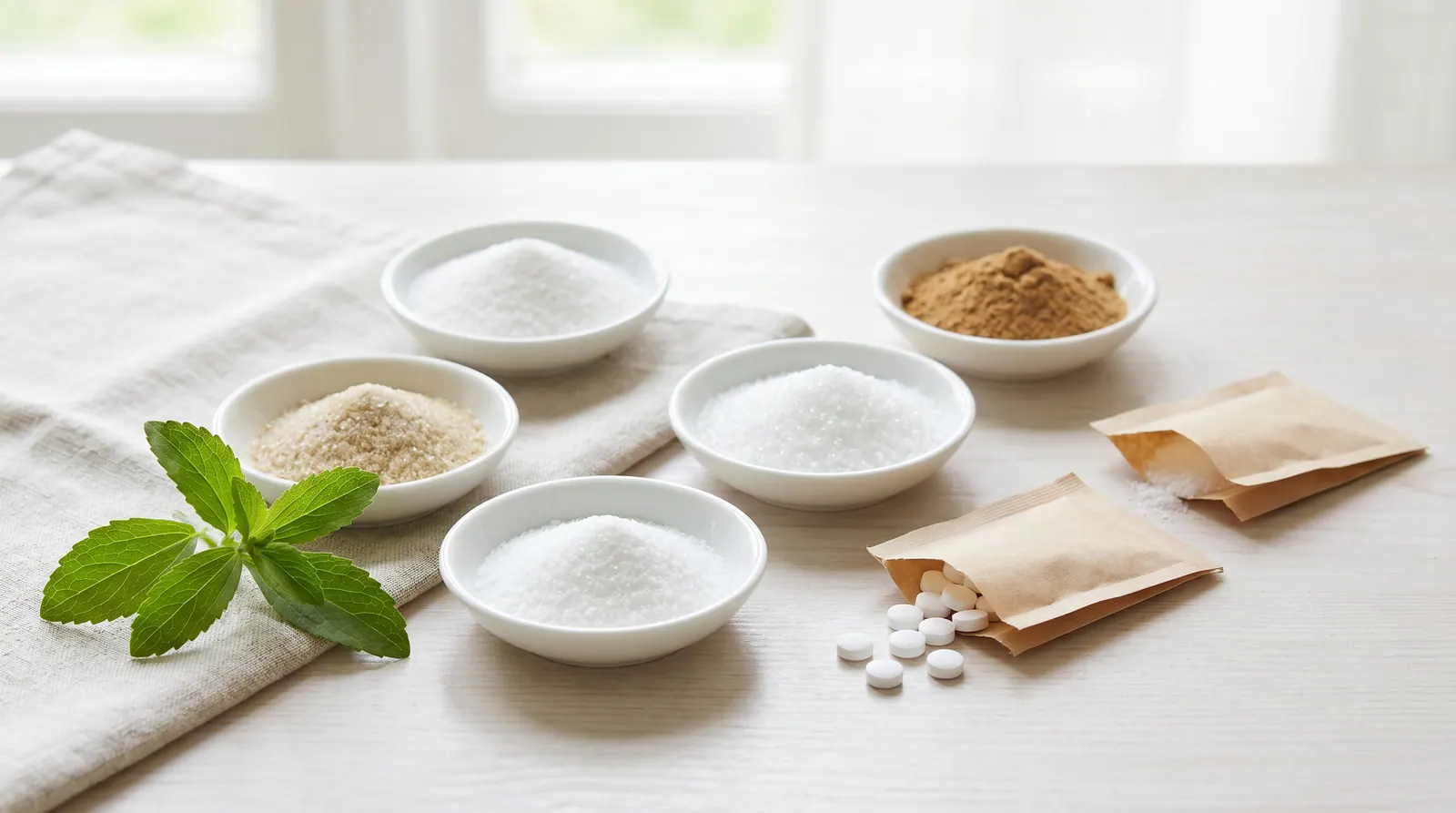
These are substances that provide a sweet taste without significant calories because they are hundreds of times sweeter than sugar, requiring only a tiny amount. They include manufactured sweeteners like aspartame, sucralose, and acesulfame potassium (Ace-K), as well as plant-derived extracts like stevia. All are approved food additives after extensive safety reviews.
Practically speaking: You find them in diet sodas, low-sugar yogurts, chewing gum, and tabletop sweetener packets. Their purpose is simple: to provide sweetness without the calories and glucose spikes associated with sugar. However, this purpose has limits, which we'll detail. The tool itself isn't the issue; it's how it's used.
Are They Really Safe?
The short answer from major regulatory bodies: Yes, within the Acceptable Daily Intake (ADI). The U.S. Food and Drug Administration (FDA) approves six high-intensity sweeteners and grants Generally Recognized As Safe (GRAS) status to certain stevia and monk fruit extracts, each with its own ADI. The European Food Safety Authority (EFSA) concluded in its re-evaluation of aspartame that it is safe at current exposure levels.
Practically, this doesn't mean scientific debate has ended. Some observational studies have raised questions, which we'll discuss honestly. However, there's a crucial difference between an 'open research question' and a 'confirmed risk.' The current regulatory stance is safety within the ADI, with ongoing monitoring of new evidence. This content is for informational purposes and does not substitute professional medical advice.
The Acceptable Daily Intake (ADI) — What Does It Mean?
The ADI is the maximum amount that can be consumed daily over a lifetime without appreciable health risk. Importantly, it includes a wide safety margin: the UK's Diabetes UK notes it's set at about 100 times lower than the smallest amount that might cause concern, making it difficult for most people to reach.
To illustrate: Experts estimate a 70kg adult would need to drink more than nine to fourteen cans of diet soda daily to exceed the ADI for aspartame. This is far beyond typical consumption. The practical rule: you don't need to calculate milligrams, but rather avoid making sweeteners a dense daily habit through cumulative products.
Is Your Relationship with Sweeteners Healthy? — A Self-Check
This is a guideline to assess your usage patterns, not a diagnostic tool for risk, as safety is assured within the ADI. The goal is to see if sweeteners are a passing tool or a habit reinforcing your sweet tooth. Choose what applies to you:
The Aspartame Story (2023) — What Actually Happened
This is the headline that alarmed many and deserves detail. In July 2023, the International Agency for Research on Cancer (IARC) classified aspartame as Group 2B, 'possibly carcinogenic to humans,' based on limited evidence concerning liver cancer.
The key to understanding 'limited evidence' is that it means a positive association was observed, but chance, bias, or confounding factors cannot be ruled out as alternative explanations. Group 2B is a middle category that includes many common substances and does not indicate a confirmed risk.
More importantly, another piece of news was lost in the noise: simultaneously, the Joint Expert Committee maintained the ADI at 40 mg/kg body weight unchanged, explicitly stating that 'the evidence linking aspartame consumption to cancer in humans is inconclusive'. The honest takeaway: no need for panic, but moderation is logical, and further research is needed before a definitive judgment.
Sweeteners and Weight — What Did the WHO Say?
In May 2023, the World Health Organization (WHO) issued a guideline advising against the use of low-calorie sweeteners for weight control or reducing the risk of noncommunicable diseases. The reason: a systematic review found no long-term benefit in reducing body fat in adults or children.
However, read the crucial footnote: the WHO classified this recommendation as 'conditional' because the evidence is observational and may be influenced by confounding factors, as individuals with existing overweight issues might be more likely to use sweeteners. It also noted potential associations with increased risk of type 2 diabetes and cardiovascular diseases, which are observational links and do not prove causation. The practical message, as summarized by a WHO nutrition official: sweeteners are not essential dietary components, and it's better to reduce overall dietary sweetness from an early age.

Sweeteners and Blood Sugar — Better Than Sugar Here
In one specific aspect, low-calorie sweeteners are indeed gentler than sugar: they don't enter the bloodstream in the same way, don't directly raise blood glucose, and contain negligible calories or carbohydrates. This is why the WHO excluded individuals with diabetes from its general recommendation on weight management.
Practically: For those managing their blood sugar, switching from sugary drinks to sweetened ones might be a useful short-term transitional step, reducing glucose spikes. However, remember: 'better than sugar' doesn't mean 'healthy without limits.' The ultimate goal remains reducing reliance on sweetness altogether, not just changing the source. Continue following your plan with your doctor or dietitian, as individual needs vary.
Do They Curb Sweet Cravings?
This is where one of the most honest points lies: sweeteners provide a sweet taste but don't retrain your palate away from sweetness. When you consistently taste intense sweetness, your threshold for 'acceptable sweetness' remains high, and your craving for sugary items may persist rather than diminish.
Practically: If your goal is a calmer relationship with sweets, simply swapping sugar for sweeteners might not be enough. A deeper step is gradually reducing sweetness levels so your palate regains sensitivity and requires less sweetness. Consider sweeteners a temporary bridge to reduce daily sugar intake, not a permanent destination. This is a practical guideline, and individual responses vary.
Natural Stevia — Does 'Natural' Mean Safer?
Stevia is extracted from the leaves of the Stevia rebaudiana plant. Its sweet compounds, known as steviol glycosides, are about 300 times sweeter than sugar, with some compounds reaching up to 450 times sweeter. The FDA has granted GRAS status to certain stevia extracts, and the EFSA has set an ADI of 4 mg/kg body weight for steviol glycosides.
However, the surprise for fans of the word 'natural': being plant-derived doesn't automatically make it safer or more beneficial for weight management. The WHO included stevia and its derivatives in the same category of sweeteners in its recommendation against their use for weight control. The takeaway: Stevia is a good option within the ADI, but don't choose it thinking 'natural' exempts you from moderation.

Why Moderation is the Smartest Approach
If we combine the above points, a balanced picture emerges: sweeteners are safe within the ADI according to major regulatory bodies, but they are not essential foods, don't aid long-term weight loss, don't extinguish sweet cravings, and one of them is subject to ongoing research debate. This isn't a call to fear, but a call to put them in perspective.
Practically: Use sweeteners as a transitional tool to reduce your daily sugar intake, not as a dense, permanent habit. Avoid constantly replacing water with sweetened beverages. Aim for reducing overall sweetness, which alone can alleviate the entire sweetener debate. The smartest approach isn't choosing the 'perfect' sweetener, but reducing your need for sweetness at its source.
What Science Actually Says
Let's honestly separate what is proven from what is potential. Proven with confidence: these sweeteners do not directly raise blood sugar, are approved as safe within their limits by major food and drug safety authorities, and are difficult to exceed with moderate consumption.
Potential and unconfirmed: their lack of long-term weight loss benefit and potential links to chronic diseases are based on observational studies that don't prove causation, hence the WHO's 'conditional' recommendation. Aspartame's classification was based on 'limited evidence' that the expert committee found 'inconclusive' for establishing a link to cancer in humans. The practical conclusion: don't promise yourself a guaranteed benefit, nor terrify yourself with a confirmed risk. Strong evidence supports safety within limits; weaker evidence calls for moderation.
Five Common Myths About Sweeteners
Half-truths and exaggerations abound regarding sweeteners, from those who overstate risks to those who overpromise benefits. Here are the most common, and what the evidence calmly states:
"It's proven that sweeteners cause cancer."
"Sweeteners help you lose weight because they have no calories."
"Sweeteners curb my sweet cravings."
"Stevia is natural, so it's automatically safer and more beneficial."
"Diet products are healthy, so it's fine to consume them freely."

Practical Tips You Can Implement Today
Before diving into the full protocol, here are small, actionable tips derived from the above, balancing reassurance with moderation, avoiding both fear and excess:
- Be reassured within the limit. Typical consumption is far from the ADI, so there's no need to calculate milligrams or fear a dash of sweetener in your coffee.
- Make it a bridge, not a destination. Use sweeteners to reduce your daily sugar intake while gradually working to decrease overall sweetness, thus reducing your need for them.
- Don't overdo daily diet drinks. Consuming multiple sweetened products throughout the day reinforces your sweet tooth and doesn't serve your goal, even if calorie-free.
- Make water your primary drink. Don't always replace water with sweetened beverages; water should be your first choice, with sweetened drinks as an exception, not the rule.
- Don't consider 'diet' a license for sweets. 'Saving calories with a diet drink' isn't an excuse for an extra dessert; the total intake counts at the end of the day.
- Reduce sweetness gradually. Decrease the amount of sweetener or sugar little by little, allowing your palate to regain sensitivity and require less sweetness.
- Be mindful of children's limits. A child's ADI is smaller as it's calculated based on weight. Don't make sweetened drinks a frequent habit for young children; consult their doctor.
- Don't chase the 'perfect' sweetener. The difference between types is less significant than the difference between moderation and excess. Your habits matter more than the name on the package.
The EEINA Protocol for a Balanced Relationship with Sweeteners
A practical plan combining the above into three progressive layers. Start layer by layer, and note your response to understand what works best for you.
This protocol is based on regulatory safety stances within the ADI, WHO recommendations, and practical guidelines for reducing sweetness.
Be Reassured, Set Boundaries
Four fundamental rules.
Use as a Tool, Not a Habit
Steps to regulate usage.
Reduce Overall Sweetness
The ultimate goal.
Golden Rule: The goal isn't to find the 'perfect' sweetener, but to reduce your need for sweetness at its source. Sweeteners are a temporary bridge within limits, not an essential food or a permanent solution.
Frequently Asked Questions
Are artificial sweeteners and stevia safe?
Does aspartame cause cancer?
Do sweeteners help with weight loss?
Are sweeteners better than sugar for diabetics?
What's the difference between stevia and artificial sweeteners?
When to Consult a Doctor — Red Flags
Sweeteners are safe within the ADI for most people, but certain situations warrant medical advice before relying on them or consuming them frequently:
- Phenylketonuria (PKU): Individuals with this genetic disorder have difficulty metabolizing phenylalanine in aspartame and should avoid or restrict it under medical supervision.
- Pregnancy or Breastfeeding: Discuss with your doctor before making sweeteners a daily habit, as needs and limits can differ during these stages.
- Diabetes or Prediabetes: Integrate sweetener use into your plan with a dietitian, as individual responses and glucose control vary.
- Young Children: Before making sweetened beverages a regular habit, remember their ADI is smaller as it's calculated based on weight.
- Digestive Issues with Sugar Alcohols: Some individuals may experience bloating or diarrhea. Consult your doctor if symptoms recur.
- Persistent Health Anxiety leading to extreme food avoidance or restriction warrants an assessment to provide reassurance and balance your diet.
Start Your Next Step with EEINA
Lower-Sugar Meal Plans
Saudi-inspired recipes that gradually reduce sugar, retraining your palate to need less sweetness.
Get Your Plan ←Low-Calorie Desserts
Moderate sweet ideas relying on natural sweetness from fruits and dates in moderation.
Try Them ←EEINA App
Track your added sugar intake and gradually reduce sweetness without deprivation.
Download ←