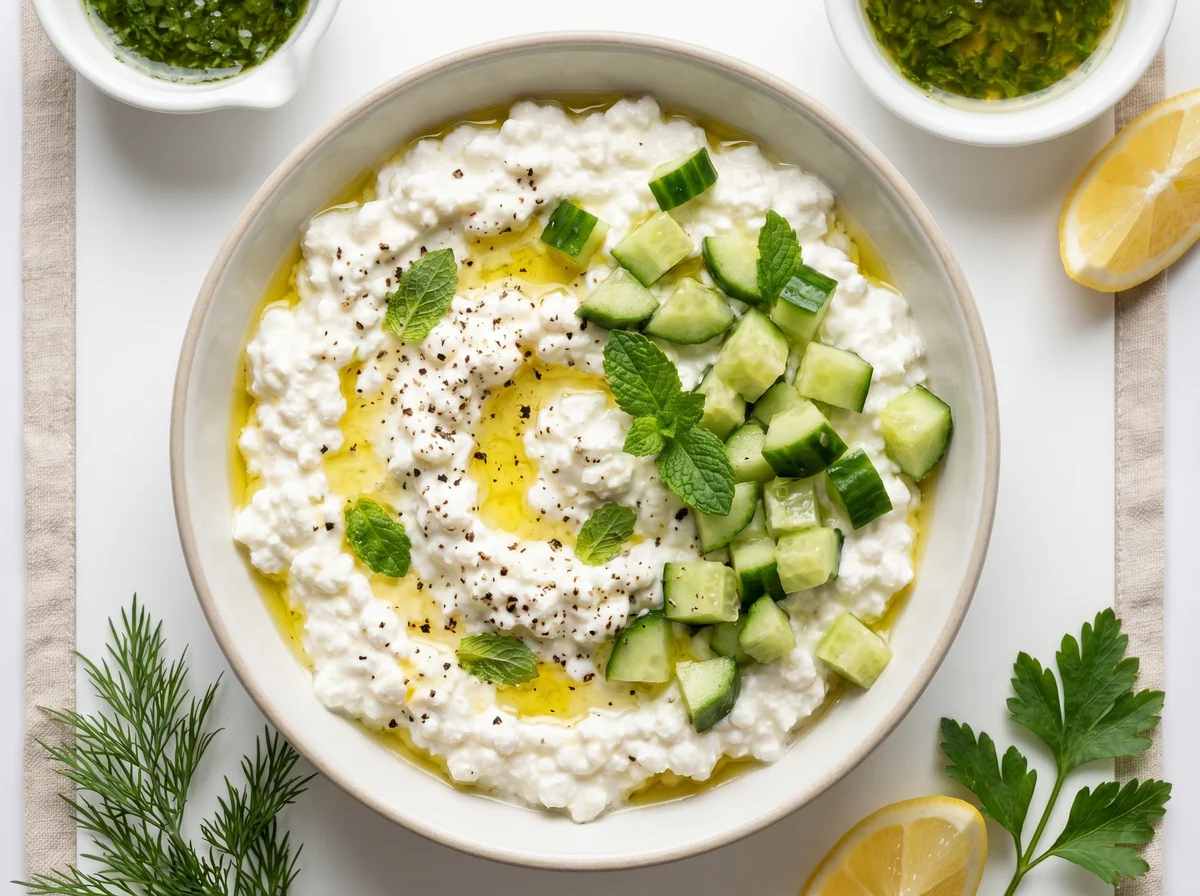
In the light Gulf morning, cheese typically appears on the table alongside bread — but this bowl presents a refreshing savoury version with no bread at all. Cottage cheese is the hero here: its chunky texture meets the crunch of cucumber and the gentle sweetness of cherry tomatoes, while fresh mint adds a cool breath that suits the region's heat.
It is a breakfast that brings together the simplicity of locally available ingredients found in every home with the desire for a high-protein start to the day that requires no cooking. Ten minutes of chopping and stirring and you have a bowl that resembles a salad but is richer and more filling — suitable for breakfast and a post-workout snack alike.
Preparation Steps
Prepare the cucumber
Wash the cucumber and cut it into small 1 cm cubes so they match the size of the cottage cheese curds in every spoonful. Leave the skin on if it is thin, as it adds crunch and fibre.
Prepare the tomatoes and mint
Wash the cherry tomatoes and halve each one so their light juice is released and the flavour distributes evenly. Chop the mint finely immediately before use to keep its aroma strong, because mint wilts and loses its scent if chopped too early.
Season the cottage cheese
Place the cottage cheese in a bowl and add the lemon juice, black pepper, and a light pinch of salt, then stir gently. Taste before adding more salt, as cottage cheese is naturally salty and may need little or none.
Combine and serve
Add the cucumber, tomatoes, and half the mint to the cottage cheese and fold with a spoon using gentle strokes so the vegetables are not crushed. Divide the mixture between two bowls, then drizzle the olive oil and sprinkle the dried thyme and remaining mint over the top and serve cold immediately to preserve the crunch of the cucumber.
Blood Sugar Impact
The glycemic index (GI) measures how quickly a food raises blood sugar, while the glycemic load (GL) measures how much a full serving raises it. Together they give the complete picture.
Glycemic Index
GI
6Low
Low0–55Medium56–69High70+
A low value (≤55) means a gradual rise in blood sugar — the most suitable range for diabetes and insulin resistance.
Glycemic Load
GL
1Low
Low0–10Medium11–19High20+
Glycemic load reflects the impact of the full serving. To lower it: take half a serving, or pair the recipe with a source of protein and fiber.
Nutritional Information
Per ServingMakes 2 servings · one serving is about 305 g of raw ingredients
Calories208 kcal10%of Daily Value*
Protein17 g34%of Daily Value*
Carbohydrates14 g5%of Daily Value*
Fat10 g13%of Daily Value*
Fiber2 g7%of Daily Value*
Sodium467 mg20%of Daily Value*
Potassium434 mg9%of Daily Value*
Phosphorus262 mg21%of Daily Value*
* Percent Daily Values are based on a 2,000-calorie diet per FDA food-label reference values — your daily needs may be higher or lower. Values are derived from the recipe's ingredients via the USDA database.
Troubleshooting
The most common problems when preparing Cottage Cheese Bowl with Cucumber, Mint and Cherry Tomatoes, and how to fix them:
The bowl became watery and runny
The cucumber and tomatoes release their water quickly. Drain the cucumber cubes on kitchen paper for two minutes before combining, and do not cut the tomatoes until just before serving; mix everything at the last moment rather than hours ahead.
The taste is flat and lifeless
Usually the acid or balanced salt is insufficient. Add an extra squeeze of lemon juice and a little black pepper and taste — the acid brings out the flavour of both the tomatoes and the cottage cheese before reaching for more salt.
The cottage cheese tastes sour or old
Cottage cheese spoils quickly. Check the use-by date and the smell — if it has turned sharply sour do not use it. Buy a fresh container, keep it refrigerated always, and consume it within a few days of opening.
The mint turned black and lost its aroma
Mint oxidises if chopped early or left in contact with acid for a long time. Chop it in the very last step, and add half when mixing and half on top as a garnish right before serving so it stays green and fragrant.
The texture is too heavy and rich
Increase the proportion of cucumber and tomatoes slightly, or choose a lower-fat cottage cheese, or add a tablespoon of cold water or milk to loosen the texture without changing the flavour much.
Storage and Make-Ahead
Components separate (refrigerated)
Store the seasoned cottage cheese in one container and the chopped cucumber and tomatoes in another for up to two days in the refrigerator, then combine at serving time to avoid water pooling.
Bowl after combining (refrigerated)
May be stored assembled and covered in the refrigerator for a maximum of 12 hours, but the cucumber will lose its crunch and release water, so it is best consumed on the day it is made.
Advance preparation
Prepare the vegetables and cottage cheese in the evening and keep them separate, then combine and season in the morning in two minutes for a quick ready breakfast.
Freezing
This dish is not suitable for freezing at all — the cottage cheese breaks down in texture and the cucumber becomes soft and watery after thawing.
Tested Ingredient Substitutions
Original Ingredient
Tested Substitute
Ratio
Flavor Difference
Cottage cheese
Strained Greek yogurt
1:1 by weight
A high-protein alternative with a smoother texture and more pronounced tang, and usually lower in sodium than cottage cheese.
Cherry tomatoes
Regular tomatoes, diced small
1:1 by weight
Drain some of their seeds and water so the bowl does not become runny.
Fresh mint
Fresh basil or chopped flat-leaf parsley
1:1 by volume
Changes the aromatic character but stays refreshing; parsley is more readily available year-round.
Extra-virgin olive oil
Avocado oil
1:1 by volume
A milder, lighter flavour that suits those who prefer a neutral note that does not overpower the cottage cheese.
Dried thyme
Sumac (tart purple spice)
Half the quantity to start, then adjust to taste
Gives acidity and a beautiful rosy colour, a common Gulf and Levantine seasoning used on cheeses.
How Much Does It Make? Scaling Guide
Ingredient
2 servings
4 servings
6 servings
Cottage cheese
300 g
600 g
900 g
Cucumber
150 g
300 g
450 g
Cherry tomatoes
120 g
240 g
360 g
Fresh mint
10 g
20 g
30 g
Olive oil
15 ml
30 ml
45 ml
Lemon juice
10 ml
20 ml
30 ml
EEINA Nutrition Tip
If you are monitoring sodium, rinse the cottage cheese in a sieve under cold water for a minute then drain it well before seasoning — this removes some of the added salt while preserving the protein and leaves you room to control the seasoning yourself.
Add This Recipe to Your Plan
The EEINA app saves your favorite recipes, calculates them from their real ingredients, and shows your daily numbers toward your goal. Try it free now.
What is the difference between cottage cheese and the Arabic qareesh?
They are essentially two names for similar types of fresh, unaged, protein-rich soft cheese. Traditional Arabic qareesh tends to be lower in fat and drier, while commercial cottage cheese comes with a moister texture and more distinct curds. Both work for this recipe; choose the lower-fat version to keep calories down.
Is this dish suitable for people with diabetes?
It is generally a suitable choice because its carbohydrates are low and protein is high, making it gentle on blood sugar. Individual response still varies, and people with diabetes are best served by monitoring their readings and consulting a dietitian to include it in their plan.
Can I prepare it ahead for a work breakfast?
Yes, but keep the seasoned cottage cheese separate from the chopped cucumber and tomatoes, then combine them in the morning or at eating time. This preserves the crunch of the cucumber and prevents water collecting in the bowl.
Is it suitable for those monitoring blood pressure or sodium?
With caution. Cottage cheese contains notable sodium, so if you are following a low-salt diet rinse it under cold water and drain it before seasoning, add no extra salt, and consult your doctor. It is not automatically a low-sodium dish.
What should I serve alongside it for a more complete meal?
It is sufficient on its own as a high-protein breakfast; for more energy and fibre add a slice of wholemeal bread or a handful of oats, or a piece of fruit, depending on your nutritional goal and activity level.