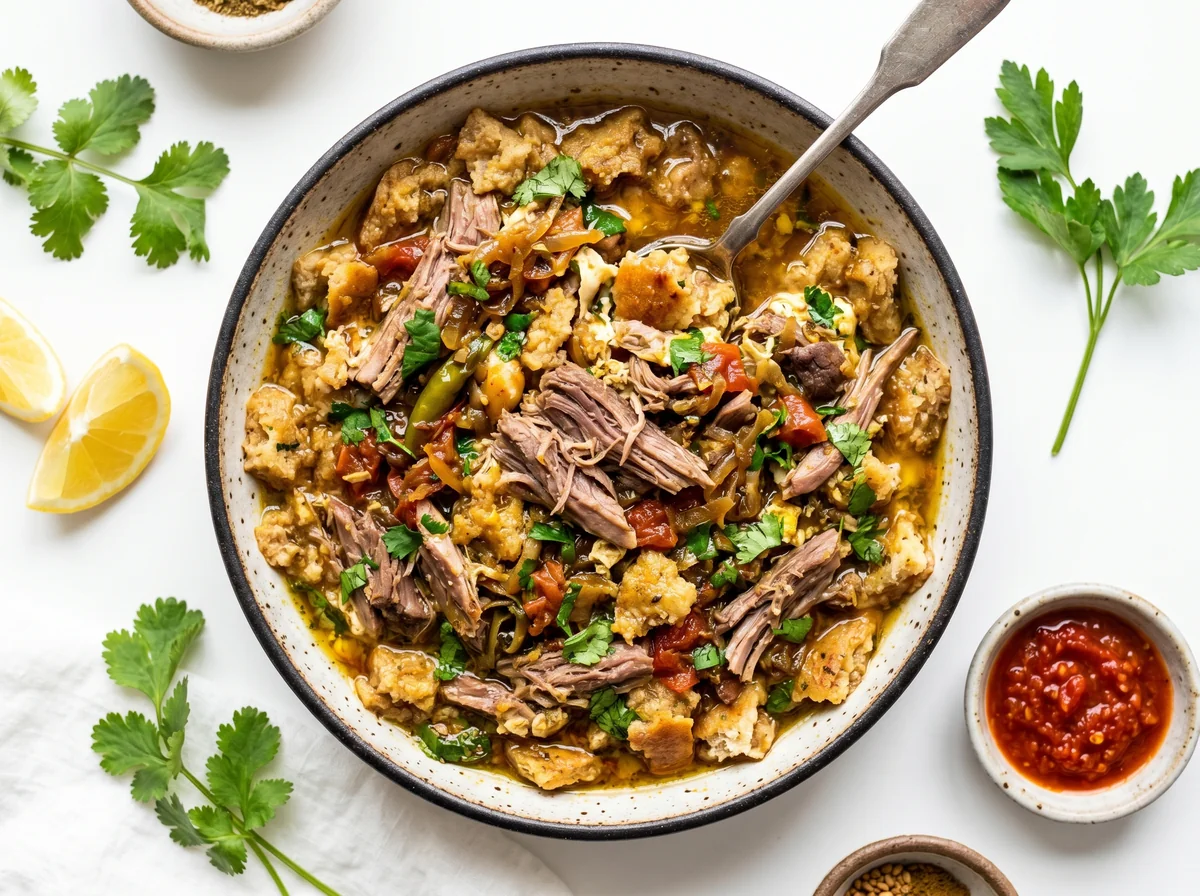
Yemeni Fatoot (Crumbled Bread with Eggs and Tomatoes)
A quick Yemeni breakfast — Yemeni bread crumbled and tossed with eggs, tomatoes, onion, and spices until toasted. A popular, filling breakfast dish with medium carbohydrates; contains gluten and eggs.
Fatoot is a popular, filling, well-loved Yemeni dish. The name comes from fatt (to crumble bread). It is a time-honoured clever way to use stale bread (economical and generous), by crumbling it and tossing it over heat with ingredients that give it flavour.
Fatoot comes in two versions: savoury (crumbled bread with eggs, tomatoes, onion, spices, and sahawiq — a rich filling breakfast) and sweet (crumbled bread with honey, ghee, and dates — for breakfast or suhoor). The savoury egg version is a popular, quick, filling breakfast. Fatoot reflects the spirit of popular Yemeni cooking (economy, satiety, and flavour) — its toasted crumbled bread with eggs and tomatoes (or honey) is a warm pleasure, symbolising the simple, generous Yemeni popular breakfast.
Preparation Steps
Crumble the bread
Crumble the Yemeni bread (kadam or any bread, preferably slightly dry) into small pieces. Fatoot is a crumbled bread dish (the name comes from fatt, to crumble), and it is a clever way to use stale bread. Slightly dry bread toasts better.
Saute the onion and tomatoes
Fry the chopped onion and garlic in ghee until wilted, add the chopped tomatoes, hot green chilli, cumin, and salt, and cook until the tomatoes soften. The seasoned tomato and onion base gives fatoot its moisture and flavour (the savoury version with tomatoes and eggs).
Add the crumbled bread
Add the crumbled bread to the tomato mixture and stir until it absorbs the flavour and toasts slightly. The bread absorbs the tomatoes and ghee, softening and toasting (fatoot texture: moist, toasted, seasoned bread). Stir to coat it with the flavour.
Add the eggs
Crack the eggs over the bread (or whisk them and add), and stir until the eggs are cooked and blended with the bread and tomatoes. The scrambled eggs add protein and bind the fatoot (like an omelette with bread), making it a rich, filling breakfast.
Final toast
Let the fatoot toast slightly over the heat (the bottom turns slightly golden and crisp while the rest remains soft and seasoned). Toasting gives a pleasing texture (soft bread with crispy edges). Taste and adjust salt and cumin.
Serve
Serve fatoot hot with sahawiq (hot sauce) or coriander and tea. It is a quick, popular, filling Yemeni breakfast (a delicious way to use bread), with its toasted crumbled bread with eggs and tomatoes being a warm, nourishing pleasure. (There is also a sweet fatoot: crumbled bread with honey and ghee.) A symbol of the simple, generous Yemeni popular breakfast.
Blood Sugar Impact
The glycemic index (GI) measures how quickly a food raises blood sugar, while the glycemic load (GL) measures how much a full serving raises it. Together they give the complete picture.
Glycemic Index
GI
67Medium
Low0–55Medium56–69High70+
A low value (≤55) means a gradual rise in blood sugar — the most suitable range for diabetes and insulin resistance.
Glycemic Load
GL
29High
Low0–10Medium11–19High20+
Glycemic load reflects the impact of the full serving. To lower it: take half a serving, or pair the recipe with a source of protein and fiber.
Nutritional Information
Per ServingMakes 3 servings · one serving is about 225 g of raw ingredients
Calories398 kcal20%of Daily Value*
Protein15 g30%of Daily Value*
Carbohydrates47 g17%of Daily Value*
Fat17 g22%of Daily Value*
Fiber3 g11%of Daily Value*
Sodium459 mg20%of Daily Value*
Potassium382 mg8%of Daily Value*
Phosphorus224 mg18%of Daily Value*
* Percent Daily Values are based on a 2,000-calorie diet per FDA food-label reference values — your daily needs may be higher or lower. Values are derived from the recipe's ingredients via the USDA database.
Troubleshooting
The most common problems when preparing Yemeni Fatoot (Crumbled Bread with Eggs and Tomatoes), and how to fix them:
Fatoot is dry
Not enough tomatoes or liquid. Add sufficient tomatoes and ghee (they moisten the bread) — stale bread absorbs liquid. The moist tomato base keeps the fatoot moist and seasoned rather than dry.
Soggy, sticky paste
Bread too fresh or too much liquid. Use slightly stale bread (it absorbs without turning to paste), and add liquid moderately. Stale crumbled bread stays cohesive and toasted rather than paste-like.
Dry, rubbery eggs
Overcooked. Add the eggs near the end and stir just until set (do not dry them out) — overcooking dries them. Soft eggs blend with the bread and bind it.
Bland flavour
Not enough cumin, salt, or sahawiq. Season well (cumin, salt, chilli), and serve with sahawiq (Yemeni hot sauce) or coriander. Sahawiq and cumin give the distinctive Yemeni flavour.
Did not toast
Low heat or too little ghee. Let the fatoot toast over medium heat with a little ghee until the bottom is slightly golden — this gives the pleasing texture (soft bread with crispy edges). Do not stir constantly so it can toast.
Storage and Make-Ahead
Best fresh
Fatoot is best fresh and hot immediately after preparation (bread is toasted, eggs are fresh). Keeps for 1 day in the refrigerator (contains eggs), reheated in a pan (not microwave — it softens the bread). Best prepared fresh for the best texture.
Separate components
Stale crumbled bread can be stored dry (for weeks), and fatoot prepared fresh quickly as needed (sauteed tomatoes, add bread and eggs). Stale bread is ideal for fatoot (do not discard it).
Refrigerator (4°C)
Cooked fatoot keeps refrigerated for 1 day, reheated in a pan. But it is quick to prepare, so fresh is better. The sweet version (with honey) is also best eaten fresh.
Food safety
Cook the eggs through completely (egg safety), use sound bread (not mouldy), cool leftovers quickly, do not leave at room temperature for more than 2 hours, and reheat thoroughly.
Tested Ingredient Substitutions
Original Ingredient
Tested Substitute
Ratio
Flavor Difference
White bread
Whole-wheat bread
same quantity
Adds fibre and lowers the index. Fatoot uses any stale bread, and whole wheat is healthier.
Savoury version (with eggs and tomatoes)
Sweet version (with honey and ghee)
—
Sweet fatoot (crumbled bread with honey, ghee, and dates) is another Yemeni version for breakfast or suhoor. The savoury version is richer in protein.
Ghee
Oil or less ghee
less
Reduces saturated fat. Some fat helps with toasting, but it can be reduced. Oil is a lighter substitute.
How Much Does It Make? Scaling Guide
Servings
Bread
Eggs
Tomatoes
2 (small)
3 loaves
2
1
3 (base)
4 loaves
3
2
6 (family)
8 loaves
6
4
EEINA Nutrition Tip
Egg fatoot is a relatively filling breakfast: eggs provide complete protein and vitamins, tomatoes and onion provide antioxidants, and the bread provides carbohydrates. Its challenges are carbohydrates (white wheat bread), fat (ghee), and sodium. For a better version: use whole-wheat bread (adds fibre and lowers the index), reduce the ghee, increase the tomatoes, onion, and vegetables, use some egg whites, and reduce salt. The sweet version (with honey) needs moderation in sugar. A filling breakfast — balance it with vegetables and eggs, be moderate with bread and fat, and whole wheat improves it.
Add This Recipe to Your Plan
The EEINA app saves your favorite recipes, calculates them from their real ingredients, and shows your daily numbers toward your goal. Try it free now.
A popular Yemeni dish of crumbled bread (cut into small pieces) tossed over heat. Savoury version: crumbled bread with eggs, tomatoes, onion, spices, and sahawiq (a rich, filling breakfast). Sweet version: crumbled bread with honey and ghee. The name comes from fatt (to crumble) — a clever way to use stale bread; a popular Yemeni breakfast.
What is the difference between fatoot and fatteh?
Both use crumbled bread, but Yemeni fatoot is tossed and toasted over heat with eggs and tomatoes (or honey), while fatteh (Egyptian and Levantine) is toasted bread soaked in broth or sauce with rice and yogurt (layered). Fatoot is dry-toasted and stirred in the pan; fatteh is soaked in broth. Both repurpose bread in delicious ways.
Should I use stale bread?
Slightly stale bread is preferred for fatoot (it absorbs the tomatoes and ghee and toasts without turning to paste, while very fresh bread may become sticky). Fatoot is inherently a clever way to use yesterday's stale bread (economical and generous). If the bread is fresh, dry it slightly or toast it first.
Is fatoot healthy?
The savoury version is a relatively filling breakfast: eggs provide protein, tomatoes and onion provide antioxidants, and bread provides carbohydrates. Its challenges are white bread, ghee, and sodium. Use whole-wheat bread, reduce ghee, increase vegetables and eggs (some egg whites), and reduce salt. A filling breakfast in moderation, and whole wheat improves it. The sweet version needs moderation with honey.
Sources: University of Sydney · Gulf GSO · Our methodology · Updated on