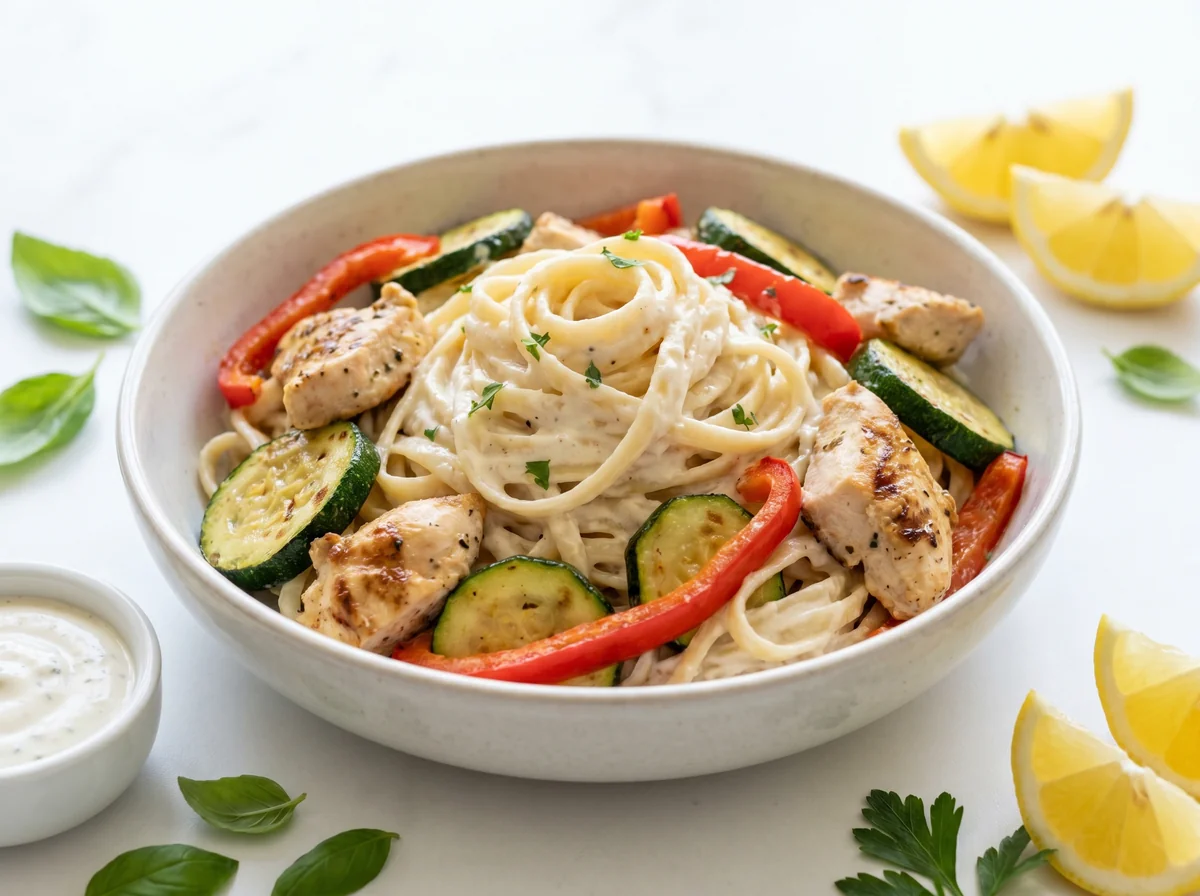
White Pasta with Chicken, Zucchini, and Pepper (No Tomato, Kidney-Friendly)
A kidney-friendly warm pasta dish with chicken, zucchini, red and green pepper in a light lemon and herb sauce, no tomatoes. Reduces potassium, phosphorus, and sodium load. Contains gluten.
In Mediterranean cooking, pasta is usually paired with red tomato sauce, but that pairing is not an unbreakable rule. This recipe returns to a simpler and older origin: pasta coated in olive oil, garlic, and herbs, an aglio e olio style that predates the spread of tomatoes themselves.
When a meal plan needs to lower potassium, this simple origin becomes a blessing rather than a compromise. Here the zucchini and peppers play the role of colour and texture, and the lemon provides the acidity that tomatoes once delivered, producing a warm dish familiar to the Saudi family without burdening the kidneys. It is a recipe that proves restricting minerals does not mean restricting flavour.
Preparation Steps
Cook the pasta
Bring a wide pot of water to a boil with just a pinch of salt, add the white pasta, and cook for 9 to 11 minutes until tender with a firm centre (al dente). The sign is a strand that bends without breaking, giving the pasta a texture that holds the sauce without turning mushy. Reserve about 120 ml of the cooking water before draining, as its starch will bind the sauce later.
Sear the chicken
Heat 2 tablespoons of olive oil in a wide pan over medium-high heat, add the chicken slices spread without stacking, and cook 4 to 5 minutes per side until no pink remains and the internal temperature reaches 74 degrees C when checked with a thermometer. Spacing the slices without stacking gives a golden sear rather than steaming in the juices. Set aside.
Soften the onion and garlic
In the same pan add the remaining tablespoon of olive oil and the chopped onion over medium heat and stir for 2 minutes until translucent but not golden, then add the garlic and stir for 30 seconds until fragrant. Keeping the onion translucent and the garlic unbrowned preserves a gentle flavour, not bitter, which is the base of the flavour here in place of salt.
Saute the vegetables
Raise the heat slightly and add the red and green peppers, stirring for 3 minutes until softened while retaining a crunch, then add the zucchini and stir for 4 to 5 minutes until fork-tender while keeping its colour. Adding the zucchini last prevents it from collapsing into a watery mush as it cooks quickly.
Make the lemon and herb sauce
Return the chicken to the pan, add the lemon juice, lemon zest, and black pepper, and toss everything together for 1 minute until the ingredients are coated in the citrus juices. The light lemon sauce compensates for the absence of tomatoes and gives the dish brightness and refreshing acidity without raising the potassium.
Combine and serve
Add the drained pasta to the pan along with half the reserved cooking water and toss over gentle heat for 2 minutes until the sauce wraps around the pasta and becomes glossy, adding more water gradually if it dries out. Remove from the heat and scatter over the fresh parsley, basil, and thyme, then serve immediately while warm. Fresh herbs added at the end preserve their fragrance, which would evaporate with prolonged cooking.
Blood Sugar Impact
The glycemic index (GI) measures how quickly a food raises blood sugar, while the glycemic load (GL) measures how much a full serving raises it. Together they give the complete picture.
Glycemic Index
GI
46Low
Low0–55Medium56–69High70+
A low value (≤55) means a gradual rise in blood sugar — the most suitable range for diabetes and insulin resistance.
Glycemic Load
GL
26High
Low0–10Medium11–19High20+
Glycemic load reflects the impact of the full serving. To lower it: take half a serving, or pair the recipe with a source of protein and fiber.
Nutritional Information
Per ServingMakes 4 servings · one serving is about 365 g of raw ingredients
Calories516 kcal26%of Daily Value*
Protein33 g66%of Daily Value*
Carbohydrates61 g22%of Daily Value*
Fat15 g19%of Daily Value*
Fiber5 g18%of Daily Value*
Sodium254 mg11%of Daily Value*
Potassium800 mg17%of Daily Value*
Phosphorus388 mg31%of Daily Value*
* Percent Daily Values are based on a 2,000-calorie diet per FDA food-label reference values — your daily needs may be higher or lower. Values are derived from the recipe's ingredients via the USDA database.
Troubleshooting
The most common problems when preparing White Pasta with Chicken, Zucchini, and Pepper (No Tomato, Kidney-Friendly), and how to fix them:
The pasta is dry and clumped after combining
Add the reserved pasta cooking water a tablespoon at a time while stirring over gentle heat; the water starch restores the flow and gloss of the sauce without extra oil or salt.
The zucchini collapsed and became watery
Add the zucchini in only the last few minutes and cook over medium-high heat for a short time; long cooking or low heat draws out its water and makes it lose its texture.
The dish tastes flat and seems to be missing something
The problem is usually insufficient acidity, not a lack of salt; add more fresh lemon juice, lemon zest, and a handful of fresh herbs, as acidity and fragrance compensate for the reduced salt and wake up the flavours.
The chicken turned out dry and tough
Do not cook the chicken beyond 74 degrees C internally and remove it immediately; overcooking squeezes out the moisture. Slice the breast into even-thickness strips so everything cooks at the same time.
The garlic burned and turned bitter
Add the garlic after the onion over medium heat for only 30 seconds until fragrant and not coloured; burnt garlic releases bitterness that overwhelms the entire dish.
Storage and Make-Ahead
Refrigerator
Store in a sealed container in the refrigerator for 2 to 3 days; refrigerate within 2 hours of cooking per the danger-zone rule to prevent bacterial growth.
Reheating
Reheat gently over low heat with a splash of water or reserved pasta cooking water to restore the flow; ensure the internal temperature reaches 74 degrees C. Avoid long microwaving as it dries the pasta and toughens the chicken.
Freezing
Not recommended; cooked pasta and zucchini both lose their texture after freezing and become soft and watery. Better to prepare the dish fresh and keep the leftovers in the refrigerator only.
Tested Ingredient Substitutions
Original Ingredient
Tested Substitute
Ratio
Flavor Difference
Skinless chicken breast
Skinless turkey breast or cooked egg white
1:1 by weight
Both are low-phosphorus proteins suitable for a kidney diet; avoid processed and canned meats due to their high phosphate and sodium additives.
Zucchini
Eggplant or green beans in limited quantity
1:1 by weight
Relatively low-potassium alternatives; adjust the quantity per your renal dietitian as green beans are slightly higher in potassium.
White pasta
Cooked white rice or gluten-free white pasta
Approximately 1:1 after cooking
White rice is a low-phosphorus, low-potassium starch; gluten-free pasta suits wheat sensitivity while keeping the mineral profile low.
Fresh lemon juice
Diluted apple cider vinegar
Half the quantity then taste
Provides alternative acidity to compensate for the absent tomatoes; start with less as vinegar is stronger than lemon and add gradually.
Red and green pepper
Shredded cabbage or small cauliflower florets
1:1 by weight
Low-potassium vegetables that add texture and colour; cauliflower is an excellent kidney choice and tolerates quick sauteing.
How Much Does It Make? Scaling Guide
Ingredient
2 servings
4 servings
8 servings
White pasta
140 g
280 g
560 g
Chicken breast
200 g
400 g
800 g
Zucchini
125 g
250 g
500 g
Peppers (red and green)
120 g
240 g
480 g
Olive oil
1.5 tablespoons
3 tablespoons
6 tablespoons
Lemon juice
1 tablespoon
2 tablespoons
4 tablespoons
EEINA Nutrition Tip
To lower the potassium in the vegetables further, blanch the cut zucchini and peppers in plenty of water for 2 minutes then drain before sauteing; this double-boil method dissolves some of the potassium in the water and discards it. Avoid adding ready-made broth or stock cubes as they are among the highest hidden sources of sodium and phosphates; use the pasta cooking water to bind the sauce instead.
Add This Recipe to Your Plan
The EEINA app saves your favorite recipes, calculates them from their real ingredients, and shows your daily numbers toward your goal. Try it free now.
Concentrated tomatoes, tomato sauce, and tomato paste are among the highest sources of potassium in Mediterranean dishes, and high potassium places a burden on weakened kidneys. So the tomatoes were replaced with a lemon, herb, and olive oil sauce that gives similar acidity and flavour without raising the potassium.
Is this recipe suitable for dialysis patients?
Protein, potassium, and phosphorus needs differ fundamentally between stages of kidney disease and dialysis patients compared with others; dialysis patients generally need higher protein. So suitability cannot be confirmed without consulting a kidney doctor and renal dietitian to determine the right serving size for your individual situation.
How do I lower the potassium in the vegetables further?
Blanch the cut zucchini and peppers in plenty of water for 2 minutes then drain before sauteing; this method dissolves some of the potassium in the blanching water and discards it, which is a common practice in renal diets.
Can whole-wheat pasta be used?
It is best avoided in a kidney diet; whole-wheat pasta is higher in phosphorus and potassium than refined white pasta. White pasta here is a deliberate choice to reduce the mineral burden.
How do I increase the protein in the recipe without raising the phosphorus?
Increase the quantity of skinless chicken breast or add cooked egg whites; both are high-quality proteins relatively low in phosphorus. Avoid adding cheese, nuts, or legumes as they raise phosphorus noticeably. Determine the quantity with your dietitian.