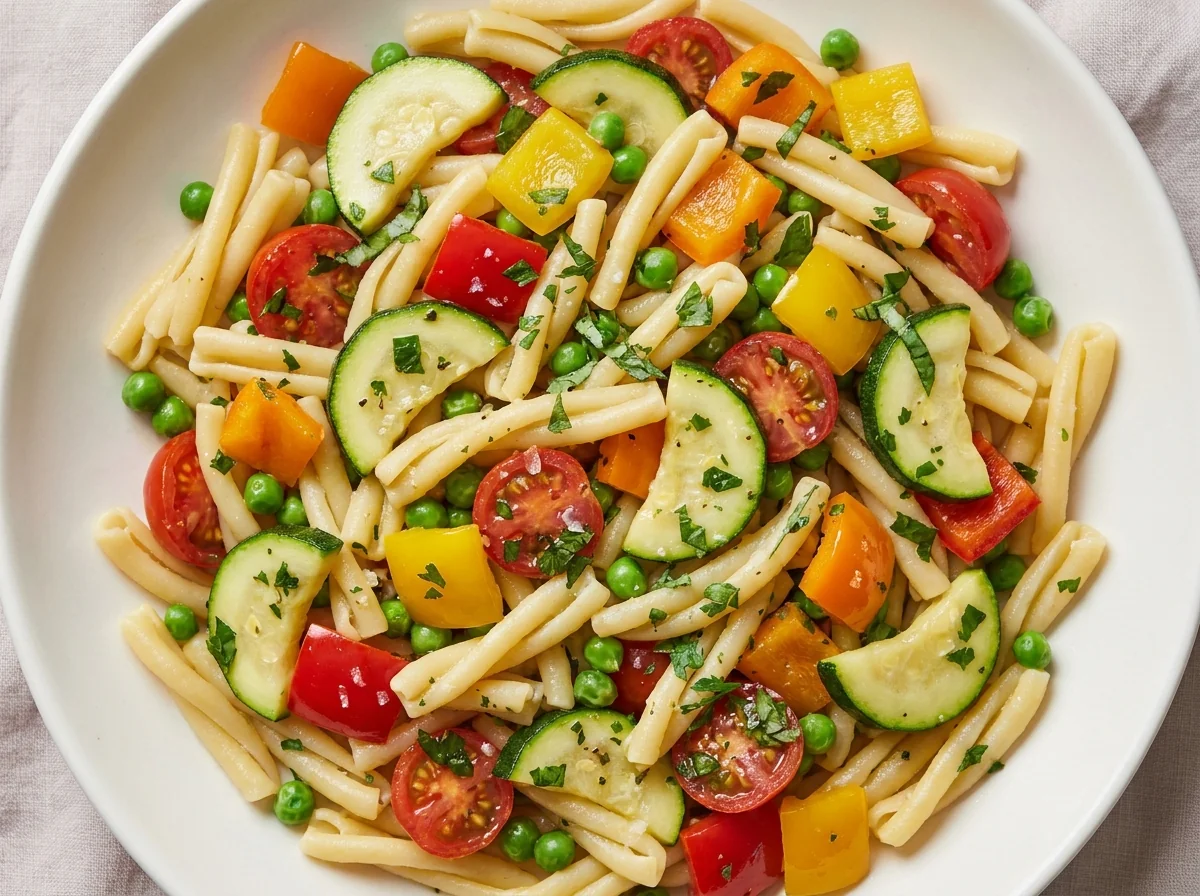
A cold pasta salad with seasonal vegetables, light and refreshing, suited for summer days and travel meals since it is served cold and holds up to transport.
Preparation Steps
Boil the pasta
Bring plenty of water to a boil, add the pasta, and boil it until tender with a slight bite remaining, about 9 to 11 minutes depending on the type. The slight firmness keeps it from going mushy after chilling.
Cool the pasta
Drain the pasta and rinse it with cold water until completely cool, then drain it well. Cooling stops the cooking and keeps the pieces separate in the cold salad.
Boil the peas
Boil the peas in boiling water for two minutes until tender and green, then drain and cool them in cold water to keep their color.
Prepare the vegetables
Cut the zucchini, pepper, and cherry tomatoes and place them in a large bowl. The cherry tomatoes stay raw to give freshness and a light acidity.
Make the dressing
Mix the olive oil, lemon juice, salt, and pepper in a small bowl until the mixture is even and a little emulsified.
Assemble the salad
Add the cold pasta and peas to the vegetables, pour over the dressing and toss gently, then add the basil and parsley. Leave it for ten minutes before serving so it soaks up the flavor.
Blood Sugar Impact
The glycemic index (GI) measures how quickly a food raises blood sugar, while the glycemic load (GL) measures how much a full serving raises it. Together they give the complete picture.
Glycemic Index
GI
47Low
Low0–55Medium56–69High70+
A low value (≤55) means a gradual rise in blood sugar — the most suitable range for diabetes and insulin resistance.
Glycemic Load
GL
29High
Low0–10Medium11–19High20+
Glycemic load reflects the impact of the full serving. To lower it: take half a serving, or pair the recipe with a source of protein and fiber.
Nutritional Information
Per ServingMakes 4 servings · one serving is about 265 g of raw ingredients
Calories425 kcal21%of Daily Value*
Protein13 g26%of Daily Value*
Carbohydrates67 g24%of Daily Value*
Fat12 g15%of Daily Value*
Fiber6 g21%of Daily Value*
Sodium305 mg13%of Daily Value*
Potassium528 mg11%of Daily Value*
Phosphorus212 mg17%of Daily Value*
* Percent Daily Values are based on a 2,000-calorie diet per FDA food-label reference values — your daily needs may be higher or lower. Values are derived from the recipe's ingredients via the USDA database.
Troubleshooting
The most common problems when preparing Vegetable Pasta Salad (Primavera), and how to fix them:
The pasta sticks together after chilling
Toss it with a little olive oil right after draining, and be sure to rinse it well with cold water.
The salad is dry after an hour in the fridge
The pasta absorbs the dressing over time, so keep a little dressing aside and add it before serving.
The zucchini releases water
Cut it just before serving rather than long beforehand, or salt it lightly and let it drain for ten minutes, then pat it dry.
Storage and Make-Ahead
Refrigerator
Keeps in a sealed container for up to three days; add a splash of olive oil and lemon before serving to revive it.
Freezer
Freezing is not recommended because the raw vegetables and cold pasta change texture after thawing.
Tested Ingredient Substitutions
Original Ingredient
Tested Substitute
Ratio
Flavor Difference
Wheat pasta
Gluten-free pasta (corn or rice)
1 to 1
Boil it a little shorter and rinse it well to prevent sticking.
Zucchini
Diced cucumber
1 to 1
Added raw without boiling and gives a refreshing crunch.
Fresh basil
Fresh chopped mint
1 to 1
Gives a different refreshing flavor that suits the cold salad.
How Much Does It Make? Scaling Guide
Ingredient
2 servings
4 servings (base)
8 servings
Short pasta
150 g
300 g
600 g
Zucchini
100 g
200 g
400 g
Bell pepper
75 g
150 g
300 g
Cherry tomatoes
100 g
200 g
400 g
Olive oil
22 ml
45 ml
90 ml
EEINA Nutrition Tip
Boiling the pasta to a firm, slightly bitey texture keeps it intact after chilling and prevents it from going mushy when mixed with the cold dressing.
Add This Recipe to Your Plan
The EEINA app saves your favorite recipes, calculates them from their real ingredients, and shows your daily numbers toward your goal. Try it free now.
It is served cold or at room temperature; both work, and cold is more refreshing in summer. Take it out of the fridge fifteen minutes before serving so the flavor evens out.
Can I make it a day ahead?
Yes, and that is one of its advantages for travel; keep part of the dressing aside and add it before serving, as the pasta absorbs the liquid.
How do I increase the protein in it?
Add boiled chickpeas or drained white beans; both keep it plant-based and raise the protein.