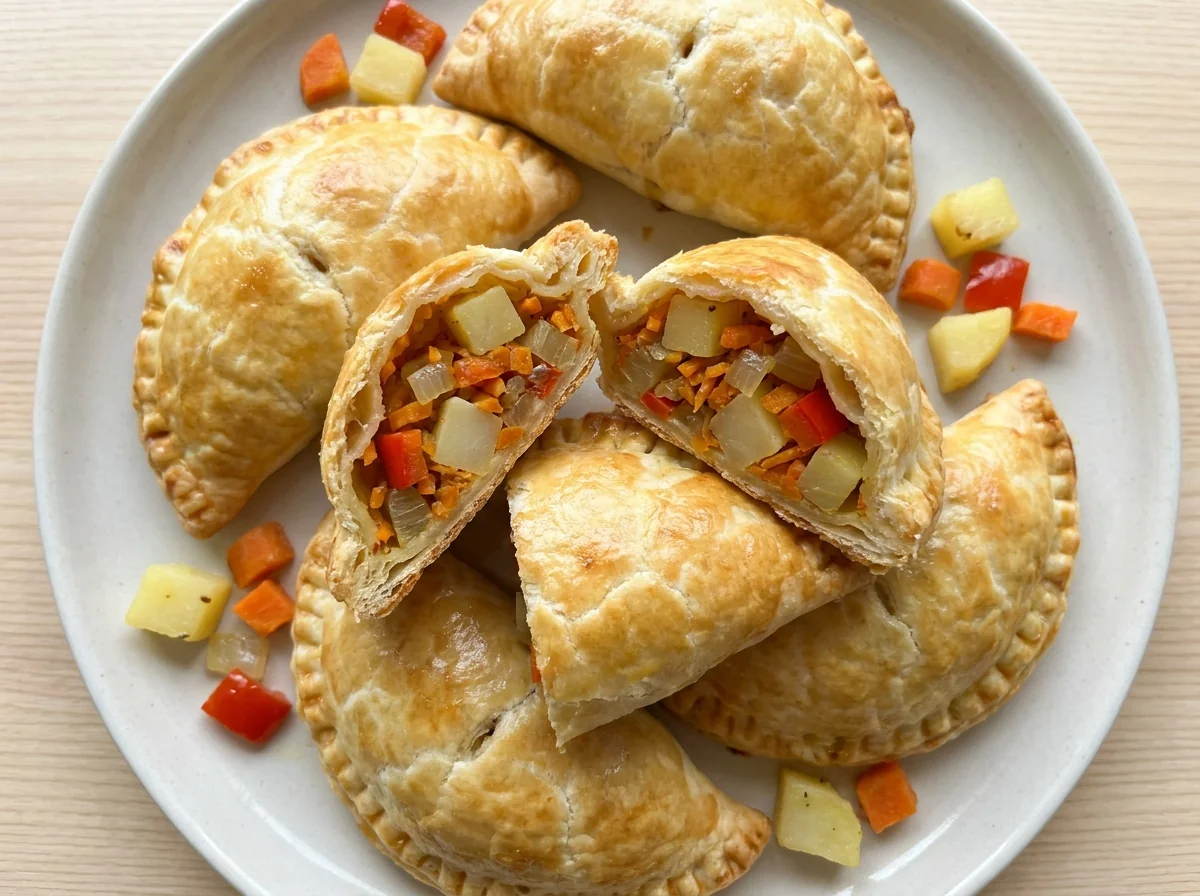
Empanadas are beloved pastries in Latin America, filled with vegetables or other fillings, folded into half-circles and baked or fried; here we serve them baked with a warm vegetable filling.
Preparation Steps
Prepare the dough
Rub the flour with the cold butter and salt until the mixture resembles crumbs, then add the egg and cold water gradually and bring together a cohesive dough without long kneading. The cold keeps the butter solid, giving flaky layers after baking.
Rest the dough
Wrap the dough and chill it for half an hour. The rest relaxes the gluten so the dough rolls out easily and does not shrink when shaped.
Cook the filling
Heat the olive oil and stir the onion until it softens, then add the potatoes, carrot, pepper, and spices and cook until the potatoes are done and the moisture evaporates. Drying the filling is important so it does not wet the dough and open it during baking.
Cool the filling
Let the filling cool completely before filling. A hot filling melts the dough's butter and makes shaping difficult.
Roll out and cut the dough
Roll the dough out thinly and cut circles about the diameter of your palm. A uniform thickness ensures even cooking.
Fill and fold
Place a spoonful of filling in the center of each circle, fold it into a half-circle and seal the edges with a fork in tight presses. A good seal prevents the filling from leaking during baking.
Egg wash and bake
Brush the surface with beaten egg yolk and bake in a preheated oven at 200 degrees Celsius until golden brown. The egg wash gives an even, glossy color.
Serving
Let them cool a little before serving so the filling sets. Cutting them right out of the oven lets the hot filling run.
Blood Sugar Impact
The glycemic index (GI) measures how quickly a food raises blood sugar, while the glycemic load (GL) measures how much a full serving raises it. Together they give the complete picture.
Glycemic Index
GI
72High
Low0–55Medium56–69High70+
A low value (≤55) means a gradual rise in blood sugar — the most suitable range for diabetes and insulin resistance.
Glycemic Load
GL
24High
Low0–10Medium11–19High20+
Glycemic load reflects the impact of the full serving. To lower it: take half a serving, or pair the recipe with a source of protein and fiber.
Nutritional Information
Per ServingMakes 8 servings · one serving is about 130 g of raw ingredients
Calories275 kcal14%of Daily Value*
Protein6 g12%of Daily Value*
Carbohydrates36 g13%of Daily Value*
Fat12 g15%of Daily Value*
Fiber3 g11%of Daily Value*
Sodium322 mg14%of Daily Value*
Potassium239 mg5%of Daily Value*
Phosphorus81 mg6%of Daily Value*
* Percent Daily Values are based on a 2,000-calorie diet per FDA food-label reference values — your daily needs may be higher or lower. Values are derived from the recipe's ingredients via the USDA database.
Troubleshooting
The most common problems when preparing Vegetable Empanadas, and how to fix them:
The dough opens during baking
Make sure the filling is dried and cooled, and press the edges well with a fork or fold them in a braid.
The dough is tough after baking
Usually from over-kneading; bring it together with as little handling as possible and keep it cold.
The filling is dry and flavorless
Add a pinch of salt, more cumin, and a little olive oil after cooking to moisten it.
The base is pale, not golden
Bake on the lower rack a little and brush the surface with egg for even browning.
Storage and Make-Ahead
Refrigerator
Keep them in a sealed container for up to three days, and reheat them in the oven to turn crisp again.
Freezing
Freeze them raw after shaping on a tray then in a bag, and bake them frozen with a few extra minutes.
Tested Ingredient Substitutions
Original Ingredient
Tested Substitute
Ratio
Flavor Difference
Butter
Olive oil
Three-quarters of the amount
Gives a plant-based dough that is slightly less flaky
Potatoes
Sweet potato
Same weight
Increases the natural sweetness and fiber
Egg wash
Plant milk or oil
Light spray
A plant-based alternative for browning without egg
How Much Does It Make? Scaling Guide
Ingredient
2 servings
4 servings (base)
8 servings
All-purpose flour
75 g
150 g
300 g
Butter
23 g
45 g
90 g
Potatoes
50 g
100 g
200 g
Grated carrot
25 g
50 g
100 g
EEINA Nutrition Tip
Sealing the edges with fork presses is not just for decoration; it is what traps the steam inside the pastry so the filling cooks well without opening up and spilling onto the tray.
Add This Recipe to Your Plan
The EEINA app saves your favorite recipes, calculates them from their real ingredients, and shows your daily numbers toward your goal. Try it free now.