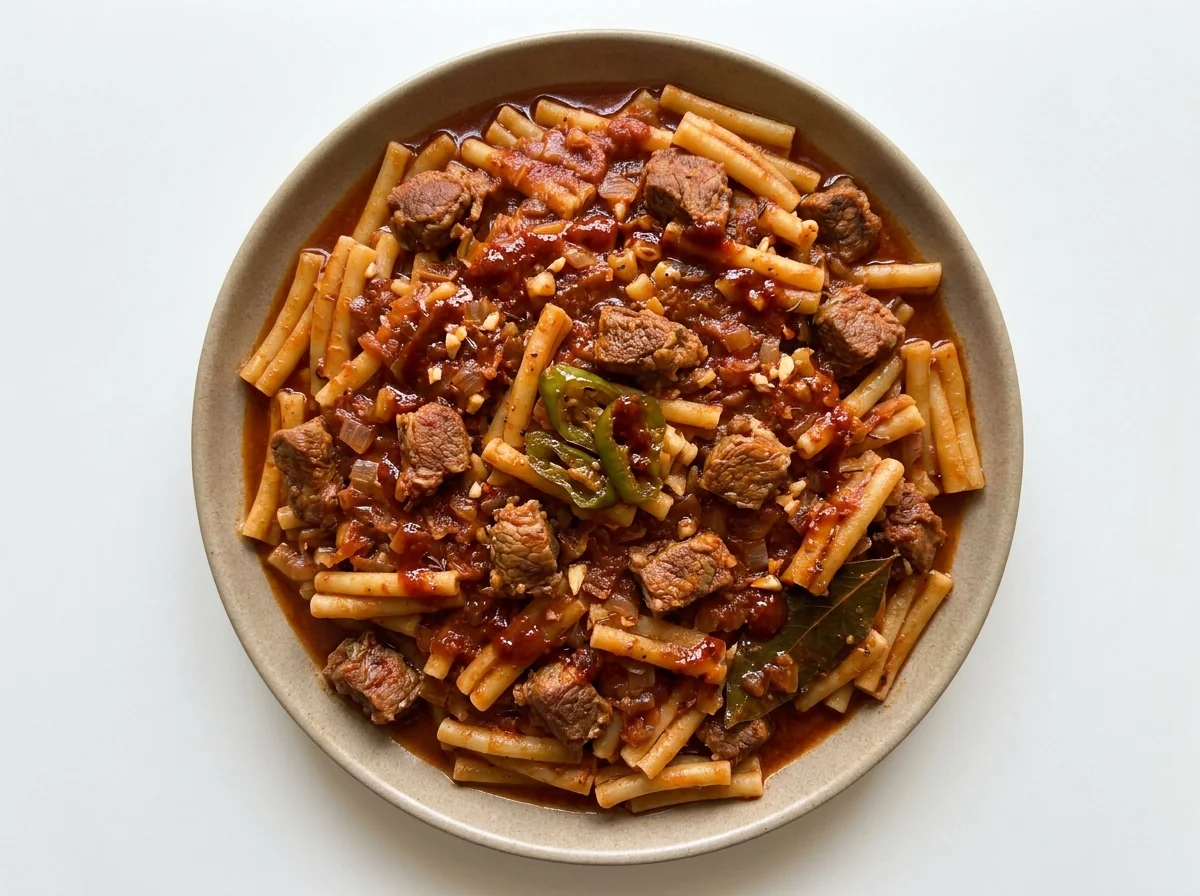
We cook Tunisian macarona the way it is made in homes: meat cooked slowly in a tomato and harissa sauce until it softens and the sauce reddens and darkens, then we coat the boiled pasta with it.
Its secret lies in the harissa and caraway, which give it its spicy Tunisian identity, and whoever likes may sprinkle a little grated cheese over it before serving.
Preparation Steps
Sautéing the meat
Heat the olive oil in a pot over medium heat, and sauté the lamb pieces with the onion until the meat changes color and the onion softens.
Building the sauce
Add the tomato paste, garlic, and harissa and stir for two minutes until the paste becomes fragrant and darkens a little, then season with the caraway, red pepper, salt, and black pepper.
Cooking the meat
Cover the meat with hot water and add the bay leaf and the hot green pepper, then let it cook over low heat for about half an hour until the meat is tender and the sauce thickens and turns red.
Boiling the pasta
Boil the pasta in salted water until it softens while keeping a firm touch, then drain it and reserve a little of the cooking water.
Mixing and serving
Add the pasta to the sauce and toss it until well coated, sprinkle in a little of the cooking water if needed, and serve it hot with the meat pieces on top.
Blood Sugar Impact
The glycemic index (GI) measures how quickly a food raises blood sugar, while the glycemic load (GL) measures how much a full serving raises it. Together they give the complete picture.
Glycemic Index
GI
47Low
Low0–55Medium56–69High70+
A low value (≤55) means a gradual rise in blood sugar — the most suitable range for diabetes and insulin resistance.
Glycemic Load
GL
26High
Low0–10Medium11–19High20+
Glycemic load reflects the impact of the full serving. To lower it: take half a serving, or pair the recipe with a source of protein and fiber.
Nutritional Information
Per ServingMakes 5 servings · one serving is about 200 g of raw ingredients
Calories500 kcal25%of Daily Value*
Protein25 g50%of Daily Value*
Carbohydrates58 g21%of Daily Value*
Fat19 g24%of Daily Value*
Fiber3 g11%of Daily Value*
Sodium416 mg18%of Daily Value*
* Percent Daily Values are based on a 2,000-calorie diet per FDA food-label reference values — your daily needs may be higher or lower. Values are derived from the recipe's ingredients via the USDA database.
Troubleshooting
The most common problems when preparing Tunisian Pasta with Lamb and Harissa (Macarona Tounsia), and how to fix them:
The sauce is sour
Sauté the tomato paste in the oil longer before adding the water and cook the sauce longer, for cooking breaks the acidity of the paste and deepens its flavor.
The pasta is mushy
Boil it until it stays slightly firm and drain it immediately, and mix it with the sauce just before serving rather than long beforehand.
The dish is too spicy
Reduce the harissa and red pepper and leave out the hot green pepper, for the heat level is adjusted to taste without losing the tomato flavor.
Storage and Make-Ahead
Refrigerator
Keep the sauce and meat separate from the pasta if possible for up to three days, and combine them when reheating so the pasta does not turn mushy.
Freezing
Freeze the meat sauce alone for up to a month, and boil fresh pasta on the day of serving for the best texture.
Tested Ingredient Substitutions
Original Ingredient
Tested Substitute
Ratio
Flavor Difference
lamb
chicken or beef
same weight, 400 g
chicken is a lighter, faster-cooking version and is also common in Tunisian macarona
regular pasta
whole-wheat pasta
same weight, 350 g
it raises the fiber and softens the glycemic load of the dish
harissa
mild red pepper paste
same amount
it preserves the color and flavor of the sauce for anyone who wants a non-spicy dish
How Much Does It Make? Scaling Guide
Ingredient
Half amount
Amount (base)
Double
Pasta
175 g
350 g
700 g
Lamb
200 g
400 g
800 g
Tomato paste
30 g
60 g
120 g
Harissa
7 g
15 g
30 g
Olive oil
15 ml
30 ml
60 ml
Salt
2 g
4 g
8 g
EEINA Nutrition Tip
Cook the sauce over low heat long enough for it to redden and lose the acidity of the tomato paste, and boil the pasta so it stays slightly firm, so it does not soak up more sauce than needed and turn mushy.
Add This Recipe to Your Plan
The EEINA app saves your favorite recipes, calculates them from their real ingredients, and shows your daily numbers toward your goal. Try it free now.
It is distinguished by its spicy tomato and harissa sauce and caraway, and by cooking the meat slowly within the sauce until it reddens and darkens, so it gains a deep Tunisian flavor different from other pasta sauces.
Is harissa essential?
Harissa is the soul of the dish and the source of its heat and flavor, and it can be reduced or replaced with a mild pepper paste for those who do not prefer spicy food.
How do I make the dish lighter?
Choose lean meat or chicken, use whole-wheat pasta, and adjust the portion size, so the dish stays filling with a gentler glycemic load.