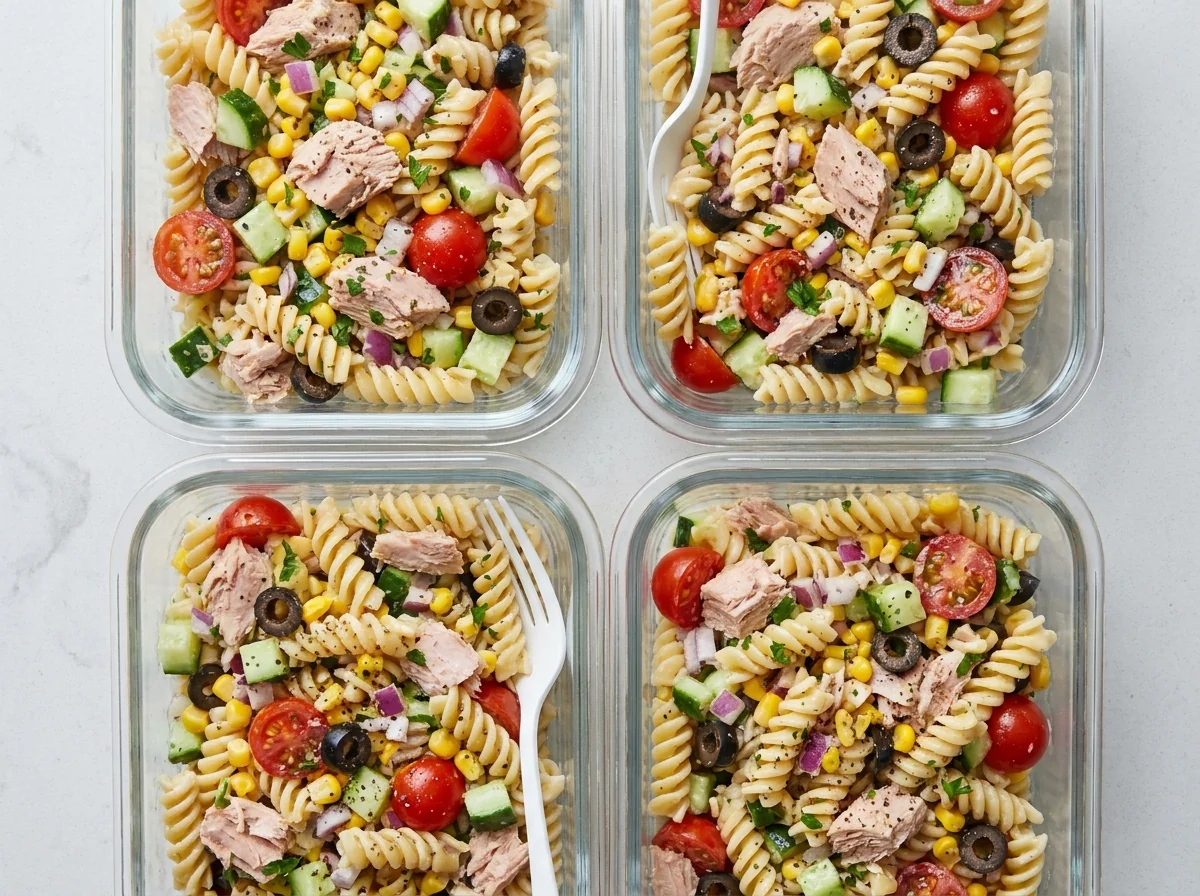
No microwave, no line, no smell filling the office: tuna protein, pasta texture, and a measured creamy dressing. The meal eaten straight from its container anywhere, at any temperature.
Preparation Steps
Boil one minute short and cool with a cold rinse
Cook the pasta in salted water one minute short, then rinse it under cold water: the only exception to the "don't rinse" rule. Salad pasta is rinsed to stop its cooking and wash off its sticky starch.
Coat it with a thread of oil
Toss it with a spoonful of olive oil. A shield against clumping in the refrigerator.
Whisk the yogurt-and-mayonnaise dressing
Greek yogurt three quarters and mayonnaise one quarter, with lemon and mustard. The full creaminess of mayonnaise at a third of its fat: our cold-salad equation.
Combine everything except half the dressing
The pasta, flaked tuna, corn, vegetables, and olives with half the dressing, the other half in a small accompanying container: cold pasta drinks its dressing overnight and dries out, and the next-day refresh is the secret to third-day creaminess.
Cold containers ready, no microwave
Four containers for the refrigerator. The work lunch that does not even need the microwave line: an advantage only the people of crowded offices appreciate.
Blood Sugar Impact
The glycemic index (GI) measures how quickly a food raises blood sugar, while the glycemic load (GL) measures how much a full serving raises it. Together they give the complete picture.
Glycemic Index
GI
48Low
Low0–55Medium56–69High70+
A low value (≤55) means a gradual rise in blood sugar — the most suitable range for diabetes and insulin resistance.
Glycemic Load
GL
30High
Low0–10Medium11–19High20+
Glycemic load reflects the impact of the full serving. To lower it: take half a serving, or pair the recipe with a source of protein and fiber.
Nutritional Information
Per ServingMakes 4 servings · one serving is about 310 g of raw ingredients
Calories428 kcal21%of Daily Value*
Protein28 g56%of Daily Value*
Carbohydrates67 g24%of Daily Value*
Fat6 g8%of Daily Value*
Fiber4 g14%of Daily Value*
Sodium462 mg20%of Daily Value*
* Percent Daily Values are based on a 2,000-calorie diet per FDA food-label reference values — your daily needs may be higher or lower. Values are derived from the recipe's ingredients via the USDA database.
Troubleshooting
The most common problems when preparing Cold Tuna Pasta Salad for Work Meal Prep, and how to fix them:
It dried out by the second day
The dressing was paid in full upfront. Daily installments. The law of cold starches.
The pasta clumped into masses
No rinse and no oil. The cold rinse and the thread of oil. The legitimate exception of salads.
The tuna overwhelmed with its smell
An oil-packed can entered with its liquids. Water-drained and a light squeeze, and lemon refines it.
The cucumber turned to water
Small cubes wept. Large cubes with the seedy core cut out, or add it the morning of.
Storage and Make-Ahead
In the refrigerator
Three days in sealed containers, with the reserve dressing alongside.
For transport
The work bag with a small ice pack in summer; a meal cold by nature.
Not freezable
Cold pasta and vegetables do not forgive the freezer.
Tested Ingredient Substitutions
Original Ingredient
Tested Substitute
Ratio
Flavor Difference
Tuna
Our shredded chicken or our batch hummus
~
Our stores trade roles
White pasta
Whole wheat. It holds up cold better
1:1
Fiber and stability
Mayonnaise
Drop it and use all yogurt with a thread of oil
~
The lightest, with enough creaminess
A southern addition
Chopped hot chili and cumin in the dressing
~
A bolder personality
How Much Does It Make? Scaling Guide
Ingredient
4 containers
2 containers
8 containers
Pasta
300 g
150 g
600 g
Tuna
280 g
140 g
560 g
Dressing
160 g
80 g
320 g
EEINA Nutrition Tip
Keep half the dressing aside and refresh it daily. Cold pasta is a slow sponge that drinks its dressing all night, so the salad wakes up dry and stiff no matter how much you drowned it yesterday: a daily watering with a spoonful from the reserve restores the original creaminess. The rule of all cold starch salads: the dressing is paid in installments, not upfront.
Add This Recipe to Your Plan
The EEINA app saves your favorite recipes, calculates them from their real ingredients, and shows your daily numbers toward your goal. Try it free now.
That one is a hot dish for the day, with oil and lemon; this one is cold and stored, with a creamy dressing. The same duo in two different seasons.
How is the container counted?
~505 calories with ~24 g protein. A complete cold lunch: those who lighten the pasta and double the vegetables drop below four hundred.
Why water-packed tuna, not oil?
Water-packed tuna saves ~60 calories per can and leaves the fat decision to your dressing, and the oil in tuna cans is rarely an oil worth its calories.
A meal with no reheating. Really an advantage?
Ask the office crowd about the noon microwave line and the smell of fish reheated in the office. The cold here is social etiquette before it is convenience.