Savory oat bread brings beta-glucan, the most famous soluble fiber for lowering cholesterol, into the most repeated meal: breakfast bread.
Oats do not have to be a sweet porridge: a savory loaf with nigella sits beside cheese and za'atar like any home bread, and its function works quietly.
Preparation Steps
Grind the oats into flour
Whole oats in the processor until a fine flour. Home oat flour at half the price of the ready-made: and its beta-glucan intact.
The wet is whisked and the dry is folded
The yogurt, eggs, and oil whisked, then the oat flour, flax, baking powder, and salt folded in: a thick batter to be poured.
Ten minutes' rest. The oats drink
The batter rests so the oats absorb and thicken. The coconut-flour lesson in a gentler version: the minutes of soaking prevent a damp-centered loaf.
A loaf tin and a top of seeds
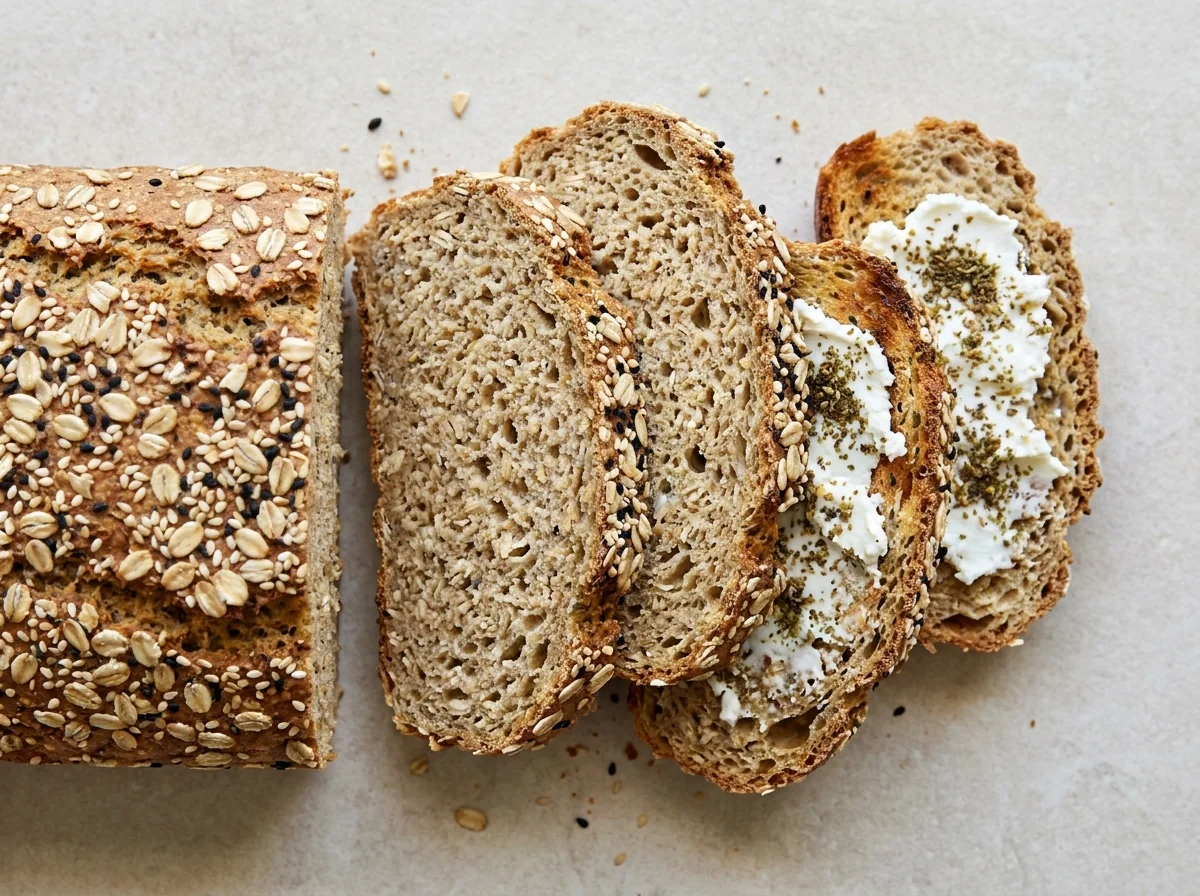
In a lined tin with the whole oats, nigella, and sesame on top, and an oven at 180 for forty-five minutes to a clean skewer.
It cools, then is sliced as daily toast
A full cooling, then slicing. Morning toast with cheese or za'atar (thyme-sumac-sesame blend): the oats' beta-glucan (the famous soluble fiber) in every slice. The loaf that works in favor of your cholesterol while you have breakfast.
Blood Sugar Impact
The glycemic index (GI) measures how quickly a food raises blood sugar, while the glycemic load (GL) measures how much a full serving raises it. Together they give the complete picture.
Glycemic Index
GI
52Low
Low0–55Medium56–69High70+
A low value (≤55) means a gradual rise in blood sugar — the most suitable range for diabetes and insulin resistance.
Glycemic Load
GL
9Low
Low0–10Medium11–19High20+
Glycemic load reflects the impact of the full serving. To lower it: take half a serving, or pair the recipe with a source of protein and fiber.
Nutritional Information
Per ServingMakes 10 servings · one serving is about 70 g of raw ingredients
Calories182 kcal9%of Daily Value*
Protein7 g14%of Daily Value*
Carbohydrates21 g8%of Daily Value*
Fat8 g10%of Daily Value*
Fiber4 g14%of Daily Value*
Sodium310 mg13%of Daily Value*
* Percent Daily Values are based on a 2,000-calorie diet per FDA food-label reference values — your daily needs may be higher or lower. Values are derived from the recipe's ingredients via the USDA database.
Troubleshooting
The most common problems when preparing Savory Oat Loaf: The Soluble-Fiber Bread, and how to fix them:
It came out damp-centered and dense
The soaking rest was cut short or it was sliced warm. The ten minutes and a full cooling. The two laws of oats.
It crumbled when slicing
With no gluten to bind, the egg and flax are the network. The right ratio, and a serrated knife with a pulling motion.
A heavy oaty taste
First-week acclimation. Za'atar and cheese on top are a bridge: and half whole-wheat flour is a legitimate transitional version.
It did not rise
Aged baking powder or batter that waited too long after mixing. Test it with vinegar and a preheated oven.
Storage and Make-Ahead
At room temperature
Two days wrapped.
In the fridge
Five days sliced, and toasted from cold.
In the freezer
Slices with dividers for two months. The daily heart toast pulled slice by slice.
Tested Ingredient Substitutions
Original Ingredient
Tested Substitute
Ratio
Flavor Difference
Yogurt
Milk with a spoon of vinegar
~
The usual buttermilk substitute
Flaxseed
Double it. Higher plant omega
40 g
A heart upgrade
A herbed version
Dried thyme and chopped olives in the batter
~
A hosting loaf
Its daily top
Labneh and olive oil or cottage cheese
~
A complete heart trio
How Much Does It Make? Scaling Guide
Ingredient
1 loaf (10 slices)
Half a loaf
2 loaves
Oats
270 g
135 g
540 g
Yogurt
250 g
125 g
500 g
Flaxseed
20 g
10 g
40 g
EEINA Nutrition Tip
Soluble fiber works by consistency, not by dose. Oats' beta-glucan lowers cholesterol by a documented mechanism (it binds to bile acids so cholesterol is spent replacing them), but its effect is built with three grams daily, sustained, not by a heroic weekly bowl: two slices of this loaf in the morning put half the dose into a habit rather than a decision, and that is the secret to the success of heart foods: make the medicine a bread habit.
Add This Recipe to Your Plan
The EEINA app saves your favorite recipes, calculates them from their real ingredients, and shows your daily numbers toward your goal. Try it free now.
~1 g per slice (the documented dose is 3 g daily). Two slices in the morning and a porridge in the evening complete it: the number is summed over the whole day.
Does it replace cholesterol medication?
Never. Food is the partner of medication, not its substitute: oats' documented effect is ~5-10% reduction, and it is a valuable addition within your doctor's plan, not a replacement for it.
How is a slice counted?
~170 calories with ~3 g of fiber. A bread that matches brown bread in calories and beats it in function.
How is it different from oat banana bread in the library?
That one is a sweet pastry; this one is savory and daily, sitting beside cheese. Oats with both passports.