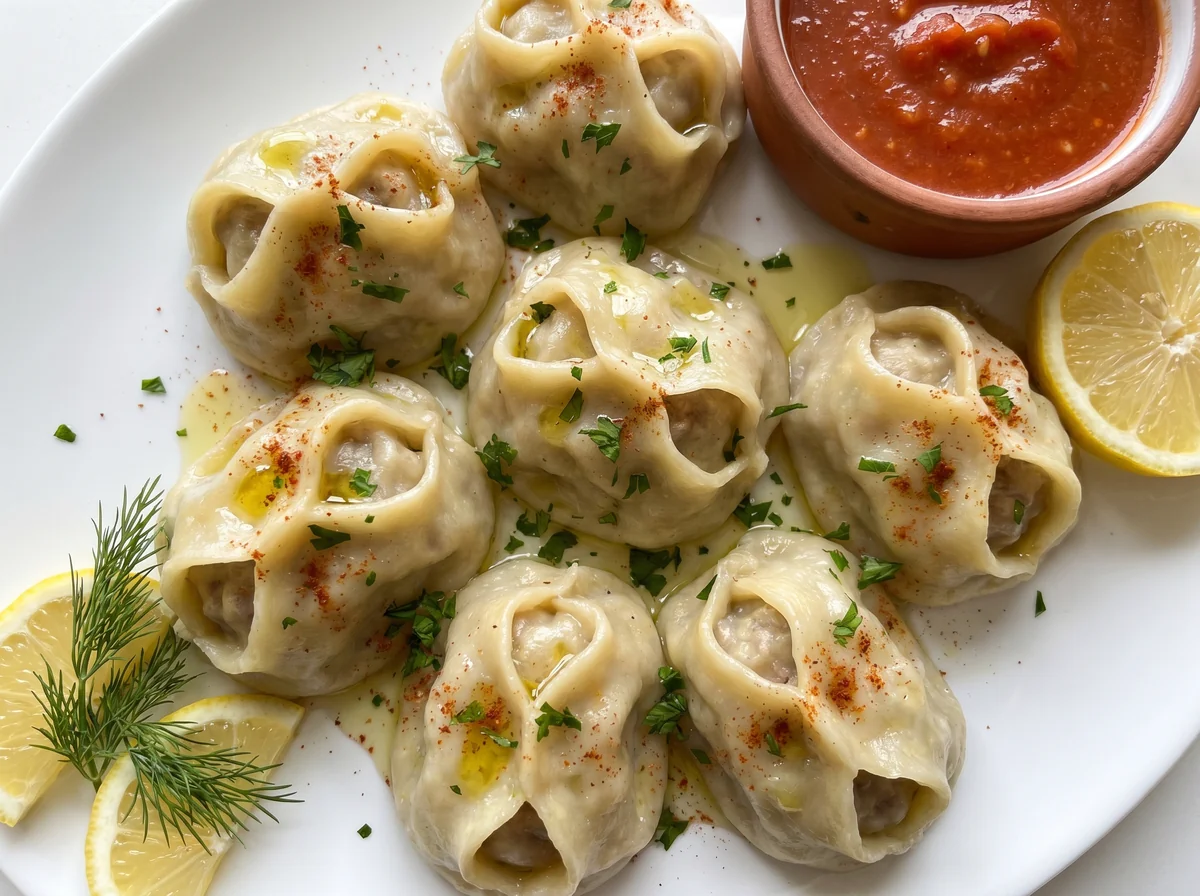
Steamed filled dumplings — thin dough parcels stuffed with spiced minced meat and onion, steamed until cooked through, then served with tomato sauce and yogurt. A Hejazi dish influenced by Turkish cuisine, moderate in carbohydrates, contains gluten and dairy.
Manto are steamed filled dough parcels that entered Saudi cuisine — particularly the Hejaz (Mecca, Jeddah, and Madinah) — through Turkish and Central Asian influence (the manti, blending the cultures of pilgrims and traders that have converged on the Hejaz for centuries). Thin dough is filled with spiced minced meat and onion, shaped into small pouches, steamed until cooked, then served with garlic tomato sauce, garlic yogurt, and dried mint.
Steaming (not frying) makes it a relatively lighter dish. Manto is beloved in the Hejaz — sold and prepared in homes alike — and reflects the diversity and openness of Hejazi cuisine to the cultures of pilgrims and merchants. The steamed dough parcels filled with spiced meat and topped with tomato sauce and yogurt are a warm delight, a symbol of the richness and manifold influences of Hejazi cooking.
Preparation Steps
Make the dough
Knead the flour with water, salt, and a little oil into a soft, pliable dough, then leave it to rest until it becomes rollable very thin. Manto are steamed filled dough parcels — they entered Saudi cuisine (particularly the Hejaz) through Turkish and Asian influence — so a thin, rollable dough is their foundation.
Make the filling
Mix the raw minced meat with finely chopped onion, parsley, baharat (Gulf spice blend), cumin, salt, and pepper. The filling goes in raw and cooks by steam inside the dough (the raw meat and onion cook in their own juices), so season well and do not pre-cook.
Roll and cut the dough
Roll the dough out very thin and cut into small squares. Rolling thin is essential — the dough wraps around the filling and must be fine enough to fold without tearing.
Fill and fold
Place a small amount of filling in the centre of each square and fold the edges to seal them (forming a small pouch, slightly open or fully closed). Work quickly and keep the dough covered.
Steam
Arrange the manto in a greased steamer basket so they do not stick, and steam over boiling water until the dough and filling are fully cooked (about half an hour). Steaming cooks the manto gently without frying or baking, making it a relatively healthier dish.
Serve
Arrange the steamed manto on a plate, spoon over the garlic tomato sauce and garlic yogurt, and sprinkle with dried mint (and a drizzle of hot ghee, optional). Serve hot. This beloved Saudi (especially Hejazi) dish reflects the diversity and openness of Hejazi cuisine — steamed dough parcels filled with spiced meat, topped with tomato sauce and yogurt, a warm comfort symbolising Hejazi culinary heritage.
Blood Sugar Impact
The glycemic index (GI) measures how quickly a food raises blood sugar, while the glycemic load (GL) measures how much a full serving raises it. Together they give the complete picture.
Glycemic Index
GI
10Low
Low0–55Medium56–69High70+
A low value (≤55) means a gradual rise in blood sugar — the most suitable range for diabetes and insulin resistance.
Glycemic Load
GL
0Low
Low0–10Medium11–19High20+
Glycemic load reflects the impact of the full serving. To lower it: take half a serving, or pair the recipe with a source of protein and fiber.
Nutritional Information
Per ServingMakes 5 servings · one serving is about 125 g of raw ingredients
Calories216 kcal11%of Daily Value*
Protein14 g28%of Daily Value*
Carbohydrates4 g1%of Daily Value*
Fat16 g21%of Daily Value*
Fiber1 g4%of Daily Value*
Sodium62 mg3%of Daily Value*
Potassium280 mg6%of Daily Value*
Phosphorus139 mg11%of Daily Value*
* Percent Daily Values are based on a 2,000-calorie diet per FDA food-label reference values — your daily needs may be higher or lower. Values are derived from the recipe's ingredients via the USDA database.
Troubleshooting
The most common problems when preparing Saudi Manto (Steamed Filled Dumplings), and how to fix them:
The dough tears
It was rolled thin without resting. Knead well and leave the dough to rest (until pliable), then roll thin but not to the point of tearing. Resting makes the dough elastic enough to roll and fold without splitting.
The filling didn't cook through
Parcels were too large or steaming time was too short. Keep the filling moderate (not packing a large pouch) so it cooks in the steam, and steam for sufficient time (about half an hour). A moderate filling and adequate steaming time will fully cook the meat.
The manto stuck to each other or to the steamer
The steamer wasn't greased or the parcels were packed too tightly. Grease the steamer basket and arrange the pouches slightly apart (they puff up) — dough sticks together with steam. Greasing and spacing prevent sticking.
The filling is dry
The meat is too lean or there isn't enough onion. Add finely chopped onion (it provides moisture) and a little fat — onion and fat keep the filling moist during steaming. The sauce and yogurt also add moisture at serving.
The flavour is flat
Underseasoned filling or weak sauces. Season the filling well (baharat, cumin, onion) and make the tomato sauce and garlic yogurt richly flavoured — they are an essential part of manto's flavour. Garlic and dried mint complete the dish.
Storage and Make-Ahead
Refrigerator (4°C)
Steamed manto keeps in an airtight container in the refrigerator for 3 days (without the sauces). Reheat by steaming or gently in the microwave and add fresh sauces at serving. Practical as a ready meal (reheat and add sauces).
Freezer (raw)
You can prepare filled but unsteamed manto and freeze them separately, then steam directly from frozen (allow extra time). This is better than freezing already-steamed manto. Practical for batch preparation — make a large quantity and freeze raw.
Advance preparation
Prepare the filled manto and refrigerate or freeze them raw, then steam fresh at serving time and prepare the sauces. Or steam and reheat later. The labour-intensive part is the filling, so advance preparation saves time.
Food safety
Steam the manto until the filling meat is fully cooked (raw meat is used), cool quickly, keep the yogurt and sauce refrigerated, and do not leave the dish out of refrigeration for more than two hours.
Tested Ingredient Substitutions
Original Ingredient
Tested Substitute
Ratio
Flavor Difference
White wheat dough
Whole wheat dough
same amount
Adds fibre and lowers the glycemic index; white is traditional for the thin dough, whole wheat is healthier
Minced meat
Lean mince or minced chicken
same amount
Lean mince or chicken is lighter; both are filled with onion and steamed
Full-fat yogurt
Low-fat yogurt
same amount
Reduces fat while retaining probiotics, protein, calcium, and the refreshing tangy flavour
How Much Does It Make? Scaling Guide
Number of servings
Dough
Meat
Laban
3 (small)
Half the quantity
250 g
1 cup
5 (base)
The quantity
400 g
2 cups
10 (gathering)
Double
800 g
4 cups
EEINA Nutrition Tip
Manto is a relatively balanced dish (and lighter than its fried counterparts): the meat provides protein, the onion and parsley provide antioxidants, the yogurt provides probiotics, protein, and calcium, and steaming (not frying) reduces fat. Its challenges are carbohydrates (white wheat dough) and sodium (salt and sauces). For a better version: use whole wheat dough (adds fibre), lean mince, low-fat yogurt, more onion and parsley, less salt, and balance it with a salad. A steamed dish that is relatively balanced in moderation, with steaming as its nutritional advantage.
Add This Recipe to Your Plan
The EEINA app saves your favorite recipes, calculates them from their real ingredients, and shows your daily numbers toward your goal. Try it free now.
Steamed dough parcels filled with spiced minced meat and onion, shaped into small pouches and steamed, then served with garlic tomato sauce, garlic yogurt, and dried mint. It entered Saudi cuisine (especially the Hejaz) through Turkish and Asian influence (the manti) — a beloved dish that reflects the diversity of Hejazi cooking.
Where did manto come to the Hejaz from?
Manto (from manti) is a steamed dumpling dish widespread in Turkey, Central Asia, and Afghanistan. It arrived in the Hejaz (Mecca, Jeddah, Madinah) through the cultures of pilgrims, traders, and migrants — the Hejaz has always been a meeting point of cultures by virtue of the Holy Mosques and trade. It became part of its diverse culinary heritage, reflecting the openness and manifold influences of Hejazi cooking.
Why is manto steamed?
Steaming is the authentic cooking method for manto (like Asian manti and dumplings): it cooks the thin dough and meat gently in steam without frying or baking, so the meat cooks in its own juices and the dough stays soft. Steaming makes manto lower in fat and healthier than fried pastries, with a distinctive soft texture.
Is manto healthy?
Relatively balanced and lighter than fried versions: the meat provides protein, yogurt provides probiotics and calcium, and steaming reduces fat. Its challenges are carbohydrates (white dough) and sodium. Use whole wheat dough, lean mince, low-fat yogurt, more onion and parsley, and less salt, balanced with a salad. A relatively balanced steamed dish, in moderation.
Sources: University of Sydney · Gulf GSO · Our methodology · Updated on