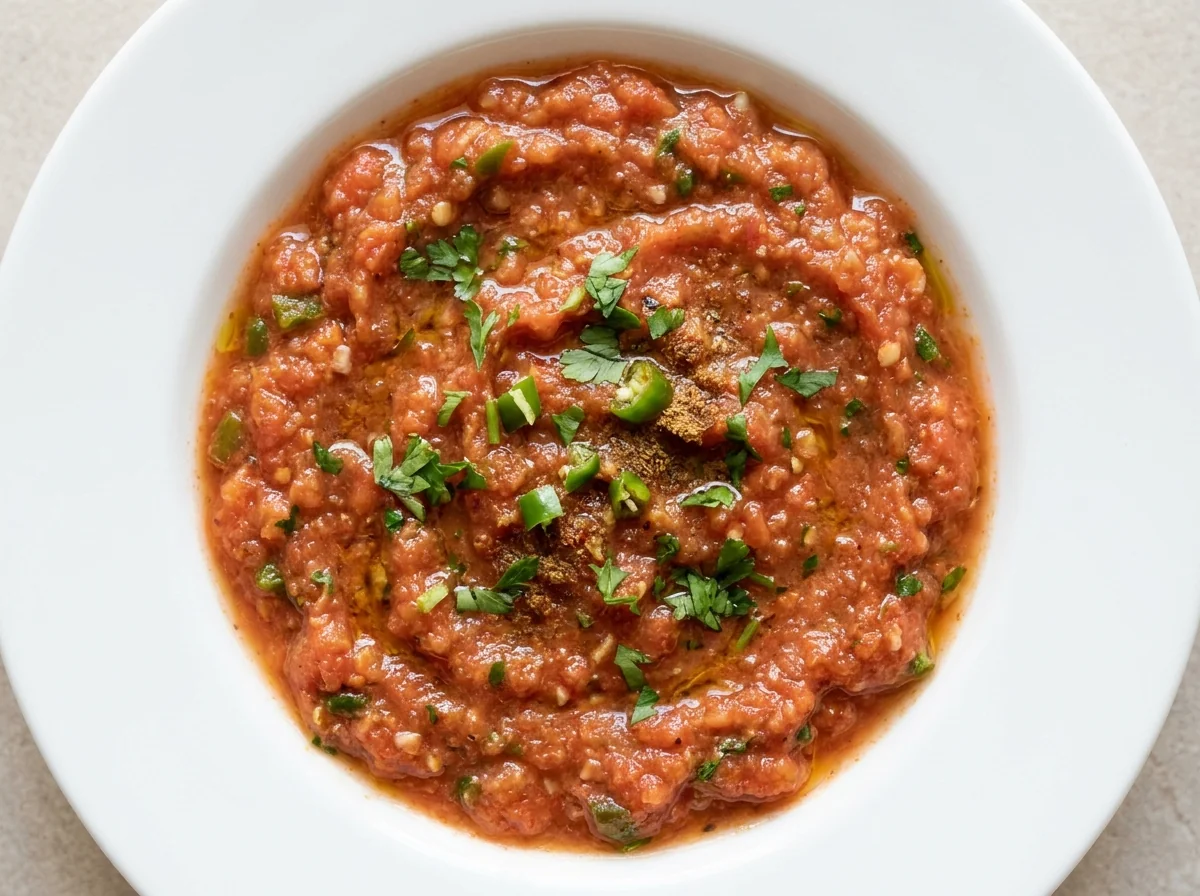
Daqoos is the spicy red tomato sauce that never leaves the Saudi table, ladled over kabsa, mandi, and rice and served with grilled meats.
We make it from fresh blended tomatoes that we sauté with garlic and hot green pepper and let simmer a little until it thickens. Every household has its favorite heat level, some add more pepper and some soften it, and its refreshing flavor keeps balancing the richness of the main dishes.
Preparation Steps
Preparing the tomatoes
Blend the tomatoes in the blender until smooth, or grate them on a coarse grater and discard the skins.
Sautéing the garlic and pepper
Heat the olive oil in a pot over medium heat and sauté the crushed garlic and hot green pepper for about a minute until they become fragrant without burning.
Adding the tomatoes
Pour in the blended tomatoes and the parsley, season with cumin, black pepper, and salt, and stir the mixture well.
Cooking
Once it boils, lower the heat and let the sauce simmer gently for about ten minutes until it thickens slightly and its flavor concentrates.
Serving
Remove it from the heat and let it cool to lukewarm, and serve it warm or cold alongside kabsa, rice, and grilled meats.
Blood Sugar Impact
The glycemic index (GI) measures how quickly a food raises blood sugar, while the glycemic load (GL) measures how much a full serving raises it. Together they give the complete picture.
Glycemic Index
GI
11Low
Low0–55Medium56–69High70+
A low value (≤55) means a gradual rise in blood sugar — the most suitable range for diabetes and insulin resistance.
Glycemic Load
GL
0Low
Low0–10Medium11–19High20+
Glycemic load reflects the impact of the full serving. To lower it: take half a serving, or pair the recipe with a source of protein and fiber.
Nutritional Information
Per ServingMakes 6 servings · one serving is about 95 g of raw ingredients
Calories64 kcal3%of Daily Value*
Protein1 g2%of Daily Value*
Carbohydrates5 g2%of Daily Value*
Fat5 g6%of Daily Value*
Fiber1 g4%of Daily Value*
Sodium306 mg13%of Daily Value*
Potassium212 mg5%of Daily Value*
Phosphorus34 mg3%of Daily Value*
* Percent Daily Values are based on a 2,000-calorie diet per FDA food-label reference values — your daily needs may be higher or lower. Values are derived from the recipe's ingredients via the USDA database.
Troubleshooting
The most common problems when preparing Saudi Daqoos (Spicy Tomato Sauce), and how to fix them:
The sauce is watery in texture
Let it simmer over low heat longer until its water evaporates, or add a spoonful of tomato paste so the texture firms up and the color deepens.
The taste is too sour
Tomatoes are sometimes very acidic; add a pinch of sugar or half a grated carrot to soften the acidity without changing the taste.
The sauce is too spicy
Remove the pepper's seeds and inner membranes or reduce the number of pods, for most of the heat is in the seeds and membranes, not the flesh.
Storage and Make-Ahead
Refrigerator
Keep it in an airtight container for up to five days, and its flavor grows more concentrated the next day.
Freezing
Freeze it in small molds for up to two months, and thaw it in the refrigerator or over low heat when needed.
Tested Ingredient Substitutions
Original Ingredient
Tested Substitute
Ratio
Flavor Difference
fresh tomatoes
canned blended tomatoes
same weight, 500 g
Faster and darker in color; reduce the salt because canned is salted
hot green pepper
hot red pepper or dried chili
to taste
Red is a little sweeter and dried chili is hotter
parsley
fresh coriander
same weight, 10 g
Coriander is closer to the Gulf flavor
olive oil
vegetable oil
same weight, 30 ml
A more neutral flavor, and the amount can be reduced to lower the calories
How Much Does It Make? Scaling Guide
Ingredient
Half the amount
Amount (base)
Double
Grated tomatoes
250 g
500 g
1000 g
Hot green pepper
15 g
30 g
60 g
Garlic
5 g
10 g
20 g
Olive oil
15 ml
30 ml
60 ml
Salt
1 g
2 g
4 g
EEINA Nutrition Tip
Control the heat level by the number of pepper pods; removing the seeds and the inner membranes softens the heat considerably because most of it is in them.
Add This Recipe to Your Plan
The EEINA app saves your favorite recipes, calculates them from their real ingredients, and shows your daily numbers toward your goal. Try it free now.