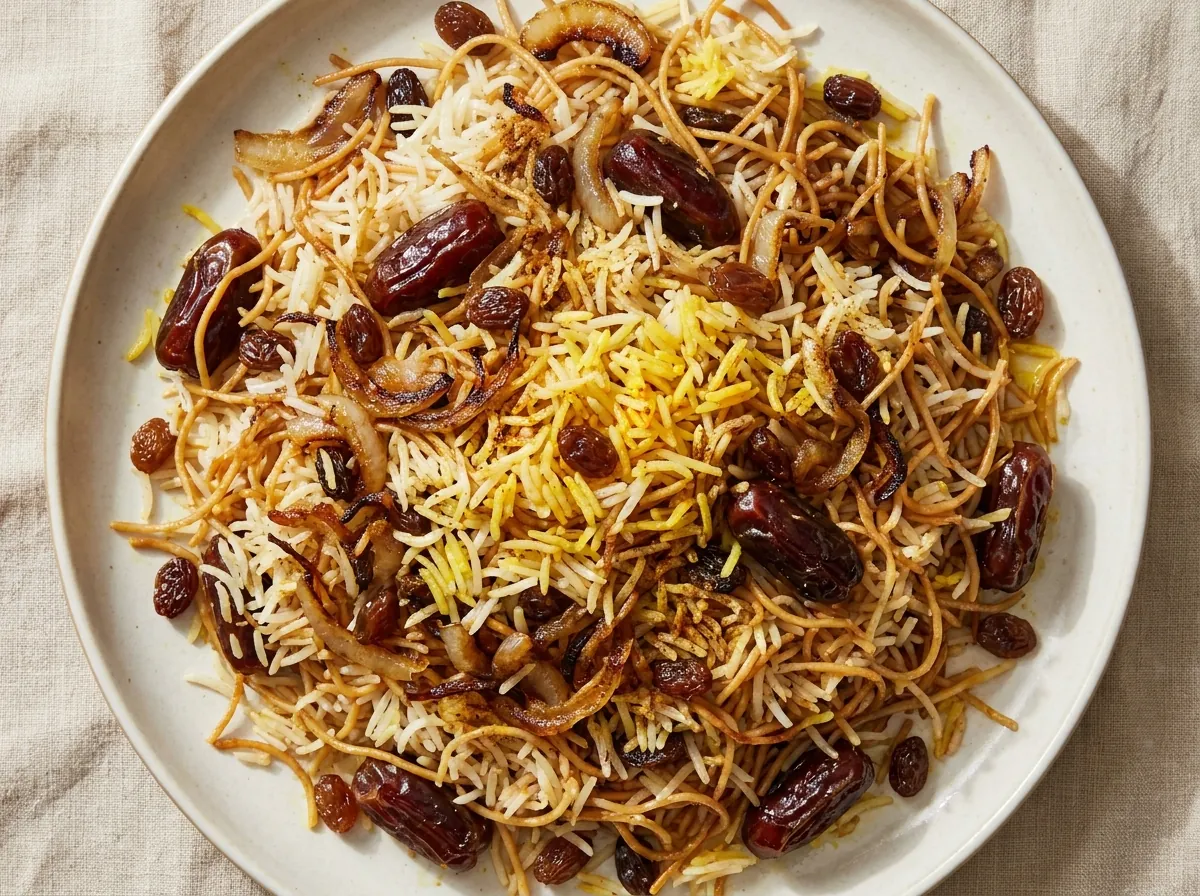
Reshteh Polo is a festive Persian dish served at Nowruz (the Persian New Year), where the strand of noodle symbolizes for them clarity of the path toward the goals of the new year.
We layer it from basmati rice, toasted noodles, dates, raisins, and saffron, so the aroma of saffron meets the sweetness of dates and browned onion in one plate.
Preparation Steps
The onion
Sauté the onion slices in half the oil over medium heat for about 15 minutes until they turn golden, because slow browning brings out the natural sweetness.
The spices and fruit
Add the turmeric and cinnamon for a minute, then the dates and raisins and toss them for just two minutes, then set them aside so the sugar does not burn.
The noodles
Spread the noodles in a single layer and toast them under the broiler for 30 to 60 seconds until they turn blond, because toasting deepens their flavor, then let them cool and break them into thirds.
Boiling the rice
Boil salted water and add the drained rice; parboil it uncovered for 5 minutes until the surface softens while the core stays firm.
Combining
Add the toasted noodles to the pot and take it off the heat immediately, then drain the mixture in a strainer and rinse it gently.
The bottom of the pot
Pour half the oil into the bottom of a cold pot, mix a cup of the rice and noodle mixture with half the saffron water and spread it on the bottom, pressing with a spoon, because this layer becomes the golden crust (tahdig, the crispy bottom of the pot).
Layering
Distribute the rest of the rice and noodle mixture alternating with the onion, date, and raisin filling in a mound shape.
Steaming
Wrap the pot lid in a clean towel and steam over low heat for 45 minutes until the rice cooks and the crispy bottom forms.
Finishing
Sprinkle the rest of the saffron water and distribute the butter, then fluff the rice with two forks and flip the pot onto a serving plate so the golden crust shows.
Blood Sugar Impact
The glycemic index (GI) measures how quickly a food raises blood sugar, while the glycemic load (GL) measures how much a full serving raises it. Together they give the complete picture.
Glycemic Index
GI
62Medium
Low0–55Medium56–69High70+
A low value (≤55) means a gradual rise in blood sugar — the most suitable range for diabetes and insulin resistance.
Glycemic Load
GL
64High
Low0–10Medium11–19High20+
Glycemic load reflects the impact of the full serving. To lower it: take half a serving, or pair the recipe with a source of protein and fiber.
Nutritional Information
Per ServingMakes 5 servings · one serving is about 195 g of raw ingredients
Calories620 kcal31%of Daily Value*
Protein10 g20%of Daily Value*
Carbohydrates108 g39%of Daily Value*
Fat17 g22%of Daily Value*
Fiber5 g18%of Daily Value*
Sodium243 mg11%of Daily Value*
* Percent Daily Values are based on a 2,000-calorie diet per FDA food-label reference values — your daily needs may be higher or lower. Values are derived from the recipe's ingredients via the USDA database.
Troubleshooting
The most common problems when preparing Noodle and Date Rice (Reshteh Polo), and how to fix them:
The crust did not crisp
We covered it before the cooking water dried out; leave it over low heat with a towel on the lid until we hear a faint crackle.
The rice is clumpy
We boiled it too long; stick to five minutes of boiling so the core stays firm before steaming.
The noodles are bitter
They burned under the broiler; toast them until just blond, then take them out immediately.
The dish is dry
We steamed it too long without enough moisture; add the warm saffron water in the last quarter hour.
Storage and Make-Ahead
Refrigerator
Keep it in an airtight container for up to 3 days, and reheat it in a pan over medium heat.
Freezer
The rice mixture freezes well, but the crispy crust loses its texture when frozen, so it is best eaten fresh.
Tested Ingredient Substitutions
Original Ingredient
Tested Substitute
Ratio
Flavor Difference
Persian noodles
toasted linguine
same weight, 150 g
For markets that cannot find ready-made reshteh.
dates
pitted dried dates
same weight, 90 g
Any soft variety such as Khlas or Sukkari.
butter
olive oil
same volume, 30 ml
For a fully plant-based version.
saffron
turmeric for color
pinch for pinch
To lower the cost while keeping the color.
How Much Does It Make? Scaling Guide
Ingredient
2 servings
4 servings (base)
8 servings
basmati rice
180 g
360 g
720 g
Vermicelli
75 g
150 g
300 g
Onion
110 g
220 g
440 g
pitted dates
45 g
90 g
180 g
EEINA Nutrition Tip
Toast the noodles with a watchful eye, as they turn blond in less than a minute and burn quickly. And mix the first cup of rice with the saffron before spreading it on the bottom so the crispy crust takes its golden color.
Add This Recipe to Your Plan
The EEINA app saves your favorite recipes, calculates them from their real ingredients, and shows your daily numbers toward your goal. Try it free now.