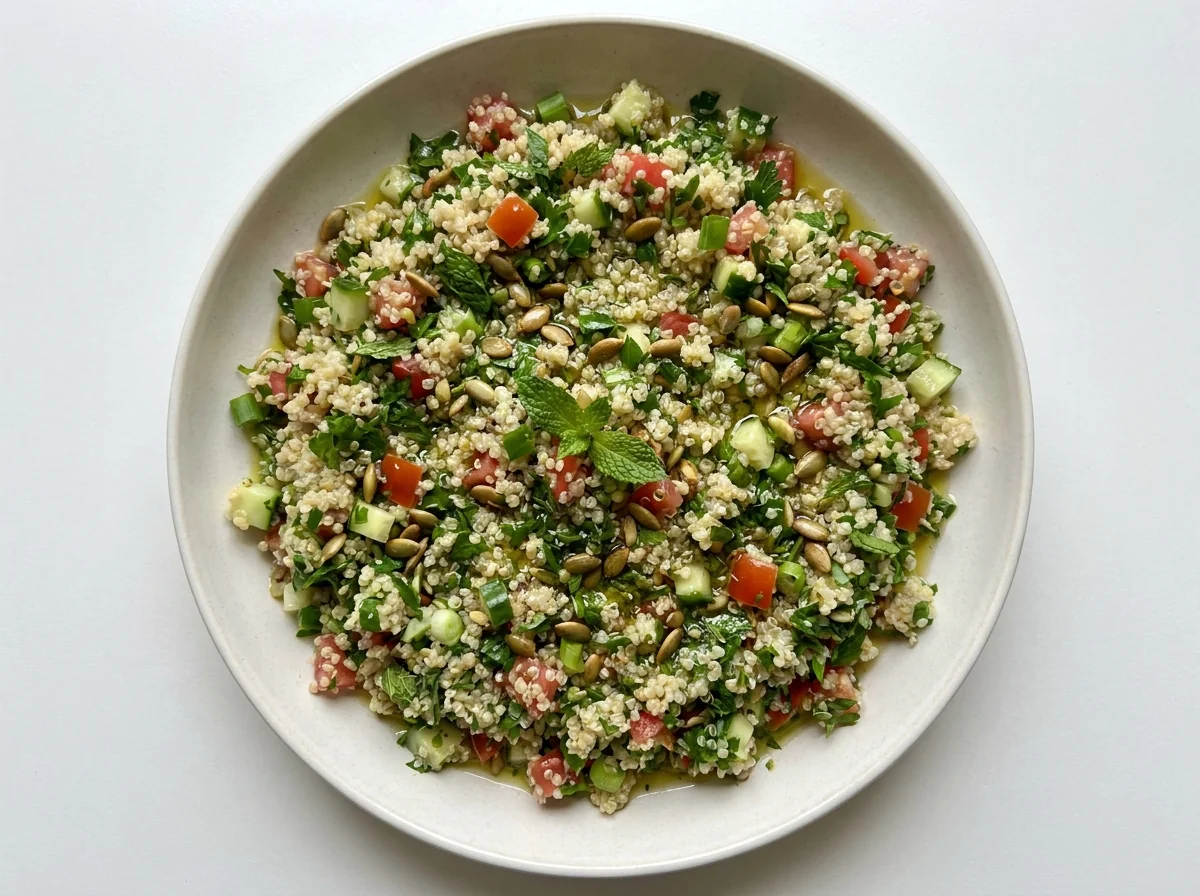
Tabbouleh is a time-honored Levantine dish built on bulgur and parsley, and we replace the bulgur with quinoa to get a gluten-free, higher-protein version while keeping the refreshing flavor of lemon and mint.
Preparation Steps
Cooking the quinoa
Place the rinsed quinoa with double its amount of water over medium heat and let it come to a boil, as rinsing removes the bitter saponin layer.
Cooking through
Lower the heat and cover the pot until the grains double in size and the water is absorbed in about 15 minutes, because gentle cooking keeps the grain separate, not mushy.
Cooling
Drain the quinoa and spread it on a plate to cool completely, as hot quinoa wilts the herbs.
The vegetables
Finely chop the parsley and mint, dice the tomato and cucumber into small cubes, and add the green onion.
Combining
Combine the cooled quinoa with the vegetables and herbs in a wide bowl.
Seasoning
Add the lemon juice, olive oil, salt, and pepper and toss gently, then garnish with the pumpkin seeds before serving to give crunch and plant-based protein.
Blood Sugar Impact
The glycemic index (GI) measures how quickly a food raises blood sugar, while the glycemic load (GL) measures how much a full serving raises it. Together they give the complete picture.
Glycemic Index
GI
47Low
Low0–55Medium56–69High70+
A low value (≤55) means a gradual rise in blood sugar — the most suitable range for diabetes and insulin resistance.
Glycemic Load
GL
15Medium
Low0–10Medium11–19High20+
Glycemic load reflects the impact of the full serving. To lower it: take half a serving, or pair the recipe with a source of protein and fiber.
Nutritional Information
Per ServingMakes 4 servings · one serving is about 280 g of raw ingredients
Calories259 kcal13%of Daily Value*
Protein8 g16%of Daily Value*
Carbohydrates36 g13%of Daily Value*
Fat10 g13%of Daily Value*
Fiber5 g18%of Daily Value*
Sodium310 mg13%of Daily Value*
Potassium589 mg13%of Daily Value*
Phosphorus249 mg20%of Daily Value*
* Percent Daily Values are based on a 2,000-calorie diet per FDA food-label reference values — your daily needs may be higher or lower. Values are derived from the recipe's ingredients via the USDA database.
Troubleshooting
The most common problems when preparing High-Protein Quinoa Tabbouleh, and how to fix them:
The quinoa is sticky
Too much water was added; drain it well and spread it out to dry from the steam.
A bitter taste
The quinoa was not rinsed enough; rinse it under running water until it runs clear.
The Tabbouleh is wilted
It was combined while the quinoa was hot; cool the grains completely and season just before serving.
Storage and Make-Ahead
Refrigerator
Keep it in an airtight container for up to two days; its green color may fade over time.
Make ahead
Cook the quinoa and chop the vegetables separately, and combine and season at serving time to preserve the crunch.
Tested Ingredient Substitutions
Original Ingredient
Tested Substitute
Ratio
Flavor Difference
quinoa
boiled bulgur
for the traditional version
Contains gluten, so it does not suit a gluten sensitivity.
pumpkin seeds
sunflower seeds
an available alternative
Adds similar protein and crunch.
fresh mint
dried mint
when fresh is unavailable
Use a third of the amount because its flavor is concentrated.
olive oil
avocado oil
a neutral flavor
Suitable for those who prefer a milder taste.
How Much Does It Make? Scaling Guide
Ingredient
2 servings
4 servings (base)
8 servings
Quinoa
90 g
180 g
360 g
Water
180 ml
360 ml
720 ml
Parsley
40 g
80 g
160 g
Lemon juice
30 ml
60 ml
120 ml
EEINA Nutrition Tip
Let the quinoa cool completely before combining, as the heat wilts the parsley and the Tabbouleh loses its freshness and crunch.
Add This Recipe to Your Plan
The EEINA app saves your favorite recipes, calculates them from their real ingredients, and shows your daily numbers toward your goal. Try it free now.