The smoothie bowl is a cold breakfast dish that combines thick Greek yogurt with frozen fruit in a texture eaten with a spoon.
In our version we added frozen riced cauliflower as the dietitian does in the original recipe: it doesn't change the taste, increases the density and fiber, and keeps the dish light in color. We chose plain Greek yogurt because it is higher in protein and lower in sugar than the flavored kind.
Preparation Steps
Yogurt and milk
Place the Greek yogurt and milk in the blender first to form a liquid base that pulls the frozen fruit toward the blade so it spins easily.
Frozen fruit
Add the banana, strawberries, and frozen cauliflower over the yogurt, and start blending on low speed to break up the pieces, then gradually raise it to get a thick texture that is eaten with a spoon, not drunk.
Adjust the texture
If the blending stalls, add the milk one spoonful at a time only, and avoid overdoing it so the smoothie stays thick enough to hold the toppings on top.
Sweeten
Taste, and if you want it sweeter, add the honey or mashed dates and blend for a few seconds.
Pour and serve
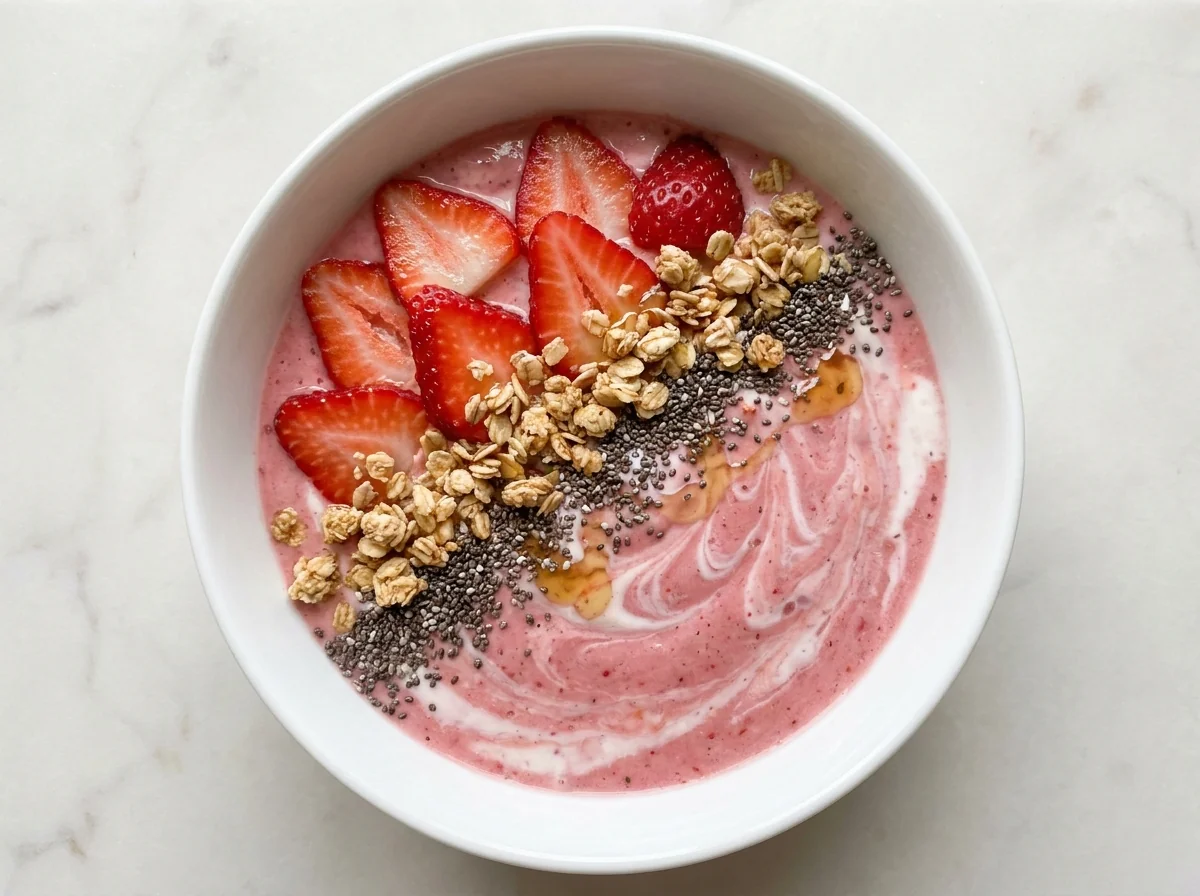
Pour the mixture into a wide bowl and scatter the strawberries, granola, and chia seeds on top right away, and serve it immediately before the cauliflower thaws and the texture runs.
Blood Sugar Impact
The glycemic index (GI) measures how quickly a food raises blood sugar, while the glycemic load (GL) measures how much a full serving raises it. Together they give the complete picture.
Glycemic Index
GI
43Low
Low0–55Medium56–69High70+
A low value (≤55) means a gradual rise in blood sugar — the most suitable range for diabetes and insulin resistance.
Glycemic Load
GL
28High
Low0–10Medium11–19High20+
Glycemic load reflects the impact of the full serving. To lower it: take half a serving, or pair the recipe with a source of protein and fiber.
Nutritional Information
Per ServingMakes 1 servings · one serving is about 670 g of raw ingredients
Calories574 kcal29%of Daily Value*
Protein28 g56%of Daily Value*
Carbohydrates78 g28%of Daily Value*
Fat19 g24%of Daily Value*
Fiber13 g46%of Daily Value*
Sodium130 mg6%of Daily Value*
* Percent Daily Values are based on a 2,000-calorie diet per FDA food-label reference values — your daily needs may be higher or lower. Values are derived from the recipe's ingredients via the USDA database.
Troubleshooting
The most common problems when preparing Protein Smoothie Bowl, and how to fix them:
The mixture won't spin
There is too much frozen fruit for the liquid; add the milk one spoonful at a time and push the mixture toward the blade with a spoon, don't drown it all at once.
The texture is runny like juice
The fruit thawed or there was too much milk; add frozen banana or strawberries and re-blend for a few seconds, and serve it right away.
An overly sour taste
Plain Greek yogurt is sharp; add a little honey or mashed dates, or replace a quarter of the amount with vanilla yogurt.
The toppings sink
The base is thin; make it thicker before topping, and the granola stays crunchy if added at serving time.
Storage and Make-Ahead
Base only
It is best made fresh; it keeps tightly sealed in the refrigerator for up to two hours, then re-blend it a little before serving.
Make ahead
Prepare bags of frozen fruit portioned by serving in the freezer; in the morning add the yogurt and milk and blend in minutes.
Tested Ingredient Substitutions
Original Ingredient
Tested Substitute
Ratio
Flavor Difference
Greek yogurt
Thick plant-based yogurt (soy)
A plant-based version with a close texture
The protein drops a little; choose a high-protein kind
Milk
Almond or oat milk
For those avoiding dairy
The dish becomes dairy-free with the plant-based yogurt
Strawberries
Blueberries or frozen mango
Varies the flavor and color
Mango is sweeter so it doesn't need extra sweetening
Frozen cauliflower
Fresh small-cut cauliflower
When frozen isn't available
Freeze it for two hours first to give the same density
How Much Does It Make? Scaling Guide
Ingredient
Two servings
Four servings (base)
Eight servings
Plain Greek yogurt
400 g
800 g
1600 g
Milk
120 ml
240 ml
480 ml
Frozen banana
200 g
400 g
800 g
Frozen strawberries
300 g
600 g
1200 g
EEINA Nutrition Tip
Freeze the banana and fruit the night before, as frozen fruit is the secret to the thick texture, while fresh fruit thaws the base and makes it closer to a drink.
Add This Recipe to Your Plan
The EEINA app saves your favorite recipes, calculates them from their real ingredients, and shows your daily numbers toward your goal. Try it free now.
No, in the amount used here it isn't noticeable; it adds density and fiber and keeps the color light, and this is the dietitian's method in the original recipe.
Do I need higher protein?
Use a high-protein Greek yogurt or add a scoop of vanilla protein and blend it with the base.
Why frozen fruit and not fresh?
Frozen fruit gives the thick texture that is eaten with a spoon, while fresh fruit makes it closer to a runny drink.