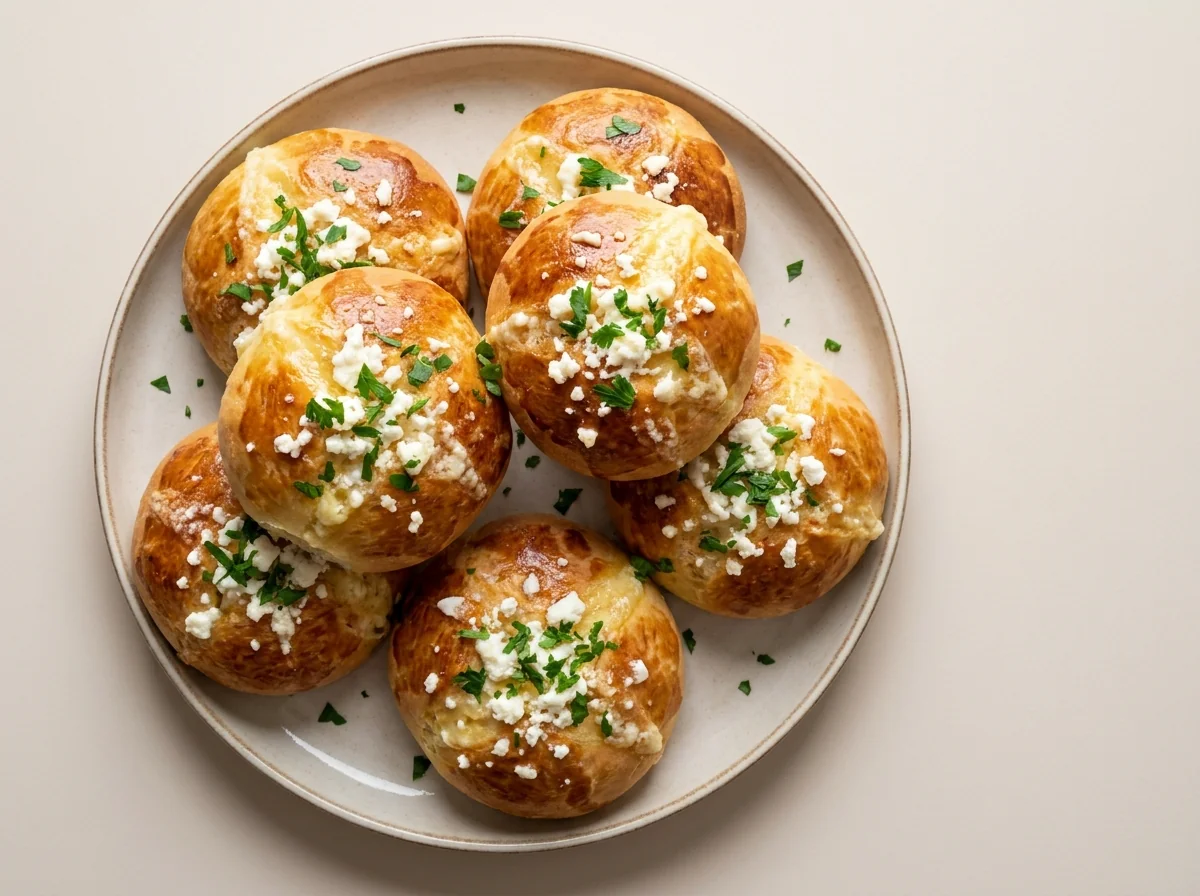
We bake Pogaca, the soft Turkish dough buns that accompany the morning breakfast and a cup of tea.
We knead them with milk, oil, and butter so they come out soft inside, fill them with white cheese and parsley, and decorate their tops with sesame and nigella seeds.
Preparation Steps
Activating the yeast
Dissolve the sugar and yeast in the warm milk and leave the mixture for five minutes until it foams, as this confirms the yeast is alive before kneading.
Kneading
Add the water, oil, and melted butter, then the flour and salt, and knead until you get a soft, slightly sticky dough; do not add more flour so the buns stay soft.
Proofing
Cover the dough with a damp towel and leave it in a warm place for about 45 minutes until it doubles in size.
Preparing the filling
Mix the crumbled cheese with the chopped parsley, and preheat the oven to 180 degrees Celsius.
Shaping
Divide the dough into small balls, roll out each one and place the filling in the center, then fold it into an oval bun and seal the edges well so the filling does not leak.
Brushing and topping
Arrange the buns on parchment paper with the seal facing down, brush them with egg yolk, and sprinkle the sesame and nigella seeds.
Baking
Bake for about 25 minutes until the tops brown and turn golden, and serve them warm with tea.
Blood Sugar Impact
The glycemic index (GI) measures how quickly a food raises blood sugar, while the glycemic load (GL) measures how much a full serving raises it. Together they give the complete picture.
Glycemic Index
GI
71High
Low0–55Medium56–69High70+
A low value (≤55) means a gradual rise in blood sugar — the most suitable range for diabetes and insulin resistance.
Glycemic Load
GL
23High
Low0–10Medium11–19High20+
Glycemic load reflects the impact of the full serving. To lower it: take half a serving, or pair the recipe with a source of protein and fiber.
Nutritional Information
Per ServingMakes 12 servings · one serving is about 100 g of raw ingredients
Calories289 kcal14%of Daily Value*
Protein8 g16%of Daily Value*
Carbohydrates34 g12%of Daily Value*
Fat13 g17%of Daily Value*
Fiber2 g7%of Daily Value*
Sodium461 mg20%of Daily Value*
* Percent Daily Values are based on a 2,000-calorie diet per FDA food-label reference values — your daily needs may be higher or lower. Values are derived from the recipe's ingredients via the USDA database.
Troubleshooting
The most common problems when preparing Savory Cheese Buns (Pogaca), and how to fix them:
The buns are hard
We added more flour than needed; keep the dough soft and slightly sticky next time.
The filling leaked
We did not seal the edges well; press the seal and arrange the bun with it facing down.
The top did not brown
The oven was not hot enough or the brushing was lacking; make sure of the 180-degree heat and spread the egg yolk over the whole top.
The dough did not rise
The yeast was weak or the hot milk killed it; use warm, not hot, milk and confirm the yeast foams first.
Storage and Make-Ahead
Room temperature
Keep them in an airtight container for one day and they stay soft.
Refrigerator
Up to 3 days, and reheat them a little before serving so they turn soft again.
Freezer
Freeze them after baking and cooling for up to a month, and reheat them in the oven straight from the freezer.
Tested Ingredient Substitutions
Original Ingredient
Tested Substitute
Ratio
Flavor Difference
white cheese (feta)
drained cottage cheese
same weight, 200 g
A less salty filling, so add a pinch of salt.
parsley
chopped dill or mint
same weight, 20 g
A different herbal flavor.
butter
extra vegetable oil
about 45 ml
For those who want a butter-free option.
nigella seeds
extra sesame
same weight
If nigella seeds are not available, double the sesame.
How Much Does It Make? Scaling Guide
Ingredient
2 servings
4 servings (base)
8 servings
Flour
160 g
480 g
960 g
White cheese
67 g
200 g
400 g
Instant yeast
2.5 g
7 g
14 g
Warm milk
67 ml
200 ml
400 ml
EEINA Nutrition Tip
Keep the dough soft and slightly sticky and do not add extra flour, because the sticky dough is the secret to a light, soft bun.
Add This Recipe to Your Plan
The EEINA app saves your favorite recipes, calculates them from their real ingredients, and shows your daily numbers toward your goal. Try it free now.