Peanut butter noodles are among the most famous of Asia's fast dishes.
The traditional Chinese sesame-peanut sauce in its simplest home translation: a jar of peanut butter meets soy and ginger to make the quarter-hour dinner that swept the internet's fast recipes.
Preparation Steps
Boil the noodles and reserve their water
Boil the noodles according to the package and reserve a cup of their cooking water before draining. That starchy water is what turns the peanut butter into a silky sauce instead of a sticky paste.
Whisk the peanut butter sauce
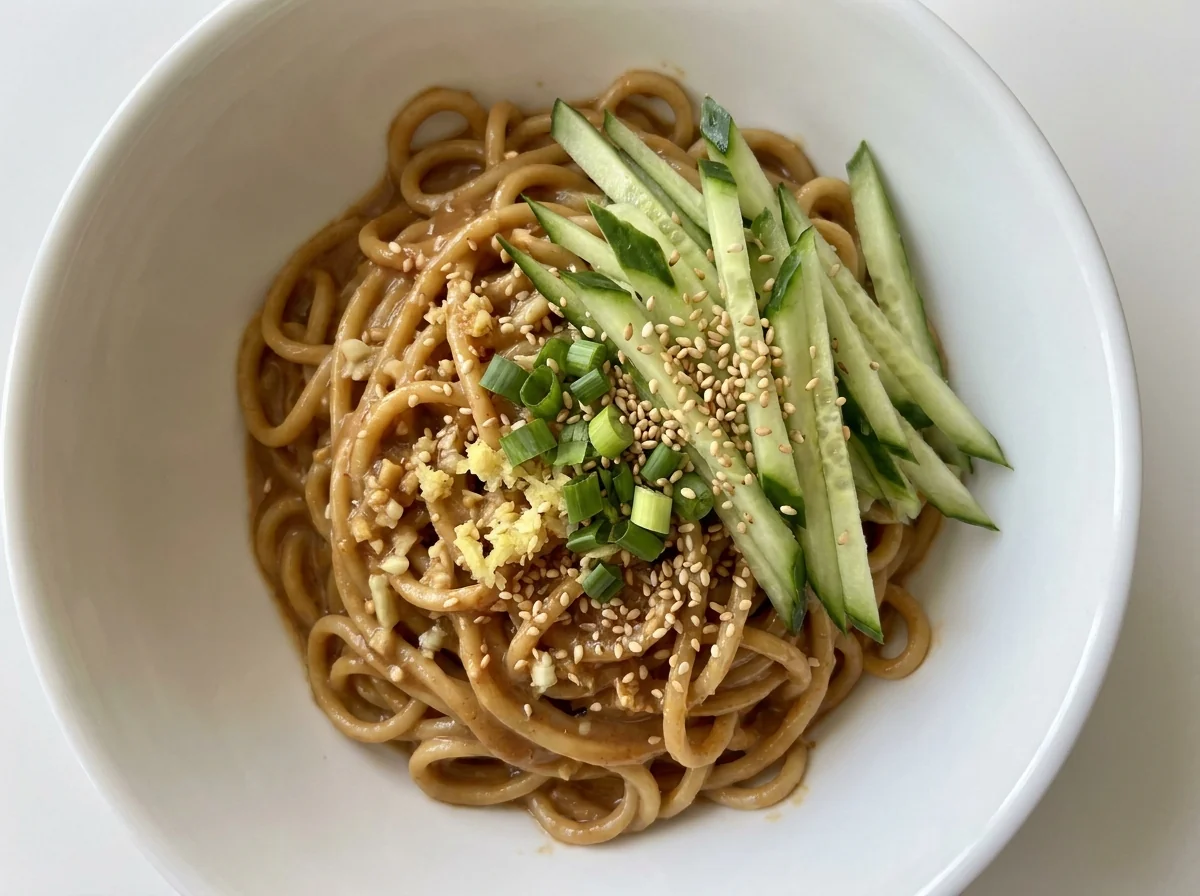
In a bowl, whisk the peanut butter with the soy sauce, honey, vinegar, garlic, ginger, and chili, thinning it with the hot cooking water one spoonful at a time. Before your eyes it transforms from a thick paste into a golden-brown sauce that flows like cream.
Toss the noodles in the sauce
Return the hot noodles to their pot, pour over the sauce, and toss with two tongs until every strand is coated, adding a splash more cooking water if it tightens.
Top with cool and crunchy
Cold cucumber sticks, green onion, and sesame over the creamy heat. The contrast of temperature and crunch is what makes this dish bigger than its simplicity: a flash Asian dinner in a quarter of an hour.
Blood Sugar Impact
The glycemic index (GI) measures how quickly a food raises blood sugar, while the glycemic load (GL) measures how much a full serving raises it. Together they give the complete picture.
Glycemic Index
GI
47Low
Low0–55Medium56–69High70+
A low value (≤55) means a gradual rise in blood sugar — the most suitable range for diabetes and insulin resistance.
Glycemic Load
GL
39High
Low0–10Medium11–19High20+
Glycemic load reflects the impact of the full serving. To lower it: take half a serving, or pair the recipe with a source of protein and fiber.
Nutritional Information
Per ServingMakes 2 servings · one serving is about 270 g of raw ingredients
Calories588 kcal29%of Daily Value*
Protein22 g44%of Daily Value*
Carbohydrates90 g33%of Daily Value*
Fat17 g22%of Daily Value*
Fiber6 g21%of Daily Value*
Sodium839 mg36%of Daily Value*
* Percent Daily Values are based on a 2,000-calorie diet per FDA food-label reference values — your daily needs may be higher or lower. Values are derived from the recipe's ingredients via the USDA database.
Troubleshooting
The most common problems when preparing Asian Peanut Butter Noodles, and how to fix them:
The sauce is clumps in water
The water was poured in all at once. Whisk in one spoonful at a time, and the smoothing-out comes by the third spoonful, so don't despair.
It tightened on the plate quickly
It's the nature of starch and peanut butter together. A splash of hot water stirred in restores its flow, and it's eaten within its quarter hour.
It turned out too sweet
Generous honey over already-sweetened butter. Use pure peanut butter (like our jar) or drop the honey when the commercial one is sweetened.
Too salty
Regular soy sauce. The low-sodium one is half our recipe, and the vinegar and cucumber break the rest.
Storage and Make-Ahead
Immediately
At the silkiness of its sauce. Its quarter hour is its peak.
In the fridge
One day, and it is eaten cold in the summery Asian style with full dignity.
Not suitable for freezing
The sauce separates into granules.
Tested Ingredient Substitutions
Original Ingredient
Tested Substitute
Ratio
Flavor Difference
Peanut butter
Tahini
1:1
The original Chinese sesame noodles. For peanut allergy
The noodles
Spaghetti or rice noodles
1:1
Every strand carries the sauce
Adding protein
Shredded chicken or a fried egg on top
~
A complete meal in minutes
The cold cucumber
Shredded cabbage or carrot
1:1
The cold crunch swaps out
How Much Does It Make? Scaling Guide
Ingredient
2 servings
1 serving
4 servings
Noodles
200 g
100 g
400 g
Peanut butter
60 g
30 g
120 g
Soy sauce
30 ml
15 ml
60 ml
EEINA Nutrition Tip
Thin the peanut butter with the hot cooking water one spoonful at a time, whisking between each addition. The thick butter resists, then suddenly yields into a silky sauce; pour the water in all at once and you harvest clumps floating in brown water.
Add This Recipe to Your Plan
The EEINA app saves your favorite recipes, calculates them from their real ingredients, and shows your daily numbers toward your goal. Try it free now.