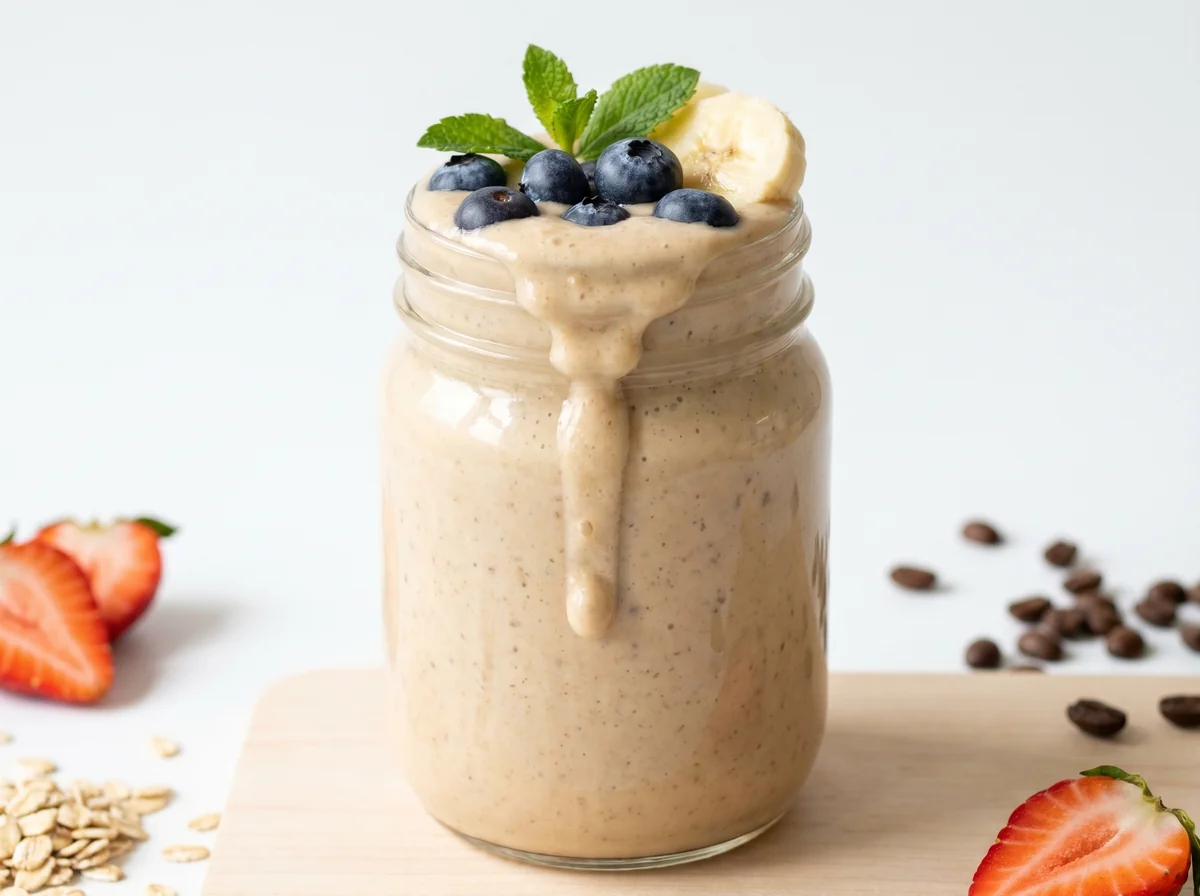
After a hard training session, the body looks for quick fuel to rebuild what was used up, but the hunger after exertion may not handle a heavy meal. This is where the functional drink comes in: a single glass that combines whole oats for gradual energy, ripe banana for natural sugar and potassium, and protein powder with milk and peanut butter for a generous protein portion that supports the muscle.
The idea is simple and practical: ingredients you can find in any Saudi kitchen, turned in minutes into an easy-to-swallow liquid meal that suits a workout morning or right after the gym. It is deliberately different from the banana and oat smoothie meant for pre-sleep relaxation: that one is light and soothing, while this one is rich in protein and energy and aimed at recovery and getting back up.
Preparation Steps
Grind the oats fine
Put the oats alone in the blender jar and grind for about 15 seconds until they become a fine powder with no coarse grains left. This gives the smoothie a silky texture and makes it easier to swallow right after a workout.
Add the wet ingredients
Add the chopped banana, protein powder, peanut butter, milk, a pinch of cinnamon, and a small pinch of salt. Arrange the banana and milk first near the blades so the mixture blends smoothly without trapped air pockets.
Blend
Close the jar and blend on high speed for about 45 to 60 seconds until the mixture is completely smooth with no lumps, since leftover oat or peanut butter lumps make the texture grainy and unpleasant. Add the ice in the last 15 seconds if you want a cold drink.
Adjust the consistency
Taste the consistency. If it is too heavy, add the cold water one tablespoon at a time with a short blend until you reach the thickness you like. A good consistency flows slowly from the glass and does not set like dough.
Serve immediately
Pour it into a large glass and drink it within about half an hour of finishing the workout to make use of the recovery window. If you prepared it ahead, keep it chilled and stir it well before drinking, because the oats thicken the mixture over time.
Blood Sugar Impact
The glycemic index (GI) measures how quickly a food raises blood sugar, while the glycemic load (GL) measures how much a full serving raises it. Together they give the complete picture.
Glycemic Index
GI
47Low
Low0–55Medium56–69High70+
A low value (≤55) means a gradual rise in blood sugar — the most suitable range for diabetes and insulin resistance.
Glycemic Load
GL
30High
Low0–10Medium11–19High20+
Glycemic load reflects the impact of the full serving. To lower it: take half a serving, or pair the recipe with a source of protein and fiber.
Nutritional Information
Per ServingMakes 1 servings · one serving is about 515 g of raw ingredients
Calories620 kcal31%of Daily Value*
Protein43 g86%of Daily Value*
Carbohydrates72 g26%of Daily Value*
Fat20 g26%of Daily Value*
Fiber9 g32%of Daily Value*
Sodium172 mg7%of Daily Value*
* Percent Daily Values are based on a 2,000-calorie diet per FDA food-label reference values — your daily needs may be higher or lower. Values are derived from the recipe's ingredients via the USDA database.
Troubleshooting
The most common problems when preparing Oat and Protein Recovery Smoothie, and how to fix them:
The texture is grainy with oat bits
Grind the oats alone first until they become a powder before adding the rest of the ingredients, and blend longer on high speed until the grainy feel on the tongue disappears.
The drink is heavy like dough and hard to drink
Add cold water or more milk one tablespoon at a time with a short blend until it flows easily, and remember that the oats thicken the mixture the longer it stands.
The protein powder taste is overpowering or chalky
Add half a banana, a pinch of cinnamon, or a few drops of vanilla to mask the flavor, and choose a vanilla or neutral powder instead of strong flavors.
The protein powder clumps at the bottom
Pour the milk in first, then the powder on top, and blend in short pulses at the start before high speed so the powder disperses evenly.
The drink is warm and not refreshing
Use frozen chopped banana instead of ice for coldness and a thick texture without diluting the flavor, or add the ice cubes in the final stage of blending.
Bloating or heaviness in the stomach after drinking
Reduce the amount of oats or peanut butter a little, and drink it slowly over a few minutes instead of all at once, since a rich liquid meal can weigh you down if drunk quickly.
Storage and Make-Ahead
Refrigerated
Keep in an airtight container in the fridge for up to 24 hours. Its texture will thicken because of the oats, so stir it well or add a splash of milk before drinking.
Frozen
It can be poured into ice cube trays and frozen for up to two weeks, then the cubes blended later with a splash of fresh milk for a quick smoothie.
Make ahead
Prepare the dry ingredients and chopped banana in a separate freezer bag, then add the milk and blend when needed for the freshest texture.
Thermal
Always serve it cold and do not leave it out of refrigeration for more than two hours since it contains milk, to avoid bacterial growth at room temperature.
Tested Ingredient Substitutions
Original Ingredient
Tested Substitute
Ratio
Flavor Difference
Whey protein powder
Plant-based protein powder (pea or rice)
1:1
A suitable option for those avoiding dairy or following a plant-based diet, with unsweetened plant milk.
Peanut butter
Sesame tahini or almond butter
1:1
An alternative for anyone with a peanut allergy, but watch for the change in allergens (sesame or tree nuts).
Fresh banana
Frozen banana or half a cup of frozen mango
Same volume
Frozen banana gives coldness and a thick texture and replaces the ice.
Low-fat milk
Unsweetened plant milk (oat, almond, or soy)
1:1
Soy milk is the closest in protein content, so it preserves the muscle recovery goal.
Quick-cooking oats
Regular whole oats
1:1
Grind them a little longer, as whole grains need a stronger blend to become smooth.
How Much Does It Make? Scaling Guide
Ingredient
1 serving
2 servings
4 servings
Oats
40 g
80 g
160 g
Banana
Piece (120 g)
2
4
Protein powder
30 g
60 g
120 g
Peanut butter
1 tbsp
2 tbsp
4 tbsp
Milk
250 ml
500 ml
1 liter
EEINA Nutrition Tip
Choose a natural peanut butter whose ingredient list is just peanuts and salt, and avoid the kinds with added hydrogenated oils and sugar, as this keeps the drink's fats healthy and the calories under control. And if you train in the morning on a nearly empty stomach, drink half the glass before the workout and the other half after to spread out the energy.
Add This Recipe to Your Plan
The EEINA app saves your favorite recipes, calculates them from their real ingredients, and shows your daily numbers toward your goal. Try it free now.
When exactly should I drink this smoothie for maximum benefit?
It is best to drink it within about half an hour to two hours after the workout, the period during which the body is primed for rebuilding and replenishing energy. Even so, your total daily intake of protein and carbohydrates remains the most important factor.
Can it replace a full meal?
It works as a light athletic breakfast or a recovery meal, but it is a liquid meal that may not keep you full as long as a solid meal. Add a piece of fruit or a handful of nuts afterward if you need longer satiety.
Do I really need protein powder, or is milk and peanut butter enough?
Milk and peanut butter provide good protein, but the protein powder raises the portion to suit the muscle recovery goal. If the powder is not available, add more milk or a spoon of Greek yogurt.
Is it suitable for someone trying to lose weight?
It supports satiety thanks to the protein and fiber, but it is high in energy because of the peanut butter and banana. If your goal is weight loss, adjust the portion and watch your total daily calories, and treat it as a meal rather than an addition on top of your meals.
Can it be made completely dairy-free?
Yes, replace the milk with unsweetened plant milk and the whey powder with a plant-based protein powder, and it becomes dairy-free while the peanuts and gluten remain as allergens.