Mustard-Honey Salmon and Brussels Sprouts Sheet Pan (Single Serve)
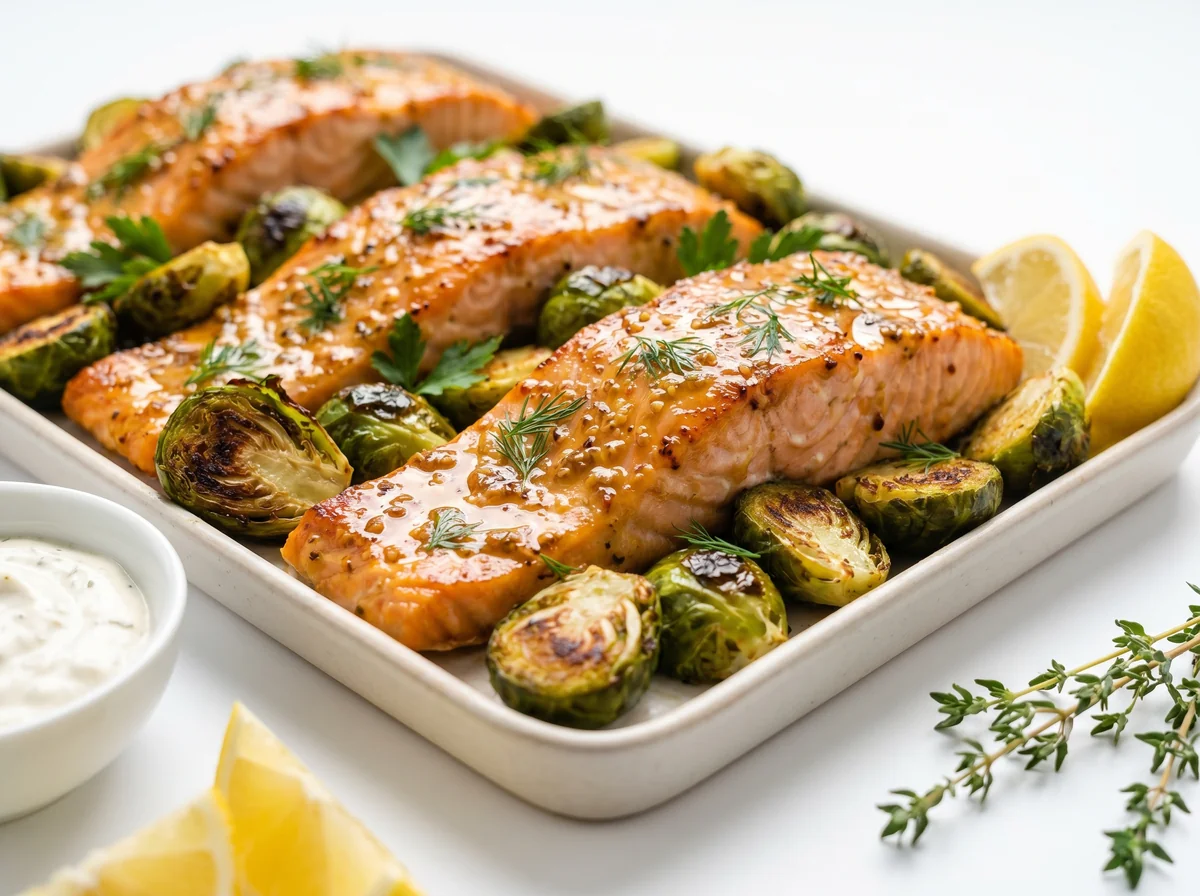
A single-serve sheet pan dinner of honey-mustard glazed salmon fillet roasted alongside halved Brussels sprouts and red onion — one pan, one person, done in 32 minutes.
This recipe was born from the desire for a quick solo dinner that leaves no pile of dishes behind. Salmon is the modern kitchen's ally — tender and rich — but it is usually paired with broccoli, asparagus or quinoa.
Here we gave it a less-familiar but more flavourful partner: Brussels sprouts, which pick up a smoky sweetness and crispy edges in the oven that break through the richness of the fish. The mustard-honey glaze builds a bridge between the two: the mustard's acidity balances the salmon's fat, and the honey softens the sprouts' bitterness. All on one tray, in one oven, for one person who deserves a complete meal without the fuss.
Preparation Steps
Preheat the oven and prepare the pan
Preheat the oven to 200 °C with both top and bottom heat on, and line a small baking tray with parchment paper. The oven must reach its full temperature before the food goes in — steady heat roasts the vegetables evenly instead of steaming them.
Halve the Brussels sprouts and slice the onion
Cut each Brussels sprout in half lengthwise and slice the red onion into half-centimetre strips. A flat cut surface that makes direct contact with the hot tray is what gives Brussels sprouts their golden, caramelised edges.
Season the vegetables and roast first
Toss the Brussels sprouts and onion with 4 ml olive oil and the black pepper, then spread them cut-side down on the tray and roast for 10 minutes. Starting with the vegetables alone gives them the extra time they need before the fish joins — the edges should begin to colour.
Mix the mustard-honey glaze
Whisk together the Dijon mustard, honey, lemon juice, minced garlic and the remaining oil in a small bowl until smooth and glossy. The glaze should cling to the back of a spoon — that consistency ensures it coats the fillet and stays put rather than running off.
Add the salmon and glaze it
Push the vegetables to one side of the tray and place the fillet skin-side down in the space, then spread the entire surface with the mustard-honey glaze. Skin-side down protects the skin and keeps it crisp; the thick glaze seals in moisture during roasting.
Finish roasting until cooked through
Return the tray to the oven and roast for 10 to 12 minutes until the centre of the salmon reaches 63 °C on a food thermometer. The fillet is ready when it flakes easily when pressed with a fork and turns opaque pale pink — 63 °C is the food-safe internal temperature for fish.
Rest and serve
Remove the tray and let the salmon rest for two minutes before serving alongside the roasted Brussels sprouts and onion. The short rest allows the juices to redistribute through the flesh, so every bite is tender rather than dry.
Blood Sugar Impact
The glycemic index (GI) measures how quickly a food raises blood sugar, while the glycemic load (GL) measures how much a full serving raises it. Together they give the complete picture.
Glycemic Index
GI
27Low
Low0–55Medium56–69High70+
A low value (≤55) means a gradual rise in blood sugar — the most suitable range for diabetes and insulin resistance.
Glycemic Load
GL
5Low
Low0–10Medium11–19High20+
Glycemic load reflects the impact of the full serving. To lower it: take half a serving, or pair the recipe with a source of protein and fiber.
Nutritional Information
Per ServingMakes 1 servings · one serving is about 350 g of raw ingredients
Calories475 kcal24%of Daily Value*
Protein35 g70%of Daily Value*
Carbohydrates23 g8%of Daily Value*
Fat27 g35%of Daily Value*
Fiber6 g21%of Daily Value*
Sodium234 mg10%of Daily Value*
Potassium1127 mg24%of Daily Value*
Phosphorus474 mg38%of Daily Value*
* Percent Daily Values are based on a 2,000-calorie diet per FDA food-label reference values — your daily needs may be higher or lower. Values are derived from the recipe's ingredients via the USDA database.
Troubleshooting
The most common problems when preparing Mustard-Honey Salmon and Brussels Sprouts Sheet Pan (Single Serve), and how to fix them:
The salmon turned dry and flaky
You exceeded 63 °C or overcooked it. Add the fish only in the last third of the roasting time, use a food thermometer, and remove it the moment it hits the target temperature — it continues cooking during the rest.
Brussels sprouts came out limp rather than crispy
They were likely crowded on the tray and steamed instead of roasting. Spread them in a single layer cut-side down with space between pieces, and make sure the oven was fully preheated before they went in.
The mustard glaze burned and turned dark
Honey caramelises quickly at high heat. Glaze the salmon in the second half of the roasting time, not from the start. If you notice rapid browning, cover the surface loosely with a piece of foil.
The red onion stayed raw and sharp
The slices were cut too thick. Keep them to half a centimetre and lay them on the tray from the very beginning alongside the Brussels sprouts so they have the full time to soften and sweeten.
The salmon skin stuck to the parchment and tore
Place the fillet skin-side down on parchment, not directly on foil, and let it rest for two minutes after removing from the oven before lifting it with a wide spatula slid under the skin.
Storage and Make-Ahead
Refrigerator
Store leftovers in an airtight container in the fridge for up to two days. Reheat gently in the oven at a low temperature so the salmon does not dry out.
Single-serve meal prep
Prepare the mustard-honey glaze, halve the Brussels sprouts and slice the onion the evening before and store them separately in the fridge. The next day, assemble the tray and roast immediately with less than five minutes of prep.
Freezer
Raw seasoned salmon can be frozen for up to one month in an airtight bag. After cooking, it is best eaten fresh because Brussels sprouts lose their texture when frozen.
Tested Ingredient Substitutions
Original Ingredient
Tested Substitute
Ratio
Flavor Difference
Salmon fillet
Trout fillet or grouper (hamour)
1:1 by weight
Adjust roasting time according to fillet thickness while maintaining 63 °C internal temperature.
Brussels sprouts
Small cauliflower florets
1:1 by weight
Cauliflower roasts similarly but cooks slightly faster — watch the edges.
Honey
Pomegranate molasses or date molasses (date molasses)
1:1 by volume
Both provide the same sweetness with a hint of acidity. Pomegranate molasses is more intense, so start with a smaller amount.
Dijon mustard
Wholegrain mustard
1:1 by volume
Gives a textured, slightly milder flavour. Still note mustard as an allergen.
Olive oil
Avocado oil
1:1 by volume
Avocado oil handles oven heat well and has a neutral flavour that does not overpower the dish.
How Much Does It Make? Scaling Guide
Ingredient
1 serving
2 servings
4 servings
Salmon fillet
150 g
300 g
600 g
Brussels sprouts
120 g
240 g
480 g
Red onion
50 g
100 g
200 g
Dijon mustard
10 g
20 g
40 g
Honey
7 g
14 g
28 g
Olive oil
7 ml
14 ml
28 ml
EEINA Nutrition Tip
Always halve Brussels sprouts before roasting and never leave them whole. The cut surface touching the hot tray creates a natural caramelised layer that transforms their flavour from sharp to sweet and nutty — the trick that converts Brussels sprouts sceptics into fans.
Add This Recipe to Your Plan
The EEINA app saves your favorite recipes, calculates them from their real ingredients, and shows your daily numbers toward your goal. Try it free now.
How do I know the salmon is cooked without a thermometer?
Insert a fork into the thickest part and press gently. If the flesh flakes into layers easily and has turned opaque pale pink, it is done. A food thermometer remains the most reliable method to confirm 63 °C, the food-safe temperature for fish.
Can I use frozen Brussels sprouts?
Yes, but thaw them and pat them thoroughly dry with kitchen paper before roasting, because excess moisture prevents browning and makes them soft. They may need slightly less time than fresh.
Why roast the vegetables before the salmon instead of putting everything in together from the start?
Brussels sprouts and red onion need longer to cook and caramelise, while salmon dries out if over-roasted. Staggering the timing ensures both components are perfectly cooked on the same tray.
Is this dish suitable for people with diabetes?
It has a low glycaemic load because it relies on non-starchy vegetables, salmon protein and a small amount of honey, which supports post-meal blood sugar stability. Individual responses vary, so consult your doctor or dietitian to fit it into your plan.
How do I keep this dish heart-friendly?
Keep salt very light and rely on lemon, garlic and mustard for flavour. That keeps sodium low while you still benefit from the omega-3 fatty acids in salmon, which support heart health as part of a balanced diet.