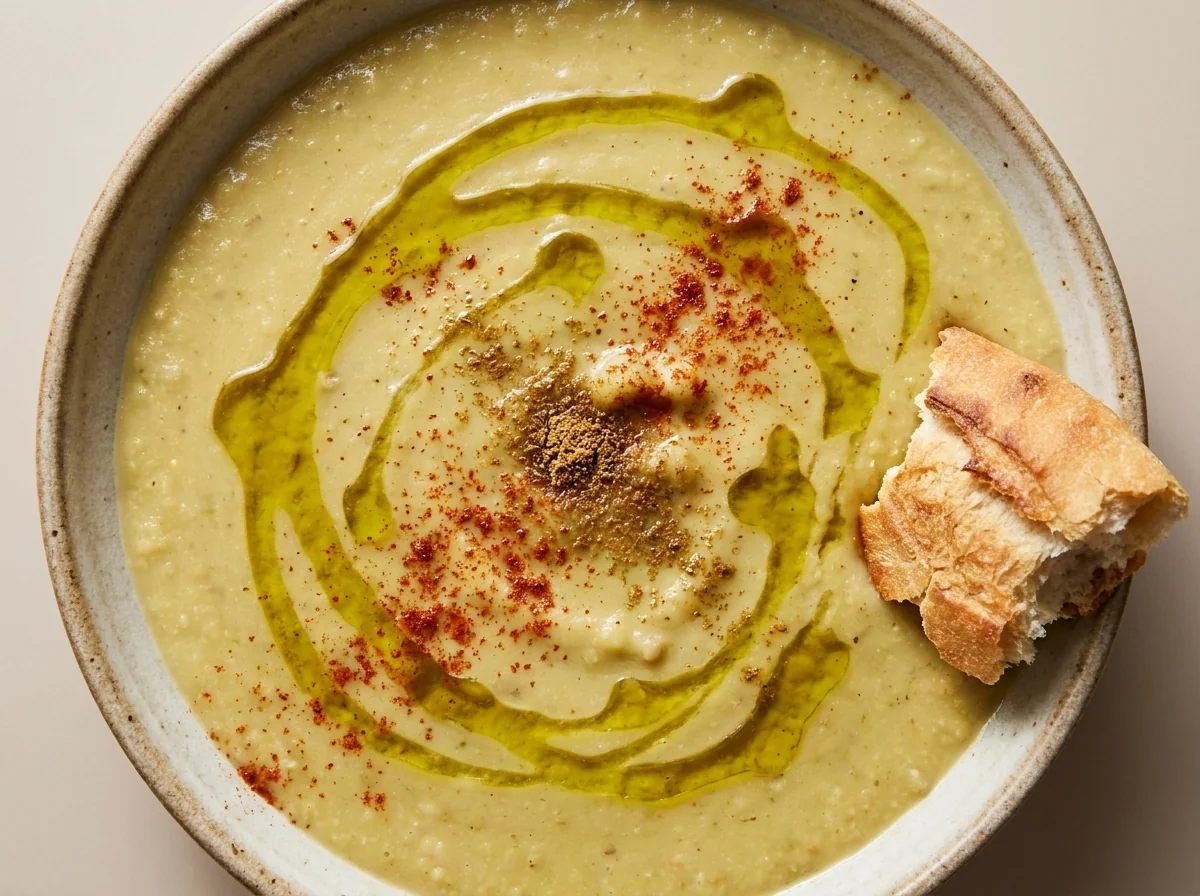
Bissara is a long-rooted popular dish in northern and eastern Morocco, cooked from dried peeled fava beans and pureed until creamy, then anointed with olive oil, cumin and paprika.
It warms Moroccans in winter and appears on Ramadan tables as a filling soup with inexpensive ingredients.
Preparation Steps
Boil the fava beans with the garlic
In a pot, place the soaked peeled fava beans with the garlic cloves and the water, and bring to a boil. Skim off the foam that floats up in the first few minutes with a spoon, then lower the heat, cover the pot halfway and leave it to cook for forty minutes until the fava beans crumble at the press of a finger.
Puree until creamy
Puree the fava beans in the pot with an immersion blender, or pass them through a regular blender in batches, until it becomes a smooth soup with a creamy consistency that flows slowly off the spoon. If it thickens, loosen it with hot water little by little.
Season the soul of the bissara
Return the pot to low heat and add the cumin, salt and half the olive oil, and stir for two minutes until the flavors marry and the aroma of cumin rises with the boiled garlic. The scent of northern Morocco on winter mornings.
Serve it the Moroccan way
Pour the bissara very hot into deep bowls, draw a generous thread of olive oil over each bowl, and scatter red paprika and a pinch of cumin. The red coloring over the pale green is its traditional dress. Hot bread alongside for dipping.
Blood Sugar Impact
The glycemic index (GI) measures how quickly a food raises blood sugar, while the glycemic load (GL) measures how much a full serving raises it. Together they give the complete picture.
Glycemic Index
GI
26Low
Low0–55Medium56–69High70+
A low value (≤55) means a gradual rise in blood sugar — the most suitable range for diabetes and insulin resistance.
Glycemic Load
GL
7Low
Low0–10Medium11–19High20+
Glycemic load reflects the impact of the full serving. To lower it: take half a serving, or pair the recipe with a source of protein and fiber.
Nutritional Information
Per ServingMakes 4 servings · one serving is about 400 g of raw ingredients
Calories401 kcal20%of Daily Value*
Protein21 g42%of Daily Value*
Carbohydrates48 g17%of Daily Value*
Fat16 g21%of Daily Value*
Fiber20 g71%of Daily Value*
Sodium315 mg14%of Daily Value*
Potassium895 mg19%of Daily Value*
Phosphorus344 mg28%of Daily Value*
* Percent Daily Values are based on a 2,000-calorie diet per FDA food-label reference values — your daily needs may be higher or lower. Values are derived from the recipe's ingredients via the USDA database.
Troubleshooting
The most common problems when preparing Moroccan Bissara (Pureed Fava Bean Soup), and how to fix them:
The bissara tastes slightly bitter
Old fava beans or unskimmed foam. Soak freshly bought fava beans for a full night and skim the foam patiently, and a squeeze of lemon at the end breaks any remaining bitterness.
The consistency is clumpy, not smooth
The pureeing is insufficient or the fava did not cook fully. Increase the boiling by ten minutes and re-puree. True bissara is smooth as silk.
It thickened a few minutes after serving
This is its nature. The fava drinks up liquids. Keep a jug of hot water nearby and loosen it bowl by bowl.
The garlic taste dominates
We boiled more cloves than needed. Four are enough for the pot, and boiled garlic is milder than raw, so no need to omit it entirely.
Storage and Make-Ahead
Right away
Hot with a thread of oil and paprika. That is how it is complete.
In the fridge
Three days in an airtight container and it thickens a lot. Loosen it with hot water when reheating.
In the freezer
Two months in portion containers. Thaw and whisk with a spoon with a little water and it returns creamy.
Tested Ingredient Substitutions
Original Ingredient
Tested Substitute
Ratio
Flavor Difference
Peeled fava beans
Dried peeled peas (jelbana)
1:1
The famous northern green version
Cumin only
Cumin with a pinch of Moroccan thyme
~
A traditional mountain aroma
Extra-virgin olive oil
Regular olive oil
1:1
It does the job and the extra-virgin is more fragrant
White bread for dipping
Barley or whole-wheat bread
1:1
Higher fiber in the rustic style
How Much Does It Make? Scaling Guide
Ingredient
4 servings
2 servings
8 servings
Peeled fava beans
300 g
150 g
600 g
Olive oil
60 ml
30 ml
120 ml
Garlic
6 cloves
3 cloves
12 cloves
EEINA Nutrition Tip
Skim off the boiling foam in the first few minutes and do not neglect it. With it the fava taste clears and its heaviness disappears. Anyone who finds it heavy for Iftar can thin its consistency with more water so it becomes a soup to be sipped rather than a paste to be scooped.
Add This Recipe to Your Plan
The EEINA app saves your favorite recipes, calculates them from their real ingredients, and shows your daily numbers toward your goal. Try it free now.
Ful is whole fava beans seasoned in the bowl; bissara is peeled fava that is boiled and pureed into a creamy soup eaten with a spoon. One ingredient and two completely different dishes.
Is it enough as an Iftar on its own?
With whole-wheat bread and a salad it makes a complete vegan meal of protein and fiber, and anyone wanting higher protein can follow it with a boiled egg.
Where do I find peeled fava beans in Saudi Arabia?
In the legume sections under the name 'peeled fava' or 'yellow split fava,' and it is among the cheapest things on the shelf.
Why is it considered a friend to the fasting person?
Slow-digesting legumes with high fiber that satisfy for a long time, and its liquid consistency moistens. Fullness without heaviness.