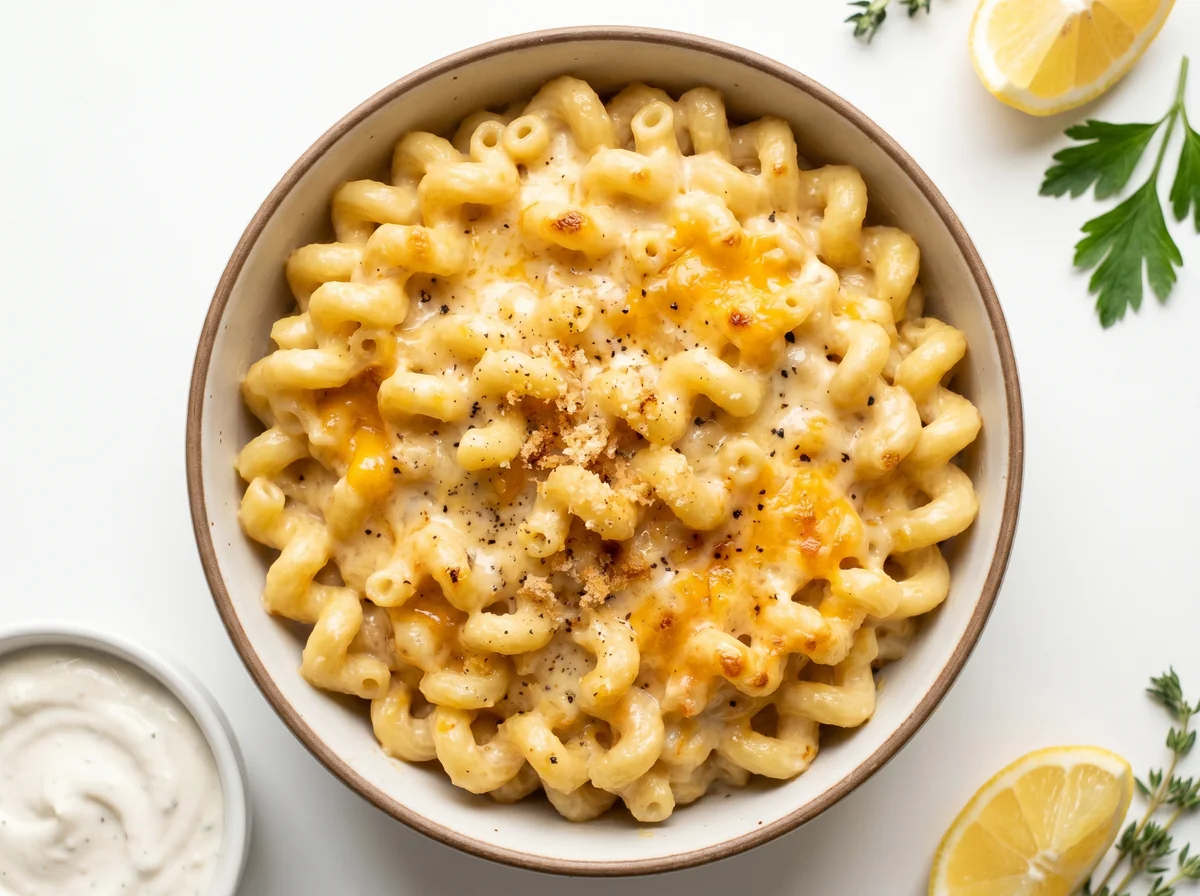
Whole-wheat macaroni in a creamy cheese sauce lightened with mashed cauliflower · higher in fiber and lower in fat than the traditional recipe. A famous American dish that kids love.
Mac and cheese is the beloved American comfort dish, but its traditional version is weighed down with cheese, butter, and flour.
EEINA's version uses whole-wheat macaroni and lightens the cheese sauce with mashed cauliflower, which adds creaminess and fiber, so it comes out lighter while keeping the pleasure of melted cheese.
Preparation Steps
Boil the macaroni
Boil the macaroni in salted water for the package time minus one minute (half-cooked, it will finish in the sauce). Reserve half a cup of the cooking water, then drain it.
Prepare the cheese sauce
In the same pot, melt the butter over low heat, add the milk, the mashed cauliflower, the mustard powder, and the garlic powder and stir until it warms. The mashed cauliflower gives creaminess and body, so it reduces the amount of cheese needed.
Add the cheese
Lower the heat to its lowest and add the grated cheese gradually with constant stirring until it melts and becomes smooth (adding the cheese over low heat keeps it from turning grainy or clumping). Taste and salt.
Combine
Add the drained macaroni and stir until it is coated with the sauce. If it thickens more than needed, add a splash of the cooking water until the texture becomes creamy and glossy.
Serve (or bake)
Serve it warm right away, or transfer it to a tray, scatter the breadcrumbs over the top, and bake at 200°C for 10 minutes until the top browns (the crispy oven version). Serve it with a green salad.
Blood Sugar Impact
The glycemic index (GI) measures how quickly a food raises blood sugar, while the glycemic load (GL) measures how much a full serving raises it. Together they give the complete picture.
Glycemic Index
GI
47Low
Low0–55Medium56–69High70+
A low value (≤55) means a gradual rise in blood sugar — the most suitable range for diabetes and insulin resistance.
Glycemic Load
GL
19Medium
Low0–10Medium11–19High20+
Glycemic load reflects the impact of the full serving. To lower it: take half a serving, or pair the recipe with a source of protein and fiber.
Nutritional Information
Per ServingMakes 4 servings · one serving is about 175 g of raw ingredients
Calories353 kcal18%of Daily Value*
Protein15 g30%of Daily Value*
Carbohydrates43 g16%of Daily Value*
Fat13 g17%of Daily Value*
Fiber2 g7%of Daily Value*
Sodium516 mg22%of Daily Value*
Potassium288 mg6%of Daily Value*
Phosphorus286 mg23%of Daily Value*
* Percent Daily Values are based on a 2,000-calorie diet per FDA food-label reference values — your daily needs may be higher or lower. Values are derived from the recipe's ingredients via the USDA database.
Troubleshooting
The most common problems when preparing Mac and Cheese, and how to fix them:
The cheese sauce is grainy or clumpy
The cheese was added over high heat or all at once. Lower the heat to its lowest and add the cheese gradually with constant stirring. High heat separates the cheese protein from its fat, so it turns grainy.
The macaroni is dry with no sauce
The sauce thickened or the macaroni absorbed it. Add a splash of the starchy cooking water or milk until the texture becomes creamy again. Mix it just before serving.
The taste is bland
It is short on salt or mustard powder. Mustard powder and garlic powder are the secret to classic mac and cheese flavor (they give depth, not sharpness). Salt it well and taste.
The cauliflower taste is noticeable in the sauce
It was not mashed enough or there was too much of it. Mash it completely smooth, and the cheese and mustard powder cover its flavor. Start with half a cup and increase gradually.
The oven top did not brown
It is short on breadcrumbs or heat. Scatter whole-wheat breadcrumbs with a sprinkle of cheese over the top and bake at high heat (200°C) or under the broiler for a few minutes to brown it.
Storage and Make-Ahead
Fridge (4°C)
Three days in an airtight container after cooling. It thickens a lot when chilled, so add milk or water when reheating to restore the creaminess.
Freezer (-18°C)
One month. The sauce may change slightly. Freeze it in individual portions, thaw it in the fridge, then reheat it with milk.
Make ahead
Prepare the cauliflower cheese sauce ahead and keep it, then boil the macaroni fresh and mix them at serving time for the best texture.
Reheating
Over low heat with milk or water and stirring, or in the microwave with a splash of milk and a stir halfway. Do not leave it out of the fridge for more than two hours [1].
Tested Ingredient Substitutions
Original Ingredient
Tested Substitute
Ratio
Flavor Difference
Whole-wheat macaroni
Lentil pasta or cauliflower cut into florets
same amount
Lentil pasta is higher in protein; cauliflower lowers the carbohydrates a lot for people with diabetes
Mashed cauliflower
Mashed butternut squash
same amount
Gives a golden color and a light sweetness, with similar creaminess
Cheddar cheese
Mozzarella with a sprinkle of parmesan
same amount
Smoother melt and lighter flavor
Milk
Unsweetened plant milk
same amount
To reduce the milk dairy (the cheese stays)
Mustard powder
Omit it or a sprinkle of paprika
—
For those allergic to mustard; the classic flavor fades a little
How Much Does It Make? Scaling Guide
Servings
Pasta
Cheese
Milk
Cauliflower
2 (single × 2)
100 g
1/2 cup
1/2 cup
1/2 cup
4 (base)
200 g
1 cup
1 cup
1 cup
6 (family)
300 g
1.5 cups
1.5 cups
1.5 cups
8 (hosting)
400 g
2 cups
2 cups
2 cups
EEINA Nutrition Tip
Two tricks make it more suitable: whole-wheat macaroni (higher fiber and lower GI), and mashed cauliflower that lightens the cheese without losing the creaminess. The carbohydrates from the macaroni are the challenge, so stick to a moderate portion and serve it with salad and protein (grilled chicken) for kids and adults.
Add This Recipe to Your Plan
The EEINA app saves your favorite recipes, calculates them from their real ingredients, and shows your daily numbers toward your goal. Try it free now.
Is mac and cheese suitable for people with diabetes?
With whole-wheat macaroni and cauliflower its glycemic index is low (48), but its load is moderate, so the portion matters. Stick to a moderate portion and serve it with salad and protein. Lentil pasta or cauliflower is a better alternative for them.
How do I lighten the cheese without losing the creaminess?
Mashed cauliflower (or squash) is the secret: it adds creaminess, body, and fiber, so it cuts the amount of cheese by about half, without its taste being noticed under the cheese and mustard powder.
How do I keep the sauce from turning grainy?
Add the cheese over the lowest heat gradually with constant stirring, not over high heat and not all at once. High heat separates the cheese fat, so it turns grainy.
How do I make it a complete meal for kids?
Add chopped grilled chicken or vegetables (broccoli, peas), and serve it with a salad. This balances the carbohydrates with protein and fiber and increases satiety.
Is it good for making ahead?
Yes, but it thickens when chilled. Prepare the sauce ahead and boil the macaroni fresh, or keep the dish for 3 days and add milk when reheating to restore the creaminess.
Sources: USDA · University of Sydney · Gulf GSO · Our methodology · Updated on